
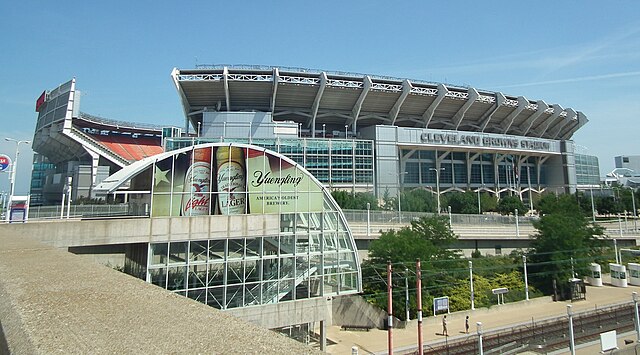
The Cleveland Browns’ new stadium agreement is more than a sports story, it’s a case study in how billion-dollar facilities get financed, and what that means for taxpayers, team owners, and franchise value.
The $1.25 billion lakefront project has been pitched as a win-win for Northeast Ohio, promising economic growth and modern amenities.
But the fine print reveals a familiar formula: private profit built on public risk. This intro gives you the key numbers, funding structure, and what every fan and taxpayer should understand about deals like this.
💰Who Pays What
The Browns’ ownership group, led by Jimmy and Dee Haslam, will contribute an estimated $700 million of the total $1.25 billion budget.
The remaining $550 million is public money, a mix of city, county, and state funds. Public portion funding sources include:
- Issuance of long-term municipal bonds
- Redirection of existing “sin tax” revenues
- Hotel and rental car tax surcharges
- Tax Increment Financing (TIF) on projected future development
The key is that much of the public share comes from debt, which taxpayers repay over 20–30 years with interest. Estimated debt service on the public portion could total $850+ million over its life, assuming a 4% interest rate.
📈The Franchise Value Play
Why would ownership put up $700M of their own capital?
Simple: return on investment.
The Browns’ franchise was valued at $4.62 billion by Forbes in 2024.
With a new stadium and lakefront development rights, the team’s valuation could jump 15–25%, adding $700 million–$1.1 billion in equity value. So while the Haslam’s put in $700M cash, they stand to gain far more in increased franchise value and ancillary real estate development.
Meanwhile, the public contribution doesn’t generate equity, just the hope of indirect economic benefits and civic pride.
🧾Key Questions
Deals like this are controversial because the true economic return to the city is hard to measure. Historical data on stadium projects suggests:
- Increased tax revenue from tourism & development rarely offsets full public costs.
- Job creation tends to be temporary and concentrated in low-wage sectors.
- Opportunity cost: money spent here isn’t spent on schools, infrastructure, or other investments.
Even with these concerns, officials approved the plan, citing long-term development potential and fear of relocation.
🔗Next Reads
- Inside the Bengals’ $470 Million Stadium Renovation Deal
- Inside the Chiefs’ Push for a New Stadium Location
- Inside the Washington Commanders’ Stadium Fight
- Apollo’s $5 Billion Private Equity Fund Explained
- How the Dodgers’ Ownership Built a Multi-Billion Dollar Sports Empire
Credits
Written by: Aidan Anderson
Research and Analysis: Apostle Sports Media LLC
Sources: City of Cleveland Official Finance Committee Reports, Cuyahoga County Budget Office, APSM proprietary analysis.
Featured Image: Public Domain / Wiki Commons
Disclaimer: This article contains general financial information for educational purposes and does not constitute as professional advice.
“‘For with much wisdom comes much sorrow; the more knowledge, the more grief.”
– Ecclesiastes 1:18


























 Apostle Sports Media