

The Royal Rumble, one of WWE’s most iconic annual events, has grown from an USA Network “special” in 1988, to now being an international spectacle in 2025.
The event was a free-to-air cable showing, that saw the WWF (at the time) livestream see approximately 8 million households tune in to watch “Hacksaw” Jim Duggan take the belt in the soon to be, first ever Royal Rumble.
With the rise of streaming, sponsorships, and premium content deals, the WWE/WWF, has turned the significant interest surrounding the lure of the sport and specifically this event, into a revenue prowess.
So, how has the financial picture changed over the years for the WWE? How did the growth in the interest surrounding pro wrestling also turn the league into the estimated $8B+ valuation that it sees in 2025?
Let’s break down the event’s costs, earnings, sponsorships, and profitability over some of the course of key milestones in the now 38 year showing, that led the “one-time event”, to assisting the sport and franchise of the WWE in collecting billions of dollars.
The First Royal Rumble
In its inaugural year, the Royal Rumble was a free event on the USA Network, meaning that there was no direct pay-per-view revenue.
The focus was on brand-building and drawing larger crowds for future events, unrealizing the mass potential for continued momentum the event would hold for the sport.
At an estimated 8 million households tuning into the first ever Royal Rumble, the event is not just historical for the sport of wrestling in general, but also showed a driving interest in the WWE that would lead to eventual PPV buys for decades.
The initial Royal Rumble may not have accrued the tens of millions of dollars in revenue generations that the sport sees in 2025 per event, but it sparked an appeal of pro wrestling to a broader audience.
The WWE took advantage of this by tailoring their future, annual Royal Rumbles to the fans who would spend their money to continue watching their favorite stars battle it out for the Royal Rumble belt year after year.
- Production Cost: Estimated at $250,000
- Revenue: Primarily from live ticket sales, estimated at around $500,000.
- Profitability: WWE (then WWF) used the event to build momentum for
WrestleMania. The showing was not meant to gain revenue quickly, but rather to market the sport to a broader audience. - Top Earner: Likely Hulk Hogan or “Million Dollar Man” Ted DiBiase, both earning around $100,000 for the event.
The 10th Royal Rumble
By 1997, the WWE had rising competition from the WCW, spurring an aggressive push to generate more PPV revenue.
Sponsorship deals continued to develop, and the talent payouts reflected the company’s increasing profitability.
The 10th annual Royal Rumble saw Stone Cold Steve Austin wrestle for over 45 minutes (45:07), defeating 10 competitors, with “Bret Hart” as his final opponent to take the win.
Austin had already technically been tossed out of the ring by Hart, but with the refs distracted during a brawl, Stone Cold snuck back in and snagged an ambivalent win.
Other notable names like Vader, Goldust and The Undertaker also made appearances in the event.
- Production Cost: Estimated at $1 million.
- Revenue: Approximately $4 million (PPV sales + ticket sales).
- Sponsorship Growth: Early-stage deals with video game and toy companies. (Sony & Milton Bradley).
- Top Earner: Likely Stone Cold Steve Austin, with an estimated $250,000 payout, plus potential bonus and royalty opportunities.
- Financial Takeaway: By the late ‘90s, the WWE was leveraging PPV buys, which in turn made events like the Royal Rumble appeal to the masses, making events like the Royal Rumble highly profitable and continued the groundwork in the company’s amassed financial infrastructure seen today.
2012: The 25th Royal Rumble
By the time the Royal Rumble hit its 25th year, the WWE had expanded its marketability and reach well beyond North America, with international markets surging the events PPV sales.
It’s safe to say the event was a financial home run by this point, as evidenced by the 443,000 Total PPV buys (~300k USA sales) for the 25th annual event, priced at $50 at the time.
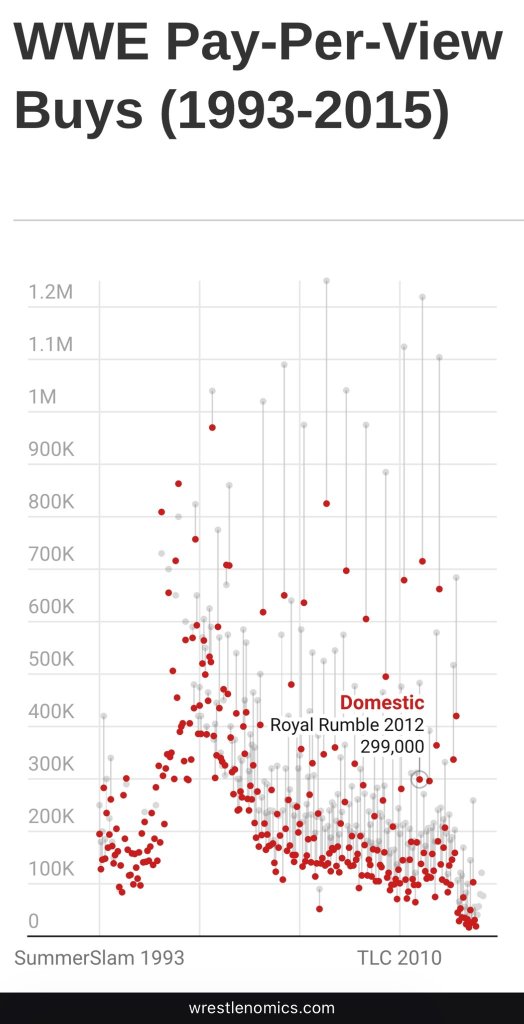
This translated to around $22,150,000 in PPV revenue alone from just one single revenue stream, an 8,760% profit increase from the first event on USA Network.
Factor in sponsorships, advertisements, and merchandise, and you’re now looking at a figure well over $30 million in total earnings for the 25th Rumble Royal alone.
The WWE by this point had expanded into an international brand, a mainstream phenomena and had intertwined itself into both the sports and entertainment industries financial leaders.
The first event was used as a teaser for those who would turn into wrestling superfans and the marketing the franchise used during these times, is known to be some of the most unique, bizarre but intriguing tactics in entertainment history.
By using some of the most unconventional yet brilliant marketing strategies, the WWE had transformed a simple cable TV showing into a massive international spectacle.
Ticket prices had surged as well, and digital content sales (WWE Network was in development) were starting to supplement just the traditional PPV income, expanding its revenue into other streams.
- Production Cost: Estimated at $3-5 million.
- Revenue: Estimated at $25 million (PPV, ticket sales, sponsorships, merchandise).
- Sponsorship Deals: Major brands like Mattel and 7-Eleven.
- Top Earner: John Cena, estimated at earning $1.5 million for the event.
- Financial Takeaway: WWE was maximizing its brand across multiple revenue streams, including ticket sales, sponsorships, merchandise, and emerging digital content.
By 2012, the WWF was now the WWE and was valued at an estimated $380 million. Although not yet the multi-billion-dollar company of 2025, the WWE was well on its way to dominating the entertainment and sports media industries by 2012.
The groundwork laid during this period set the stage for the biggest financial boom the WWE would have but had still yet to see.
The 38th Royal Rumble & Move to Streaming
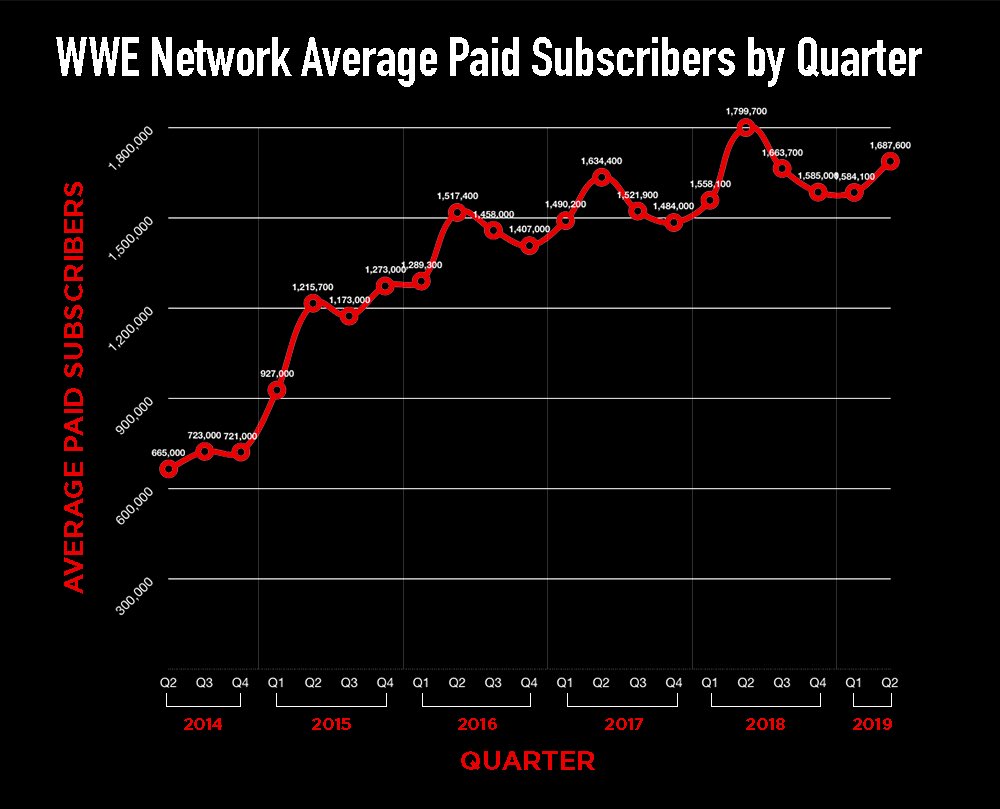
In 2023, WWE made a monumental shift, moving the Royal Rumble away from its traditional pay-per-view model and into the streaming era, striking a deal that would redefine its business model.
Now apart of “TKO Holdings“, a joint venture with the UFC and WWE, the sports combined their financial leverage and embraced streaming as its primary revenue source.
This move also more closely aligned with the trend seen in other pro sports leagues such as the NFL & NBA. This transition has been part of the bigger picture for the sport of pro wrestling, with the WWE’s valuation skyrocketing and contributing to the overall $21B valuation of TKO Holdings, the parent company to now both the WWE & the UFC.
Notably, TKO Holdings, under the leadership of Dana White and Vince McMahon, has achieved this massive valuation without relying on multiple ownership groups and equity partners, quite different from traditional major sports franchises.
For the 38th annual Royal Rumble set to take place tonight, February 1st, 2025, TKO and the WWE have their sights set on turning the Royal Rumble into a global digital event.
They have sold the licensing rights to this years Royal Rumble event to Peacock, who will be streaming the event starting at 6:00 pm EST to anyone subscribed to the service.
- Production Cost: Estimated between $15-20 million
- Projected Revenue: $100+ million!
- Streaming Revenue: WWE’s new Netflix deal is estimated to bring in $5 billion over multiple years.
- Top Earner: Likely Roman Reigns or Cody Rhodes, potentially earning $3-5 million from just todays Royal Rumble alone. Who do you have taking the win this year?
- Financial Takeaway: The WWE is now shifting away from a PPV-based model, as the WWE paired up with UFC to create “TKO Holdings” in April 2023, to further strengthen the pro fighting entertainment industries dominance by moving towards a streaming subscription model.
With an estimated $100 million in projected revenue for the 2025 Royal Rumble, the WWE’s focus on streaming deals, especially its licensing agreements with streaming goliaths Netflix & Peacock ensures long-term financial growth.
The partnership with Netflix alone could bring in over $5 billion over several years, propelling the WWE into even more lucrative territory.
While the streaming model that the WWE and UFC hope to shift towards with their new TKO Holdings parent structure will surely continue to generate massive profits.
So, it will be interesting to see how the WWE is able to continue generating wealth and interest for more decades to come.
The WWE is now more than just an entertaining pass time or hobby. It is a full blown pro sport league, that is climbing the ranks of financial values for entertainment, media and sports companies by the day.
The Royal Rumble Isn’t Going Anywhere
The Royal Rumble event is just one example of the WWE’s financial evolution, transforming from a freely aired, “special’ cable event, to a multi-billion-dollar global powerhouse.
The event’s revenue has multiplied exponentially over the decades, not just from PPV buys but from a growing mix of sponsorships, merchandising, and the revolutionary rise of streaming and subscription deals.
WWE’s shift to Netflix and its streaming-focused model, as part of TKO Holdings, marks the most significant change since the introduction of the WWE Network.
While it remains to be seen how the shift will play out compared to past models, one thing is certain: The Royal Rumble continues to be a massive financial success for WWE.
Stay tuned for our exclusive deep-dives into the WWE’s entire financial structure, where we’ll break down everything from talent salaries and sponsorship agreements, to how the company maximizes profits from its worldwide audience!
Want Every APSM Report In One Place?
The APSM Master Report Bundle includes all current APSM reports:
- Travis Hunter’s 2025 Net Worth Valuation
- Tyrese Haliburton’s 2025 Net Worth Valuation
- 7 Ways Athletes Build Wealth
- 7 Ways Athletes Go Broke
- (Will Include future additions of reports as APSM grows)
You’ll Get:
- Deep financial literacy designed through a sports lens
- Net Worth projections, contract forecasts & tax modeling
- Wealth frameworks & risk analysis
- Lifetime value mapping for both athletes and professionals
The most valuable way to learn the game of money through APSM.
🔗Next Reads
- Which Adds More Value to TKO Holdings: UFC or WWE?
- Hulk Hogan Career Earnings & WWE Legacy
- How UFC Promotion Drives Revenue
- Canelo vs. Crawford Revenue & Purse Projections
- Will a Non-McGregor UFC Fighter Ever Earn $10 Million in a Bout
Credits
Written by: Aidan Anderson
Research and Analysis: Apostle Sports Media LLC
Sources: WWE financial reports, Wrestling Observer Newsletter, Forbes WWE valuation, APSM Proprietary analysis.
Social Media Clips: Instagram & X.
YouTube Embed: WWE Channel
Featured Image: Public Domain / Wiki Commons
Disclaimer: This article contains general financial information for educational purposes and does not constitute as professional advice.
“My soul thirsts for God, for the living God. When can I go and meet with God?”
– Psalm 42:2

























 Apostle Sports Media