
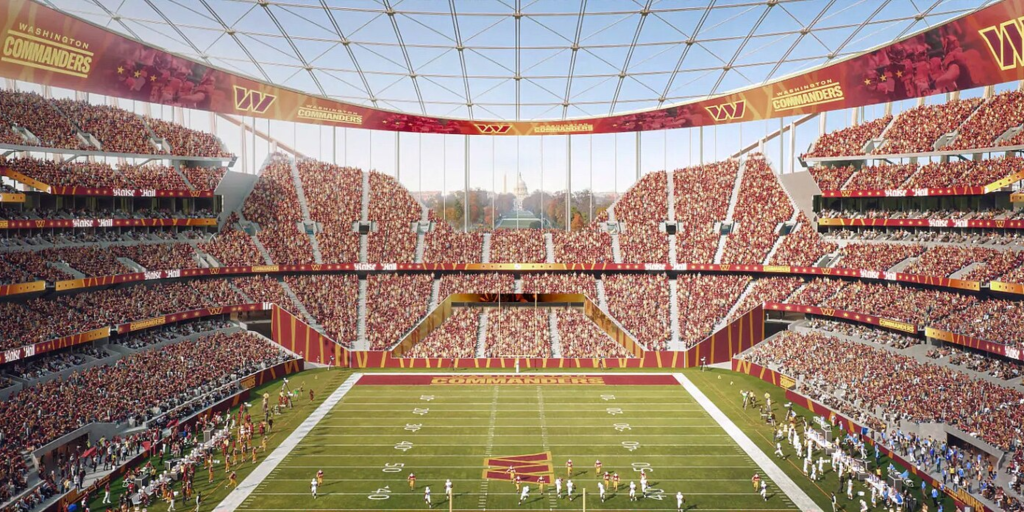
The Washington Commanders’ stadium saga is entering a critical phase and behind every headline is a classic NFL playbook move:
Leverage + Public Money + Valuation Growth = New Stadium.
With their lease at FedEx Field set to expire in 2027, the Commanders are now at the center of a three-jurisdiction bidding war involving:
✅Maryland
✅Virginia
✅Washington D.C.
And with each location comes different tax breaks, public financing options, and long-term revenue potential.
So, where will the Washington Commanders franchise end up playing their home games after the 2027 NFL season?
While the answer is still not entirely clear, we’ll break down the three current proposed options and the financial benefits or issues that come with each city.
💸The Financial Stakes
Here’s the latest:
- Virginia: Recently passed legislation clearing the way for public incentives worth up to $1.5 billion if the Commanders build in Prince William County or Loudoun County.
- Maryland: Pitching a smaller-scale renovation and infrastructure plan around FedEx Field, estimated at $800 million, but with less direct stadium funding.
- Washington D.C.: City leaders are offering prime land at the RFK Stadium site, but so far are resisting direct public cash offers, pushing for a land lease model instead.
📈Why It Matters for Franchise Value
New ownership, led by Josh Harris and Magic Johnson paid $6.05 billion for the Commanders in 2023.
At the time it was highest sale price in NFL history.
Without a new stadium deal, that valuation of the newly acquired franchise could stagnate the Commanders ROI.
The financial upside of a new stadium:
✅Higher PSL revenue
✅Increased naming rights (projected $20M–$25M/year)
✅Enhanced game-day revenue from suites and club seating
✅Super Bowl and major event hosting potential (huge economical boost).
Translation: The difference between staying at FedEx vs. building a brand-new stadium could mean a $1 billion jump in long-term franchise valuation over the next decade.
So it is safe to say that the Washington ownership is weighing their options heavily to ensure they make the best choice for their financial future.
🏛️PR and Voter Challenges
Public opinion across all three regions is split.
Many taxpayers remain frustrated with the team’s historical performance and public funding requests, especially after years of organizational dysfunction under previous owner Dan Snyder.
The Harris ownership group is now pushing community investment messaging and job creation projections to help sway public support.
Expect heavy lobbying and PR blitzes heading into the 2025 legislative sessions in both Virginia and D.C.
Pro sports money moves similarly to politics, the largest pockets have the best chance at winning the race.
💬Bottom Line
For the Commanders, this isn’t just about where they’ll play football.
It’s about:
- Unlocking new revenue streams
- Securing long-term market dominance in the DMV region
- Rewriting the financial future of a $6 billion franchise
Whether it’s D.C., Maryland, or Virginia, one thing’s clear:
This new stadium deal will define the next era of Commanders football both on and off the field.
Next Reads
- Inside the Bengals’ $470 Million Stadium Renovation Deal
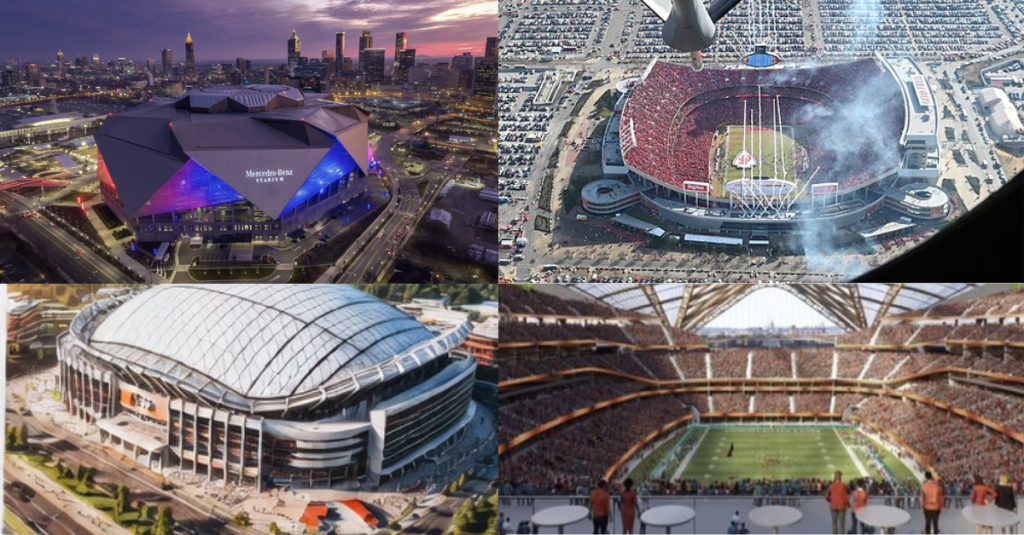
- Inside the Chiefs’ Push for a New Stadium Location
- The Actual Costs of the Cleveland Browns’ New Stadium Deal
- How the NBA Could Bring Teams to Seattle and Las Vegas
- How the Dodgers’ Ownership Built a Multi-Billion Dollar Sports Empire
Credits
Written by: Aidan Anderson
Research and Analysis: Apostle Sports Media LLC
Sources: Forbes, ESPN, Washington Post, Bloomberg, Sports Business Journal, NFL.com, Front Office Sports, APSM Proprietary Analysis.
Featured Image: Public Domain / Wiki Commons
Disclaimer: This article contains general financial information for educational purposes and does not constitute as professional advice.
“Be on your guard; stand firm in the faith; be courageous; be strong.”
– Corinthians 16:13


















 Apostle Sports Media