
Professional sports leagues are corporations driven by enterprise growth, cash-flow optimization, and maximizing bottom-line valuation. For over two decades, the NBA maintained a static 30-team ecosystem, last expanding when the Charlotte Bobcats joined the league in 2004.
That era of roster stability has officially come to a close. With the NBA’s Board of Governors voting to formally explore bids and applicants for expansion exclusively in Seattle and Las Vegas, the league is moving toward its most lucrative structural evolution in modern sports history.
This is not merely about satisfying nostalgic fans or placing teams in enthusiastic markets; it is an exercise in astronomical capital generation. With prospective ownership groups facing historic expansion fees projected in the $7 billion to $10 billion range per franchise, dissecting the underlying economics reveals why the NBA is pulling the trigger on these two specific metropolitan hubs right now.
The Multi-Billion-Dollar Math: Why Owners Are Voting Yes
To understand why the NBA is pushing toward a 32-team league, you have to follow the cash flow. The decision to explore expansion is directly fueled by soaring franchise valuations and the league’s massive, long-term media rights agreements.
The Media Rights Catalyst
Propelled by an 11-year domestic media rights deal valued at roughly $76 billion across digital streaming and traditional broadcast partners, average NBA franchise valuations have skyrocketed past $5.5 billion, with marquee properties like the Los Angeles Lakers commanding benchmark valuations near $10 billion.
The Expansion Fee Windfall
Charging incoming ownership groups an estimated $7 billion to $10 billion per franchise means current owners stand to split a staggering $20 billion pool in expansion fees. That translates to an immediate payout of over $500 million straight into the pockets of every existing team owner, providing more than enough financial incentive to offset the dilution of sharing future broadcast revenues 32 ways.
Seattle’s Rebirth: Tech Wealth and Modern Infrastructure
For Seattle, an expansion franchise represents a long-awaited reclamation. Ever since the SuperSonics were forcibly relocated to Oklahoma City in 2008 due to municipal gridlock and ownership disputes over arena financing, the Pacific Northwest has hungered for elite professional basketball. From a modern macroeconomic standpoint, Seattle is unrecognizable compared to the mid-2000s:
Tech-Driven Household Income
Fueled by Silicon Valley juggernauts, local powerhouses like Amazon and Microsoft, and an expanding regional economy, the Seattle metropolitan area boasts an average individual gross income hovering over six figures (~$105,000), making it one of the most affluent consumer bases in North America. The state of Washington is also on par with Nevada in the sense that they are two of just nine states in the U.S. to not levy an income tax.
With one of the highest average incomes in the country, one of the best state-tax situations on the west coast and a population increasing to that of a larger market metro, Seattle is more than ready to host an NBA franchise and their roster of wealthy players and team employees.
More info on state-by-state athlete taxes –> State Athlete Tax Glossary
Modern Arena Ready
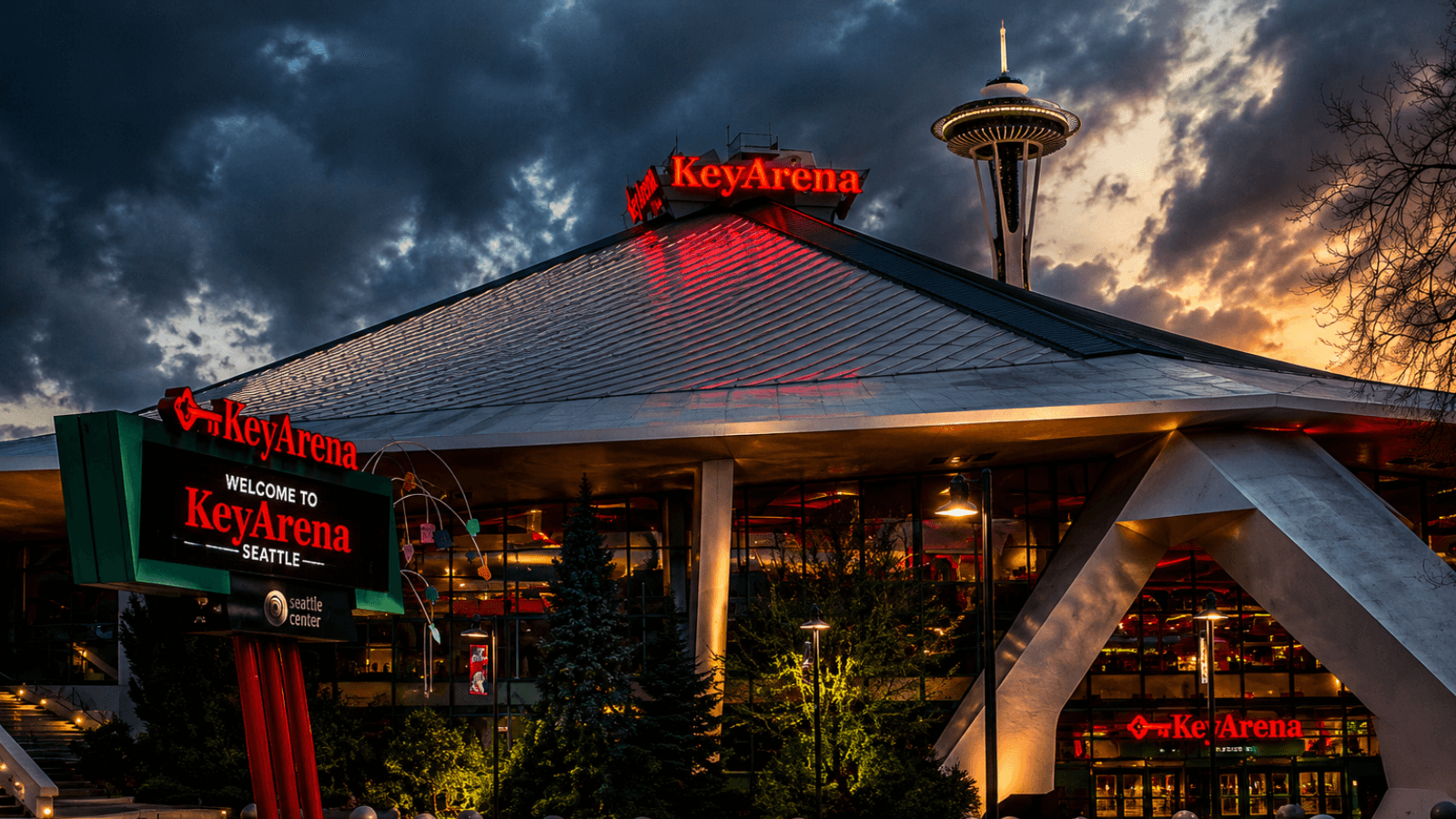
Unlike the defunct Key Arena of the past, Seattle already houses Climate Pledge Arena, a state-of-the-art, multi-billion-dollar venue capable of hosting NBA competition on day one.
Backed by potential ownership integration from the NHL’s Seattle Kraken group, the city possesses the institutional infrastructure required to absorb a top-tier franchise immediately.
Las Vegas: Tourism, Zero-Tax Mechanics, and Entertainment Scale
Las Vegas has undergone one of the most dramatic paradigm shifts in professional sports history. Once blacklisted by major sports leagues due to gambling regulations, Sin City has proved its viability as a premier sports capital through the massive success of the NHL’s Vegas Golden Knights, the NFL’s Las Vegas Raiders, and upcoming relocations.
The Zero-Tax Advantage
Nevada and Washington are two of a handful of U.S. states with no state income tax. For players, coaches, and executives, this structural advantage lets high-earning professionals save an estimated 4% to 12% more of their annual income compared to peers playing in high-tax states like California or New York, a massive recruiting perk for future free agents.
The Tourism and Gaming Nexus
Vegas operates as a 365-day consumer engine. Millions of tourists flood the strip year-round, creating unmatched ticket sales, hospitality, merchandising, and corporate sponsorship yields that traditional regional markets simply cannot replicate. T-Mobile Arena provides an elite, NBA-ready venue right in the heart of the entertainment district.
📊 Seattle vs. Las Vegas: Expansion Market Breakdown
| Economic & Market Metric | Seattle Expansion Profile | Las Vegas Expansion Profile |
|---|---|---|
| U.S. Media Market Rank | Top-15 Major Metropolitan Hub | High-Growth Tourism & Regional Hub |
| Primary Economic Engine | Tech giants (Amazon, Microsoft), high income | Global tourism, hospitality, entertainment |
| Tax Environment | Standard state income tax structure | Zero state income tax (4%–12% player savings) |
| Arena Infrastructure | Climate Pledge Arena (Modernized & NBA-Ready) | T-Mobile Arena (entertainment hub) |
| Projected Expansion Bidding | ~$7 Billion to $10 Billion | ~$7 Billion to $10 Billion |
The Minnesota Question: Who Moves East?
Here is where expansion creates an immediate geographical and logistical puzzle for the league. If Seattle and Las Vegas both enter the fold, they will logically land in the Western Conference, bloating it to 17 teams while the East sits at 15. To restore a balanced 16-team structure per conference, the NBA must shift one existing Western franchise across the map.
While names like Memphis and New Orleans have surfaced in league chatter due to their relative eastern positions in the current West, league insiders and industry reports have pointed to the Minnesota Timberwolves as the clear leading candidate.
The Geographic Argument
Although Minnesota is currently assigned to the Northwest Division, its travel footprint is notoriously isolated. Its closest conference neighbor, Denver, is roughly 680 miles away, while major Eastern Conference hubs like Milwaukee, Chicago, Detroit, and Cleveland sit comfortably within that same general range.
The Financial & Competitive Shift
Shifting the Anthony Edwards and LaMelo Ball-led Timberwolves to the East wouldn’t just solve a logistical headache; it would completely alter the team’s operational economics.
A cleaner regional travel schedule slashes charter flight inefficiencies, builds organic rivalries, and alters postseason qualification paths away from the top-heavy gauntlet of the modern West.
Realignment isn’t just a scheduling footnote, it’s a fundamental structural adjustment that reshapes travel budgets, regional broadcast windows, and ticket demand for the organization.
Bottom Line
The NBA’s push toward expansion into Seattle and Las Vegas proves that modern professional sports leagues operate strictly as multi-billion-dollar enterprise corporations. By leveraging surging franchise valuations and a newly modernized media rights landscape, current owners are positioning themselves to extract up to $20 billion in expansion fees.
For young athletes, investors, and finance enthusiasts, the lesson is clear: long-term asset growth, tax optimization, and institutional scalability dictate the entire sports economy.
When the NBA officially grows to 32 teams, it will not just change the competitive landscape of basketball, it will reset the financial baseline for global sports valuations for decades to come.
NBA Expansion FAQs
Why is the NBA expanding to Seattle and Las Vegas?
The NBA is exploring expansion to Seattle and Las Gage due to their massive economic growth, modern arena infrastructure, and ability to generate immense revenue. Seattle represents a booming tech-driven market reclaiming its historic basketball roots, while Las Vegas offers a zero-income-tax environment, massive year-round tourism, and proven sports entertainment success.
How much will new NBA expansion franchises cost?
Current projections from league sources indicate that prospective ownership groups will be required to pay an unprecedented expansion fee in the $7 billion to $10 billion range per franchise.
How do current NBA team owners benefit from expansion?
By charging incoming expansion groups up to $10 billion per team, the league will generate a massive financial windfall, splitting up to $20 billion in total expansion fees evenly among the existing 30 team owners, resulting in payouts exceeding $500 million per franchise.
What financial advantage do WA/NV offer NBA players?
Nevada is one of a select few U.S. states with zero state income tax. This allows players, coaches, and executives signing with a Las Vegas franchise to retain an extra 4% to 12% of their annual earnings compared to teams based in high-tax states.
Next Reads
- NBA Salary Cap 2026-27 Explained: The Aprons, the Numbers, and What They Actually Mean
- Top 5 Biggest Sponsorship Investments For The 2026 NBA Finals
- How Much the NBA Actually Made From the 2025 Finals
- Shai Gilgeous-Alexander’s $285M Contract: What the NBA’s Highest-Paid Player Actually Pockets
- Luka Dončić Lost $345 Million From Lakers Trade
Disclaimer: This article contains general financial information for educational purposes and does not constitute professional advice. APSM estimates are derived from publicly available information, tax assumptions, finance modeling, and industry-standard fee structures. Actual earnings may vary based on residency elections, private contract provisions, image/media rights agreements, bonuses, and tax filings.