
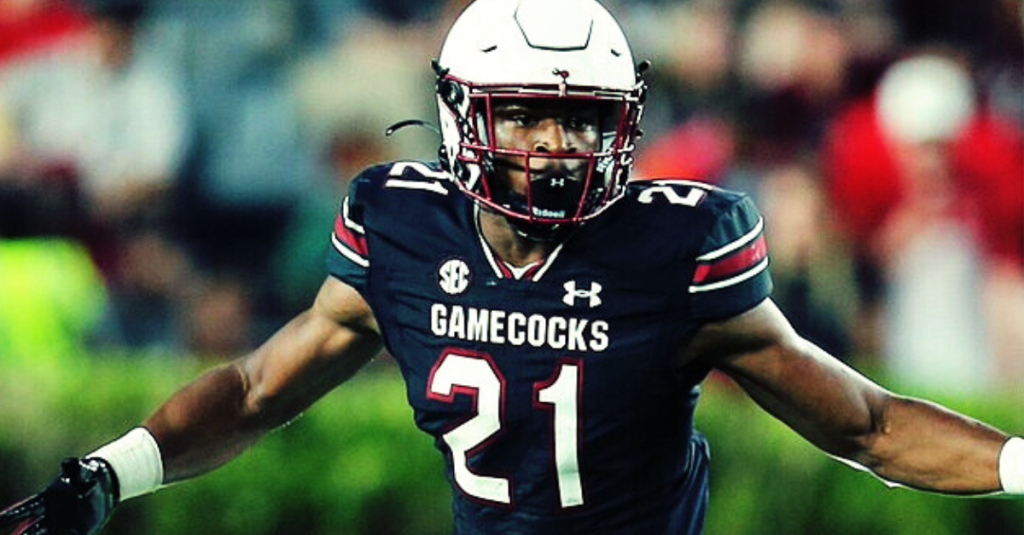
Nick Emmanwori entered the NFL after being selected in the 2nd-round of the 2025 NFL Draft (35th overall).
The Seahawks rookie comes in carrying more financial momentum than most other players drafted outside the first round.
At 6-foot-3 and 220 pounds, Emmanwori showed elite tangibility at the NFL Combine, including a 4.38-second 40-yard dash, 43-inch vertical, and 11-foot-6 broad jump that transitioned his initial scouting narrative and landed him among one of the most athletic incoming safeties in recent memory.
Second-round contracts rarely make national headlines, but they quietly rewrite positional economics and signal how modern NFL finance is evolving, especially when a unique talent bucks the positional leverage script. Nick Emmanwori’s rookie deal with the Seattle Seahawks is exactly that kind of benchmark based on how it’s structured, its guarantees, and the deal being calibrated to both Seattle’s cap window and the 2025 trend toward early guarantees for high-value second-rounders.
His on-field production matched the tools. Over three seasons at South Carolina, Emmanwori started 36 of 37 games, racking up 244 tackles, six interceptions, and two pick-sixes, earning unanimous first-team All-SEC and first-team All-America honors in 2024.
Early in his NFL career, he’s already making plays, earning a Rookie of the Week nod with nine tackles, multiple pass defenses, and a sack in a single game to key defensive snaps in Seattle’s NFC West run.
He is now a detrimental part of the Seahawks 2nd ranked defense headed into the NFL Playoffs Divisional against Seattle’s hated rivals, the San Francisco 49ers.
Seattle bought predictability. Emmanwori was paid in liquidity and financial peace of mind before he ever ran his first NFL route.
The result is a rookie contract that does more than pay a player, it sets the tone for early-career net worth planning, combining on-field upside with off-field financial scaffolding.
Contract Details
- Contract Value: $11,601,260
- Length: 4 years (2025–2028)
- Guaranteed Money: Fully guaranteed
- Signing Bonus: $5,077,280
- AAV: ~$2.9 million
- Incentives: None publicly reported
Headlines give gross figures that only tell one side of the story; front-loaded bonuses, cash delivery and guarantees tell the real one.
A $5.077 million signing bonus front-loads liquidity, giving Emmanwori immediate financial optionality.
Full guarantees remove early-career downside risk, making the contract valuable even if future market conditions shift.
For the Seahawks, the four-year window and predictable base progression keep cap volatility low while aligning pay with typical rookie development.
Estimated Base Salary Progression
- 2025: ~$840,000
- 2026: ~$1,367,000
- 2027: ~$1,894,000
- 2028: ~$2,422,000
This ascending structure follows the rookie wage scale and expected cap growth, keeping year-to-year cap hits manageable while preserving roster flexibility.
Emmanwori’s Residency & Real Estate
- Home State: South Carolina
- Primary Residence as a Seahawk: Washington (no state income tax)
- Primary Residence Value: Not publicly disclosed; rookies typically rent
Residency can quietly become one of the most important levers for rookie earnings. For Nick Emmanwori, establishing his primary residence in Washington offers a significant financial advantage, largely because the state has no state income tax.
Over the four-year rookie contract, this choice translates into an estimated take-home of ~$6.2–7.0 million, a substantial baseline for a second-round safety.
If Emmanwori instead maintained residency in his home state of South Carolina, where state income tax sits around 5%, the picture changes noticeably. His estimated net take-home would drop to approximately $5.9–6.6 million over the same period, ~$300K lower than the money he would pocket in Washington.
This difference may not make headlines, but for a rookie building early financial security, it is meaningful enough to cover a car, housing, or seed an investment portfolio. The contrast becomes even more pronounced when looking at high-tax states like California, with a top marginal rate of 13.3%.
Had Emmanwori resided there, his estimated net take-home would fall to around $5.4–6.0 million, $600–650K lower than the Washington baseline. That’s the difference between comfortable financial flexibility and a contract that feels structurally tighter, even though the headline numbers remain the same.
For rookies, housing itself is rarely the largest cost early in their career; many choose to rent while navigating their first professional moves.
The true multiplier comes from state taxation, or the lack thereof. Away-game jock taxes still apply, meaning playing in states like California, New York, or Pennsylvania will eat another portion of earnings.
The cumulative impact of having a no-tax home base, combined with front-loaded guarantees and a signing bonus, gives Emmanwori the kind of immediate liquidity and optionality that many rookies in high-tax states can only dream of.
In short, residency isn’t just about comfort or geography, it’s a financial strategy. For the rookie sensation, living in Washington not only reduces his tax drag, but the state also helps him preserve capital that can then be invested, saved, or leveraged to build wealth before even stepping on the field.
In the modern rookie economics landscape, these decisions can move hundreds of thousands over a single rookie deal, setting the foundation for both long-term financial security and career flexibility.
Taxes, Fees & Professional Expenses
NFL earnings don’t translate cleanly to bank accounts. Before a rookie ever sees their first direct deposit, federal taxes, agent fees, jock taxes, and professional expenses begin carving off meaningful percentages of gross income.
Emmanwori will face a federal marginal rate near ~37% on large portions of both salary and bonuses, standard for professional athletes earning in high brackets.
Washington’s lack of state income tax is a major advantage, but it doesn’t fully eliminate state exposure.
The NFL’s “jock tax” system allocates income by game location, meaning that away games played in states like California, Pennsylvania, or New York still create non-resident tax liabilities. Depending on Seattle’s schedule design, this typically amounts to ~2–5% of gross income over the course of a season.
Agent fees for rookie deals tend to fall around ~3%, and while that number seems small, it becomes noticeable when layered on top of federal withholding and jock tax exposure.
Add in standard professional expenses, FICA/Medicare contributions, NFLPA dues, financial planning, housing, transportation, and early career lifestyle costs and deductions stack quickly.
Estimated total deductions land between 42–46% of gross, which is consistent with the modern rookie profile for players without state income tax exposure at home.
For players in California or New York, that number climbs even higher. Washington’s structure doesn’t erase away-game obligations, but it removes the largest year-round drag on net take-home and compounds in the player’s favor over the four-year rookie window.

Estimated Net Contract Value
Once taxes, fees, and expenses are accounted for, the headline $11.6 million figure reshapes into a more realistic net outcome.
Emmanwori’s deal is projected to return approximately $6.2–$7.0 million in net take-home over four years, driven largely by the front-loaded liquidity of the $5,077,000 signing bonus and the absence of a home state income tax.
To put this in perspective, a similarly slotted rookie in California or New York would likely see 7–13% lower take-home, purely from state-level taxation.
That delta equates to hundreds of thousands of dollars, capital that for a rookie can either disappear into tax drag or become seed money for investments, real estate, or early financial compounding.
In athlete finance, the spread between gross and net isn’t just math, it’s leverage. Emmanwori exits his rookie signing with more optionality than most second-round safeties entering the league.
Financial Outcome
For a rookie in any league, certainty is currency. Full guarantees and immediate liquidity allow Emmanwori to establish financial footing before the uncertainty of the NFL begins, not after.
Safety is a position where second-contract outcomes range widely, so early guarantees function as insurance against variance and volatility. The signing bonus alone gives him the ability to invest, pay down debt, or build a multi-year safety net before performance incentives, role clarity, or coaching decisions enter the picture.
For Seattle, the Seahawks organization secures a cost-controlled contributor with a clean cap footprint and no void-year gymnastics. Predictability matters when a roster is balancing veterans, rookie classes, and looming extensions, especially in a window where the Seahawks are reshaping defensive identity under a new coaching regime.
For the market, the deal is part of a broader 2025 draft trend: franchises are increasingly trading theoretical upside for guaranteed structure at high-value second-round slots.
The move toward early guarantees for versatile players isn’t accidental, it reflects how teams price certainty relative to positional scarcity and cap efficiency. The result is a small but meaningful shift in rookie economics, and Emmanwori’s contract is a clear data point in that evolution.
Nick Emmanwori’s rookie contract is a textbook modern second-round deal: guarantees first, escalators second; liquidity up front, and predictability for the salary cap.
It’s a win-win, as the rookie gains security, the team gains a clean cap fit on a undervalued contract (as of the end of the 2025-26 season), and the deal reinforces a broader market shift toward early guarantees for rookies who combine draft capital with positional versatility.
For anyone tracking how rookie economics are evolving, this is a clear data point: certainty is currency, and residency choices alone can move hundreds of thousands in net take-home, even before investments, bonuses, sponsors and endorsements or other off-the-field earnings are taken into account.
Graphic
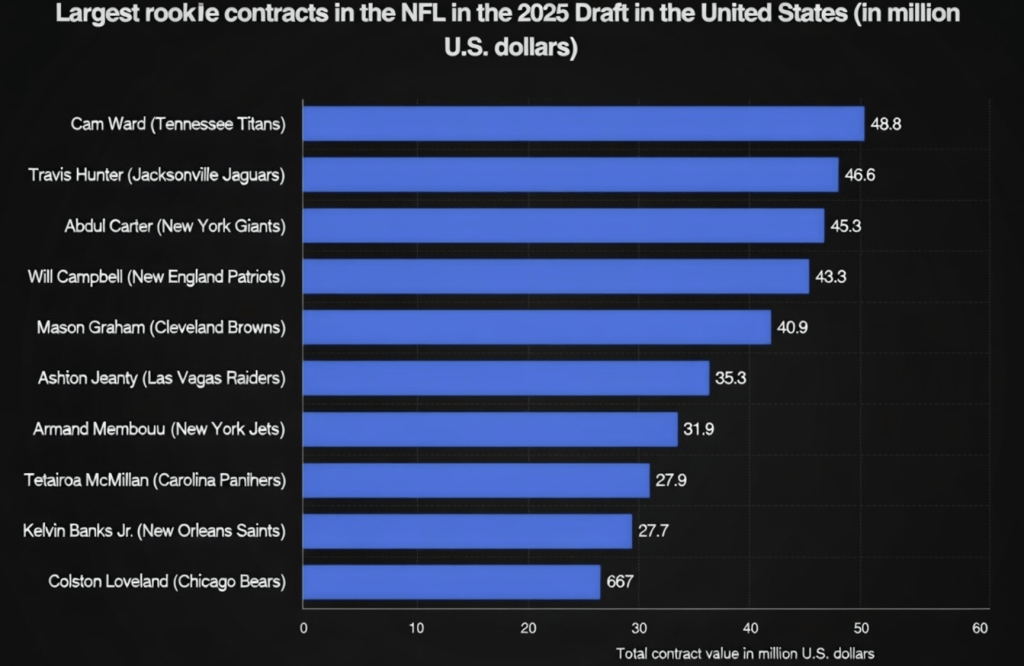
Want to Understand How Athletes Actually Lose it All?
The APSM “7 Ways Athletes Go Broke” Report Includes:
- The hidden behavioral traps behind financial collapse
- Spending patterns that drain wealth faster than income can replace it
- High-risk advisors, entourages and predatory industries
- Divorce, taxes, lifestyle creep & fame + pressure breakdowns
- Real athlete case studies you can learn from
- Future-proof frameworks for avoiding the exact same mistakes
If you want real financial literacy, the kind that protects you, not just informs you, this is the blueprint.
Next Reads
- Luther Burden III’s Fully Guaranteed NFL Rookie Contract
- Cam Ward’s Rookie Contract with the Tennessee Titans
- T.J. Watt’s 3-Year, $123 Million Contract Extension
- The Largest NFL Contracts From 2015-2025
- How Sam Darnold Can Still Reach $100 Million in NFL Contract Earnings
Credits
Written By: Aidan Anderson
Research & Analysis: Apostle Sports Media LLC
Sources: ESPN, Spotrac, OTC, Forbes, APSM proprietary analysis
Featured Image: Public Domain / Wiki Commons
Disclaimer: This article contains general financial information for educational purposes and does not constitute professional advice.
Produce fruit in keeping with repentance.
– Matthew 3:8
























 Apostle Sports Media