What Is Base Salary
Base salary is the fixed annual compensation a team contractually owes a player for a given season, separate from bonuses, incentives, and endorsement or sponsorship income.
It’s the number most often quoted in headlines, and also the number most likely to mislead a casual fan, because in several major USA sports leagues, the base salary printed in a contract isn’t necessarily guaranteed money.
A $20 million base salary in one league can mean something entirely different from a $20 million base salary in another, depending on whether that figure is fully guaranteed at signing , or not guaranteed in any meaningful sense until specific roster milestones pass. Understanding which version applies to a given contract is the difference between an accurate read on a player’s financial security and a significant overestimate of it.
The athletes most exposed to a misunderstanding here aren’t usually the players themselves, who generally understand their own deal structure intimately. It’s fans, media, and sometimes even financial planning conversations that treat a quoted base salary figure as fully secured net income when, depending on the league, it may not be.
How Base Salary Actually Works
Base salary sits at the foundation of a player’s contract, but how “real” that number is depends heavily on league-specific guarantee rules:
- Fully guaranteed base salary is owed to the player regardless of injury, performance, or even being released from the roster
- Non-guaranteed base salary isn’t actually owed at all until specific contractual or roster-status milestones are met, most commonly tied to a specific date or roster cut deadline
- Base salary differs from total contract value, which often includes signing bonuses, roster bonuses, incentives, and other payment types layered on top of the base number
This guarantee structure is precisely why a contract’s “total value” and a player’s actual guaranteed earnings can differ by tens of millions of dollars, and why league context matters enormously when evaluating what a salary figure represents.
How Base Salary Guarantee Structures Differ Between Leagues
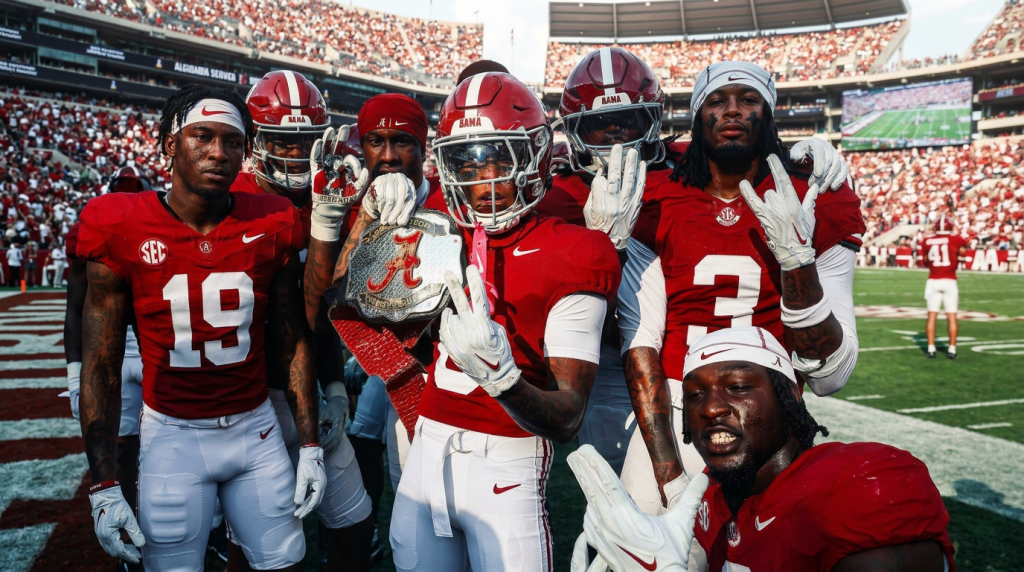
🎓 NCAA / NIL
Following the historic House v. NCAA settlement, college sports entered a structured revenue-sharing model. While student-athletes are not universally classified as traditional league employees, direct payouts from an athletic department’s budget effectively function as a collegiate “base salary.”
However, unlike professional leagues where player pay is heavily protected, this institutional compensation comes with a massive structural asterisk: it is treated as Form 1099, independent contractor income, not W-2 employee wages.
Because schools do not automatically withhold taxes from these distributions, athletes are entirely responsible for their own federal tax payments and state income tax appropriations, as well as an additional ~15.3% for self-employment taxes.
Furthermore, because these funds are tied directly to student status, they are completely contingent upon maintaining academic eligibility, adhering to team rules, and remaining with the program.
Example:
A star athlete is allocated a $250,000 direct revenue-sharing payout from their university for the academic year, issued via a Form 1099. If that athlete enters the transfer portal mid-season or fails to maintain their academic eligibility, the school can immediately halt any future distributions. Because it is reported as 1099 income, the athlete must independently manage quarterly estimated tax payments on that $250,000, as the university will not withhold a single dollar for taxes at the source.
🏈 NFL
NFL base salaries are the least guaranteed of the major U.S. leagues by default. Unless a contract specifically designates a portion of base salary as fully guaranteed at signing, base salary in future contract years is typically not guaranteed and can be voided entirely if a player is released before a specific date, often tied to the league’s annual roster cut deadlines.
Example:
A player signs a contract with a $15 million base salary in year three, but that amount isn’t designated as guaranteed. If the team releases the player before a specified date prior to that season, the team owes none of that $15 million, despite it being printed in the original contract.
🏀 NBA
NBA contracts are, by default, fully guaranteed unless a specific non-guaranteed designation is negotiated into the deal, which is comparatively rare relative to other leagues.
This makes NBA base salary figures generally far closer to actual guaranteed income than NFL figures of the same size.
Example:
A player with a $25 million base salary in the final year of a standard guaranteed contract is owed that full amount regardless of performance, injury, or even being traded mid-season, since the obligation follows the player’s contract rather than any specific team roster spot.
⚾ MLB
MLB contracts are also fully guaranteed by default in almost all standard circumstances, including injury, performance decline, or being designated for assignment, making MLB base salary among the most reliably “real” figures across major U.S. leagues. MLB does not have a salary cap, unlike other pro leagues, and negotiates contracts based on service-time, duty days and salary arbitration.
Example:
A player with a $30 million base salary who suffers a season-ending injury in April is still owed the full $30 million for that season, since the guarantee is tied to the contract itself rather than to active roster participation.
🏒 NHL
NHL base salaries are generally guaranteed against the team, similar to MLB and the NBA, though structural quirks like performance bonuses and salary cap recapture rules can complicate how a given year’s actual cash payout compares to the cap-accounting “salary” figure reported publicly.
Example:
A player’s reported $8 million annual cap hit may not match the actual cash base salary paid in a given season if the contract front-loads or back-loads payments differently than it structures the cap charge, a distinction that matters for the player’s real-time cash flow even though both numbers are fully guaranteed.
⚽ MLS / International Soccer
Soccer/Futbol contracts function differently still, with guaranteed compensation structured around base wages that are typically fully owed for the contract term, but with transfer fees, loan arrangements, and buyout clauses creating financial outcomes that can completely overshadow the base salary figure itself.
Example:
A young academy player’s modest guaranteed base salary can become financially secondary entirely once a pre-negotiated transfer clause triggers a payout to the selling club worth many multiples of the player’s actual annual salary.
Why Base Salary Structure Matters For Athletes To Know
The printed base salary number is only the starting point for understanding what an athlete is actually owed and when:
- Guarantee status varies enormously by league, and assuming non-guaranteed structure applies everywhere (or vice versa), leads to significant misreads of a player’s real financial security
- Total contract value headlines frequently include non-guaranteed years that may never be paid out
- Cap accounting figures (especially in the NHL and NFL) can differ from actual real-time cash payments to the player
- A lower fully-guaranteed contract can represent more real financial security than a larger contract with significant non-guaranteed components
- Understanding guarantee structure is essential before drawing any conclusion about an athlete’s actual net worth or financial position based on contract headlines alone
A player’s true financial security has never been accurately measured by the biggest number in a press release. It’s measured by how much of that number is actually, contractually guaranteed to arrive, regardless of what happens on the field.
Base Salary FAQs
Is base salary the same as total gross contract value?
No. Total contract value often includes signing bonuses, roster bonuses, incentives, and other payment types in addition to base salary. Base salary specifically refers to the fixed annual compensation tied to a given season.
Are NFL contracts less guaranteed than NBA or MLB contracts?
Generally, yes. NFL base salary is typically not guaranteed by default unless specifically negotiated as guaranteed at signing, while NBA and MLB contracts are fully guaranteed in almost all standard circumstances.
Can a team avoid paying a player’s base salary?
In leagues like the NFL, yes, if the salary isn’t specifically designated as guaranteed and the team releases the player before relevant roster deadlines. In the NBA and MLB, base salary is owed regardless of roster status under standard fully-guaranteed contract terms.
Why does an NHL player’s cap hit sometimes differ from their actual base salary payout?
Because cap accounting can spread a contract’s value differently than the actual year-by-year cash payments to the player, especially in front-loaded or back-loaded contract structures, even though the total guaranteed amount remains the same.
Does a bigger base salary always mean more financial security?
Not necessarily. A smaller, fully-guaranteed base salary can represent more actual financial security than a larger headline contract that includes significant non-guaranteed years that may never be paid in full.
Related Terms
Next Reads
Disclaimer: This article contains general financial information for educational purposes and does not constitute professional advice.