
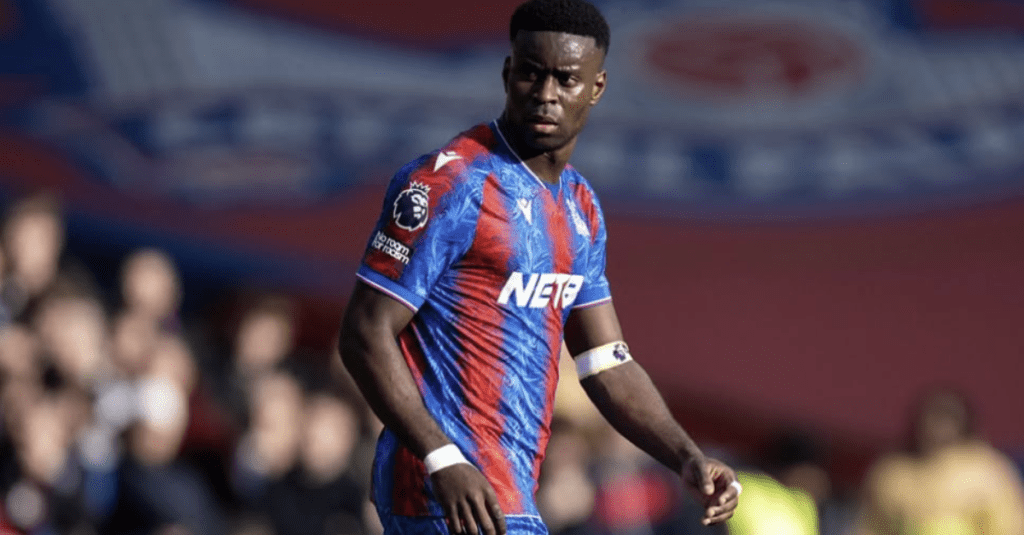
Few contract sagas in European football combine timing, leverage, economics, and market interest like the one unfolding around Marc Guéhi, the England international center-back whose current deal at Crystal Palace is running down and set to expire after the 2026 season.
At 25 years old, entering the athletic prime for elite defenders, Guéhi’s contract situation has become a defining financial and strategic story for both club and player alike.
Guéhi’s journey from Chelsea academy product to Palace captain and key Premier League defender has seen him make more than 160 appearances for the south London club, including anchoring the back line during Crystal Palace’s historic FA Cup triumph.
Now, he has reportedly informed Crystal Palace that he will not sign a contract extension, meaning he will leave on a free transfer when his contract expires on June 30, 2026 unless an earlier deal is struck.
That decision has nuanced ripple effects: it impacts transfer valuation, wage leverage, contract timing, and strategic planning for both Palace and his future/potential suitors.
In modern football economics, an asset with less than 12 months remaining on its contract begins to trade more like a unique transfer arbitrage opportunity than a traditional squad member and Guéhi’s situation encapsulates this.
Contract Details & Financials
- Current Club: Crystal Palace
- Contract Expiry: June 30, 2026
- Estimated 2025/26 Salary: ~£2,600,000 gross (≈ £50,000 per week)
- Contract Status: No extension agreed; running down final year
- Free Transfer Eligible: Yes (Summer 2026; able to sign pre-contract abroad from Jan. 2026)
According to salary data aggregators, Guéhi is earning around £2.6 million gross in his final season, about £50,000 per week, with the bulk of his contract tied up in base earnings rather than extravagant bonuses.
Relative to many elite Premier League starters, that places him modestly in the wage hierarchy, but his on-field impact and international pedigree outstrip his earnings level, a hallmark mismatch that free agency will help correct.
Guéhi joined Palace in July 2021 from Chelsea for a fee of ~£18 million on a five-year deal; that contract carried Palace’s valuation of his long-term potential, which has since been realized internationally.
Performance, Market Value & Leverage
As Palace captain and a mainstay in defense, Guéhi has played a pivotal role in stabilizing the club’s back line.
His value is reflected not only in his Premier League appearances but in England caps and leadership responsibilities, factors that elevate his market economic value independent of contract length.
Based on Market Valuations and reported interest, Guéhi’s current transfer/market value sits at ~€55 million (~£47M) as of late 2025, a figure that underscores the premium placed on center-back talent in elite European leagues.
Because Guéhi has declined to extend, he can sign a pre-contract with foreign clubs starting January 1, 2026, under FIFA rules, a major shift from traditional transfer economics.
Once that window opens, clubs in Spain, Germany, Italy, and France can approach him directly about future deals without a transfer fee, but Premier League clubs cannot do so until his contract expires.
This dynamic creates a strategic tension for Crystal Palace.
Sell in January 2026 to recoup a transfer fee (often less than peak valuation because of contract length), or hold him through the season and lose him on a free transfer in June.
That calculus has shaped negotiations with parties such as Liverpool, Manchester City, Barcelona, Real Madrid, and Bayern Munich, all of whom have been linked to him recently.
Residency & Tax Considerations
Guéhi’s earnings situation is shaped by English tax law and Premier League salary structure:
- Country: United Kingdom
- State/Region Tax: UK income tax applies (higher marginal brackets)
- Contract Location: London (no U.S.-style state tax, but UK income tax can be ~40%+ at top brackets)
- Domestic Match Jock Tax: Not applicable, taxed based on residency
As a UK resident, Guéhi’s gross salary faces UK income tax and National Insurance contributions, which can take a considerable chunk of gross earnings.
Unlike U.S. sports, there are no multi-state jock tax complications; however, top UK tax rates on footballers mean that net take-home can be 50% or more after all deductions when factoring in higher rate brackets, agent fees and professional expenses on large deals.
Because his current deal is comparatively modest by Premier League standards (~£2.6M gross), his net differential vs. gross is less extreme than it would be at the higher ends of the wage scale, but it remains a significant drain on actual take-home pay.
If Guéhi elects to join a club in a low-tax jurisdiction (e.g., Spain’s Beckham tax regime for foreign players under some conditions), his net takings, particularly around signing bonuses and image rights, could improve substantially compared with staying in the UK.
Taxes, Fees & Professional Expenses
Even as contracts expire, professional earnings are subject to:
- UK Income Tax: ~40%+ marginal on wages
- Agent/Rep Fees: ~5% standard on base + signing components
- Union/Professional Dues: FA/PL registration costs, pension contributions
- Financial Planning Costs: Wealth management, off-season expenses
For a player in the final year of a contract, standard professional expense drags still apply, though end-of-career contract negotiations often shift focus to signing-on fees and net-of-tax optimization, the monetary elements Guéhi will wield most as he enters negotiations for his next deal.
Estimated 2025 Net Contract Value
Taking tax and professional fees into account on his final year:
Estimated Net Take-Home:
~£1.3M – £1.5M
This reflects actual net earnings from the salary itself;
future signing bonuses or signing-on fees with a new club in 2026 would be separate income streams and could dramatically increase net earnings beyond this range.
Financial Outcome
- For the player: Guéhi positioned himself to maximize future earnings by preserving free agency leverage, guaranteeing a signing-on premium and bargaining power that far exceeds remaining salary.
- For the club: Crystal Palace must balance sporting competitiveness with economic pragmatism, ideally monetizing Guéhi’s transfer before June while preserving defensive continuity this season.
- For the market: This scenario underscores how Premier League contract structures shift value over time, nearing free agency, transfer fee economics degrade while player wage/human capital leverage increases, creating strategic negotiation windows in January and summer.
Guéhi’s situation exemplifies the economic asymmetry between club and player when contracts enter their final year.
Marc Guéhi’s expiring contract is a classic case study in modern football economics.
Controlling contract earnings early, strategic timing/waiting, rising market value, and then eventually free-agent leverage.
Crystal Palace and Guéhi are engaged in a chess match of timing and valuation where every month and every appearance affects negotiation power, potential transfer fees, and future net earnings.
For anyone tracking athlete contract dynamics in Europe’s top leagues, Guéhi’s final contract year offers a masterclass in how contract expiry transforms a player from a club asset into a free-market investment and why timing, tax, and strategic negotiation matter just as much as game checks and annual wages.
Next Reads
- Cavan Sullivan Philadelphia Union Homegrown MLS Contract: Taxes, Residency & Net Income Explained
- Why U.S. Investors are Buying European Soccer Clubs
- Largest Contracts in Pro Sports History: Top 7 All Time
- Private Jets For Athletes: Flex, Asset, or Liability?
- Nike’s Tariff Problem: How U.S. Trade Policy Reshaped the Swoosh’s Margins, Endorsements, and Global Strategy
Credits
Written By: Aidan Anderson
Research & Analysis: Apostle Sports Media LLC
Sources: Capology, Transfer Market Data, APSM proprietary analysis
Featured Image: Public Domain / Instagram
Disclaimer: This article contains general financial information for educational purposes and does not constitute professional advice.


























 Apostle Sports Media