
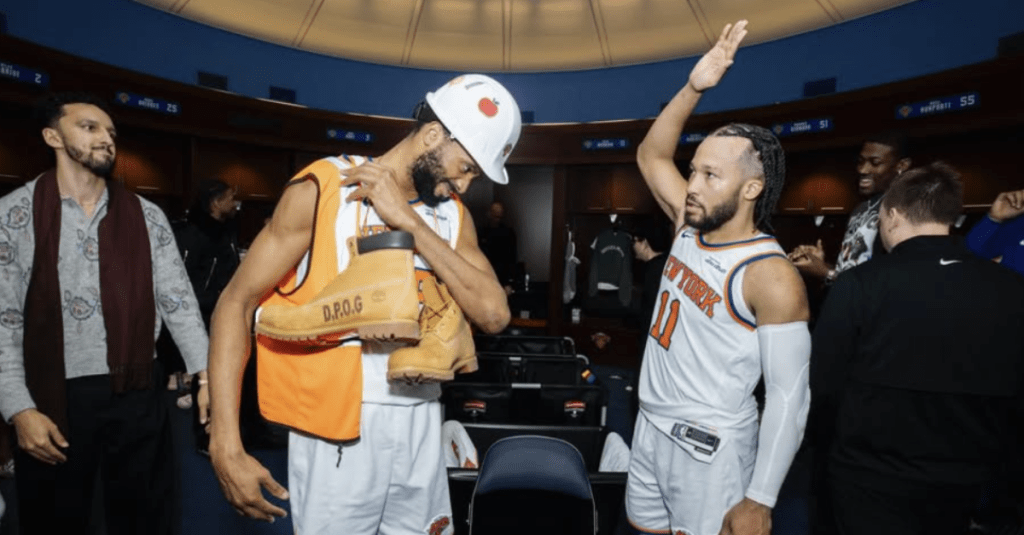
For a guard drafted in the second round out of Villanova, Jalen Brunson’s rise to being the New York Kicks franchise cornerstone player shows a masterclass in performance‑to‑leverage economics.
Brunson started as a role player with the Mavericks, blossoming into an All‑Star in Dallas after Luka was out with injuries and Brunson became the #1 option.
In the 2022 free agency window, he signed with New York, becoming the centerfold for the Knicks rebuild under Coach Thibs.
Brunson later agreed to a four‑year, $156.5 million extension that began at the start of this season.
What makes this new deal noteworthy isn’t just the dollar figure and the gross headline amount, it’s how the contract was structured and why.
Brunson willingly signed for significantly less than he could have commanded next offseason (potentially ~$269 million over five years), prioritizing roster flexibility for a Knicks core built to compete now and into the late 2020s.
Brunson’s contract bridges a unique financial calculus in today’s NBA:
player earning security vs. team competitiveness, salary cap optimization vs. short-term quick funds, and legacy building vs. pure market extraction.
Contract Details
- Team: New York Knicks
- Contract Type: Veteran Extension
- Term: 4 years (2025–26 to 2028–29)
- Total Value: $156,500,000 (fully guaranteed)
- Average Annual Value (AAV): ~$39,137,000
- Player Option: Final year (2028–29)
Brunson’s Knicks extension is fully guaranteed and begins in 2025–26.
The first season, at ~$34.94 million represents a meaningful pay bump from his 2024–25 base salary of ~$24.96 million and firmly places him among the highest‑paid guards in the league.
This structure also includes a player option in the final year, giving Brunson control over timing and leverage ahead of free agency as he enters his 30s.
A rare strategic feature for stars who build value early and aim to maximize future earnings.
Salary Timeline & Cash Delivery
- 2025–26: ~$34,944,001
- 2026–27: ~$37,739,521
- 2027–28: ~$40,535,041
- 2028–29: ~$43,330,561 (player option)
This ascending pay schedule reflects both productivity reward and market positioning within the NBA’s max salary framework.
Each year brings a meaningful jump, designed to align with Brunson’s prime competitive window while preserving broader Knicks cap flexibility.
On‑Court Value & Market Context
Brunson’s extension came on the heels of his most efficient and highest‑usage seasons, averaging elite scoring, playmaking, and leadership, including a fifth‑place MVP finish and two All‑NBA selections since joining New York.
From a valuation standpoint, his contract is considered by many analysts as one of the best value deals in the NBA, especially outside the very top tier of superstars.
The Knicks locked in a bona‑fide All‑NBA guard at below the theoretical max he could command.
By taking this deal, Brunson enabled New York to retain mobility to sign other core pieces (like Mikal Bridges and OG Anunoby), without breaching the league’s second salary apron, a significant operational lever for roster construction.
Endorsements & Ancillary Income
Brunson’s income stream extends well beyond his Knicks contract.
As one of the NBA’s most marketable stars, especially in the New York market, he has developed a diverse endorsement portfolio that includes:
- Nike
- American Express
- Dollar Shave Club
- Hecho Tequila Soda
- MSI Computers
- Faherty Brand
- DoorDash
- BodyArmor
- Pedialyte
- Oura Ring
- Delta Airlines
- Bose Sound
These deals operate as guaranteed revenue streams that cushion his earnings profile against performance variance and expand his financial footprint beyond basketball.
Intersectional endorsements like these also elevate his public profile and offer non‑salary compensation avenues that traditional team contracts don’t capture.
Residency & Tax Strategy
NBA players pay a significant portion of their income in taxes and a Knicks player like Brunson must navigate:
- Federal tax: ~37% top marginal bracket
- State tax: New York and New Jersey both levy income tax, Knicks home games generate income taxed by New York, and if Brunson resides in New Jersey (common for Knicks players), he also owes New Jersey income tax.
- Jock tax: NBA players owe income tax in every state where they play home games (the so‑called “jock tax”), compounding the complexity and drag on net take‑home.
Industry data suggests that after federal, state/local, jock taxes, agent fees, and typical professional and other business related expenses, NBA stars can lose 40–50% of their gross salary before net take‑home.
This makes tax planning a crucial feature of a top‑earner’s strategy, including the selection of their primary residence location and use of financial vehicles to maximize retained earnings.
Estimated Net Contract Value
To render Brunson’s contract in net take‑home terms, we synthesize salary, tax obligations, and typical deduction structures:
Gross Contract Value: $156,500,000
Estimated Deductions:
- Federal tax: ~37%
- State/local/jock taxes: ~8–12% (NY/NJ, etc.)
- Agent/rep fees: ~3%
- Professional expenses/lifestyle: ~2–3%
Estimated Net Take‑Home:
~$80–$88 million
While individual results vary based on residency and financial planning structures, this range reflects realistic net after deductions, the capital Brunson can actually retain from his Knicks deal.
Added endorsement income (potentially $10+ million annually) and appearance revenues significantly elevate total net intake, pushing his real earnings profile well north of his contract alone.
Financial Outcome
- For the player: Brunson secured long‑term financial security during his prime, capped by a player option that preserves leverage.
- For the team: The Knicks locked in an elite two‑way guard at below his theoretical max, preserving roster building flexibility under the NBA’s complex cap system.
- For the market: Brunson’s deal underscores the evolving calculus top stars make between maximizing immediate dollars vs. optimizing team context, competitive window, and future resale value.
This extension is an instructive case in modern NBA finance, where peak earning potential must be balanced with health, age curve, team structure, and legacy ambitions.
Jalen Brunson’s four‑year, $156.5 million extension with the Knicks isn’t just a contract, it’s a strategic financial lever.
By anchoring his prime earning window with guaranteed dollars, enhancing his endorsement market, and embracing team flexibility over immediate max extraction.
Brunson and his camp crafted a deal tailored for career earning maximization in a market where revenue, exposure, taxes, and legacy interact in complex ways.
In the NBA ecosystem, where salary cap rules and tax structures matter as much as scoring averages, this contract serves as a masterclass in player economic strategy, showing that the real value of a deal isn’t just in headline millions, but in timing, leverage, and net outcomes.
Next Reads
- Paolo Banchero’s $239 Million Contract Extension
- Ace Bailey’s NBA Draft Fall Cost Him $9 Million
- Trae Young Trade to Wizards Salary Implications, Cap Impact & Long-Term Financial Outlook
- Cooper Flagg Could Earn Over $1 Billion in Future NBA Contracts
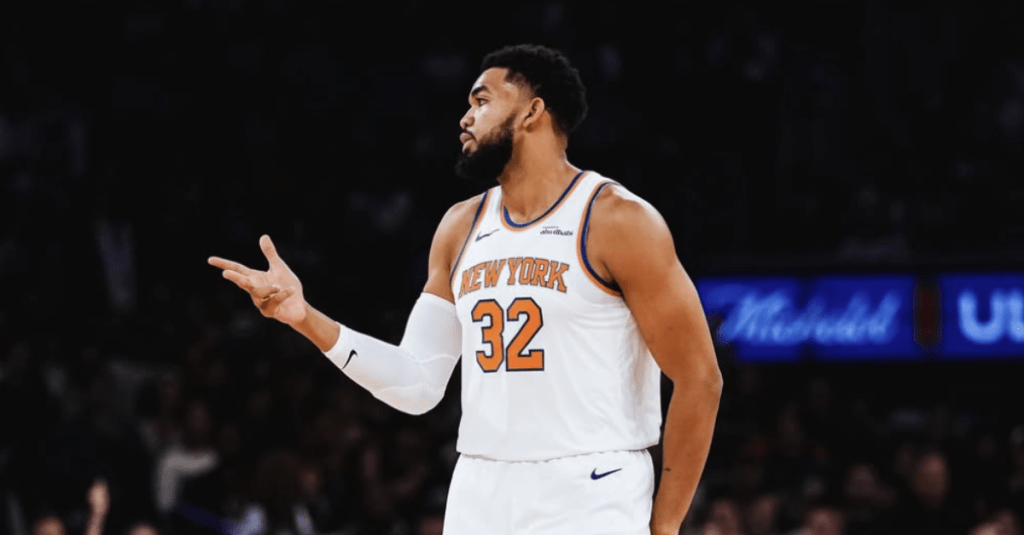
- KAT on the Trade Block: Financial Implications if the Knicks Trade Karl Anthony-Towns Out of New York
Credits
Written By: Aidan Anderson
Research & Analysis: Apostle Sports Media LLC
Sources: Spotrac, SportsKeeda, NBA.com, AthleteAgent, public tax sources (.gov/IRS/SEC), APSM proprietary analysis
Featured Image: Public Domain / Wiki Commons
Disclaimer: This article contains general financial information for educational purposes and does not constitute professional advice.















 Apostle Sports Media