A championship boxing event is not merely an athletic contest, it is an event-based financial ecosystem structured to maximize variable consumer spending. When a marquee event like Mayweather vs. Pacquiao or Canelo vs. Crawford generates nine figures in gross revenue, it operates as a high-margin, short-duration enterprise.
However, unlike corporate sports leagues with fixed revenue-sharing models, professional boxing operates on a fragmented, contract-by-contract basis. Every dollar generated across digital distribution, live ticket gates, host-city subsidies, and commercial sponsorships flows through a complex waterfall structure before reaching promoters and athletes.
Here is the wall-to-wall financial breakdown of how pay-per-view boxing events generate revenue, how the distribution waterfall splits the gross receipts, and how streaming platforms are disrupting combat sports capital structures with up-front capital, for long-term rights.
Primary Revenue Pillars of a Championship Fight
A major fight card creates capital across multiple distinct business verticals.
1. Pay-Per-View Receipts (The Variable Engine)
- Retail Pricing Architecture: Domestic PPV prices range from $79.99 to $89.99 for elite cards, generating dynamic variable revenue based on total buy-rate volume.
- Volume Scalability: Unlike physical venues constrained by seating capacity, digital PPV buys scale with minimal distribution costs.
- Buy-Rate Benchmarks: Tier-1 events threshold at 500,000 buys (~$40M gross PPV), while historic mega-fights surpass 1.5 million to 4.0+ million buys ($100M+ gross domestic PPV).
2. Live Gate Yield & Host Destination Site Fees
Dynamic Box Office Yields
Iconic venues like MGM Grand Garden Arena, T-Mobile Arena, and Madison Square Garden utilize dynamic ticket pricing to optimize primary seat yields, generating between $10 million and $25 million in gate receipts.
Host Site Subsidies
Municipal entities and sovereign funds (e.g., General Entertainment Authority of Saudi Arabia via Riyadh Season) pay substantial upfront site fees ranging from $20 million to $50 million+ to host high-profile bouts, guaranteeing revenue prior to ticket sales.
3. Commercial Sponsorships & International Rights
- Ring Canvas & Corner Branding: Commercial sponsors pay premium integration fees for ring apron logos, center-canvas real estate, and fighter apparel placements.
- International Broadcast Licensing: Global rights are sold territorial-by-territory to regional networks (e.g., Sky Sports, TNT Sports), contributing guaranteed upfront licensing capital to the event ledger.
The Net Cascade: How Fight Revenue Is Split
The transition from gross event receipts to net promoter profit follows a strict contractual waterfall.
The Cable/Platform Distribution Cut (30% to 50%)
Before any promoter, fighter, or trainer receives a payout, the distribution infrastructure claims its fee:
- Traditional MSOs (Cable/Satellite): Operators like Comcast, DirecTV, and Spectrum traditionally extract 30% to 50% of gross PPV receipts off the top as a carriage fee.
- Digital Streaming Platforms: OTT distribution via app stores (Apple, Google) or streaming infrastructure retains 15% to 30% in processing and platform fees.
Sanctioning Fees & Regulatory Expenses
Alphabet Bodies Tax
The four major sanctioning organizations (WBC, WBA, IBF, WBO) each levy a 3% fee on the champion’s and challenger’s purses for title bouts, capped at specified dollar thresholds.
Athletic Commission Withholdings
State athletic commissions (such as NSAC in Nevada) extract medical compliance fees, drug testing assessments, and local event taxation directly from gross gate and purse figures.
Production & Marketing Overhead
- Broadcast Operations: Satellite trucks, camera crews, lighting rigs, and talent payroll require $2 – $5 million in direct production expense.
- Promotional Campaigning: International press tours, commercial advertising buys, and digital marketing represent major upfront investments paid directly by the lead promoter.
Fighter Leverage Mechanics: Purses, Backend Points, and Upfront Guarantees
In contrast to corporate leagues where labor cost percentages are capped by collective bargaining agreements (CBA), boxing athlete compensation is dictated by market leverage and individual draw.
The A-Side vs. B-Side Pay Split
- Marquee Superstar Leverage: Elite box-office draws (e.g., Floyd Mayweather, Canelo Alvarez) dictate contract splits ranging from 70/30 to 80/20 in their favor against opponent contenders.
- Guaranteed Purse Baselines: Elite fighters negotiate flat upfront guarantees backed by promotional escrow accounts, ensuring baseline payouts regardless of total PPV buy performance.
PPV Backend Point Escalators
Tiered Thresholds
Marquee fighters receive backend PPV points, typically structured as a dollar value per buy (e.g. $10 to $15 per purchase) once the event passes a hurdle rate (e.g. 300k buys) required to break even on expenses.
Uncapped Upside
When an event exceeds 1 million+ buys, backend point escalators trigger, shifting the majority of net profits directly into the A-side fighter’s purse.
The Paradigm Shift: From Transactional PPV to Streaming Arbitrage
The combat sports media model is undergoing a structural shift from transactional single-event purchases to recurring subscription rights and corporate sponsorships.
The Subscription Model (DAZN & ESPN+)
Guaranteed Media Rights
Platforms like DAZN altered market dynamics by offering fighters multi-fight guaranteed contracts to build subscription bases, trading variable PPV spikes for predictable cash flow.
Hybrid Models
To manage escalating purse demands, subscription platforms introduced hybrid models where subscribers receive discounted PPV rates while non-subscribers pay full retail fees.
Tech Platforms & Enterprise Streaming (Netflix)
Subscriber Acquisition & Retention
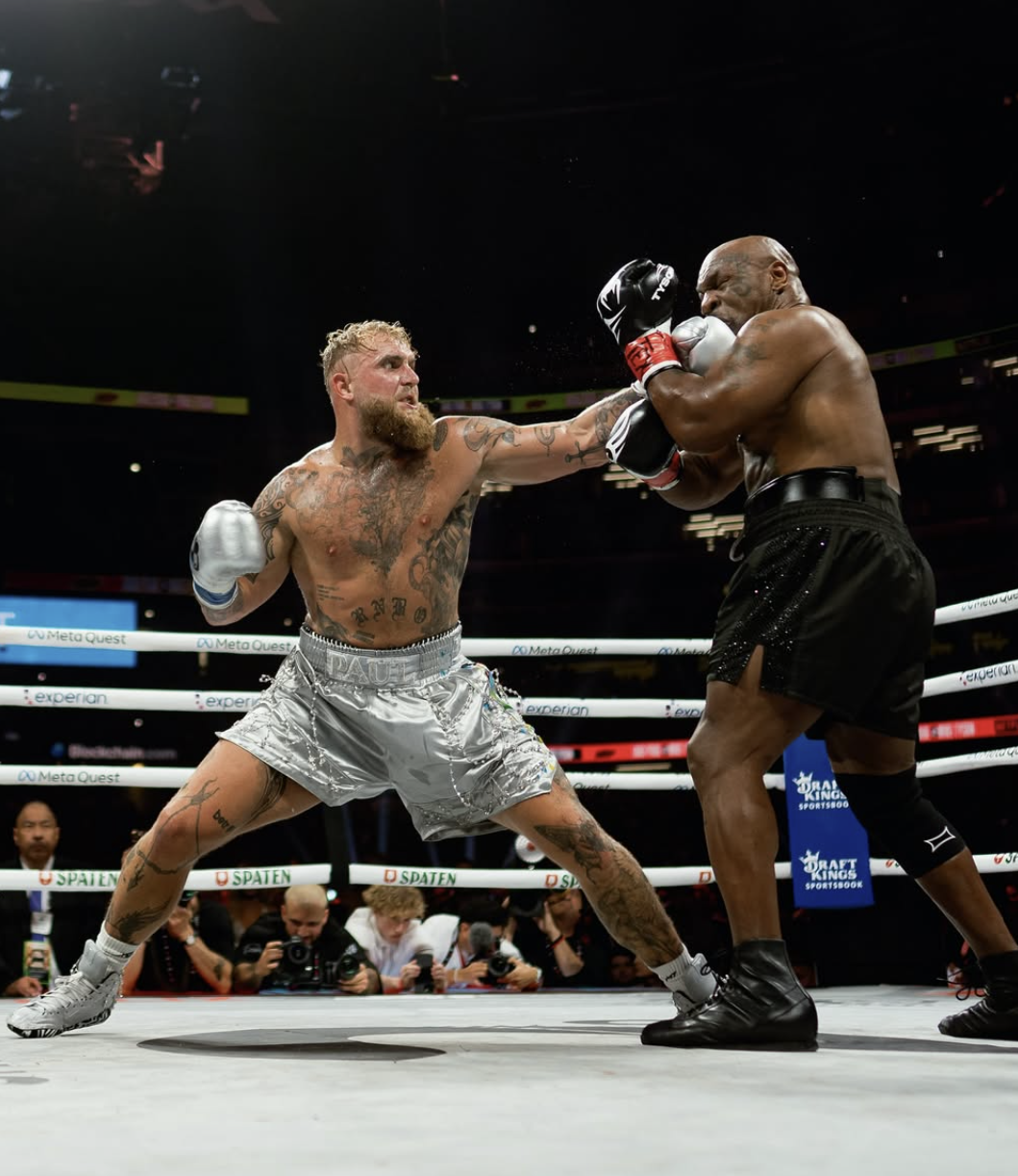
Tech platforms like Netflix entering live combat sports (e.g., Jake Paul vs. Mike Tyson) operate under a non-PPV model. Instead of relying on per-view transactions, the event acts as a subscriber acquisition engine funded out of broader content budgets.
Ad-Tier Monetization
Live sports events enable streaming services to sell high-CPM digital advertisement slots during broad-reach broadcasts, establishing a dual revenue stream of subscription retention and ad sales.
The Net Reality: Capital Structure of Combat
Analyzing boxing’s financial mechanics highlights a fundamental divergence between boxing and centralized sports entities like the UFC (under TKO Group Holdings).
Labor Compensation Asymmetry
In the UFC, athlete payouts historically hover between 16% and 18% of enterprise revenue due to a lack of collective bargaining and centralized promotional control. In championship boxing, top-tier fighters command 60% to 80% of net event revenue because independent star athletes act as free agents with maximum contract leverage.
Promotional Risk Profiles
Boxing promoters operate on thinner operational margins per event compared to league owners. If a high-guarantee PPV event underperforms its buy-rate projections, the promoter absorbs the downside loss while the fighter retains their escrow-backed purse guarantee.
Sovereignty of Capital
The rise of sovereign-backed financing has altered boxing economics. By replacing variable PPV dependencies with guaranteed site fees, marquee fighters achieve guaranteed liquid paydays while promoters eliminate event-level downside variance.
The Bottom Line
Pay-per-view boxing remains one of the most direct monetization mechanisms in global sports business. By converting consumer interest into high-margin variable sales, mega-fights generate single-night cash flows that rival entire playoff runs in traditional league formats.
While media fragmentation and subscription streaming platforms continue to evolve the distribution layer, the fundamental law of fight economics remains unchanged: individual star power commands the ultimate financial leverage.
Boxing PPV Economics & Revenue Splits (FAQs)
How much money do cable companies take from a PPV?
Traditional cable and satellite distributors (such as Comcast or DirecTV) typically take between 30% and 50% of gross PPV revenue right off the top as a carriage fee before any money reaches the promoter or fighters.
What are PPV points in boxing contracts?
PPV points are backend variable compensation clauses that pay a fighter a set dollar amount per PPV purchase (e.g., $10 per buy) once the event surpasses a predetermined breakeven buy-rate threshold.
Why do boxers make a higher percentage of revenue than UFC fighters?
Boxing lacks a single monopsony league structure. Top boxers operate as independent contractors with their own promotional entities (e.g., Mayweather Promotions, Canelo Promotions), allowing them to negotiate competitive bids among rival promoters and networks to command up to 70%+ of net event revenue.
How are streaming services like DAZN changing boxing PPV economics?
Streaming services shift the financial model from single-event variable purchases to guaranteed subscription fees. Platforms pay promoters upfront license fees or fight guarantees, bearing the financial risk of subscriber retention rather than relying entirely on individual per-event buy rates.
Next Reads
- Canelo vs. Crawford Revenue & Purse Projections
- The Streaming Problem in Sports
- UFC Fighter Pay Explained – $12K Entry Deals, the Paramount+ Streaming Era, and What Money Fighters Actually Keep
- DAZN’s $3.4 Billion Power Play – Inside the Foxtel Acquisition and Saudi PIF Injection
- TKO Group Holdings – Which Company Adds More Value from the WWE & UFC Merger
Disclaimer: This article contains general financial information for educational purposes and does not constitute professional advice. APSM estimates are derived from publicly available information, tax assumptions, finance modeling, and industry-standard fee structures. Actual earnings may vary based on residency elections, private contract provisions, image/media rights agreements, bonuses, and tax filings.