
The Seattle Mariners were 1 inning away from reaching their first World Series appearance, before losing to the Toronto Blue Jays late in game 7 during the 2025 MLB AL Championship.
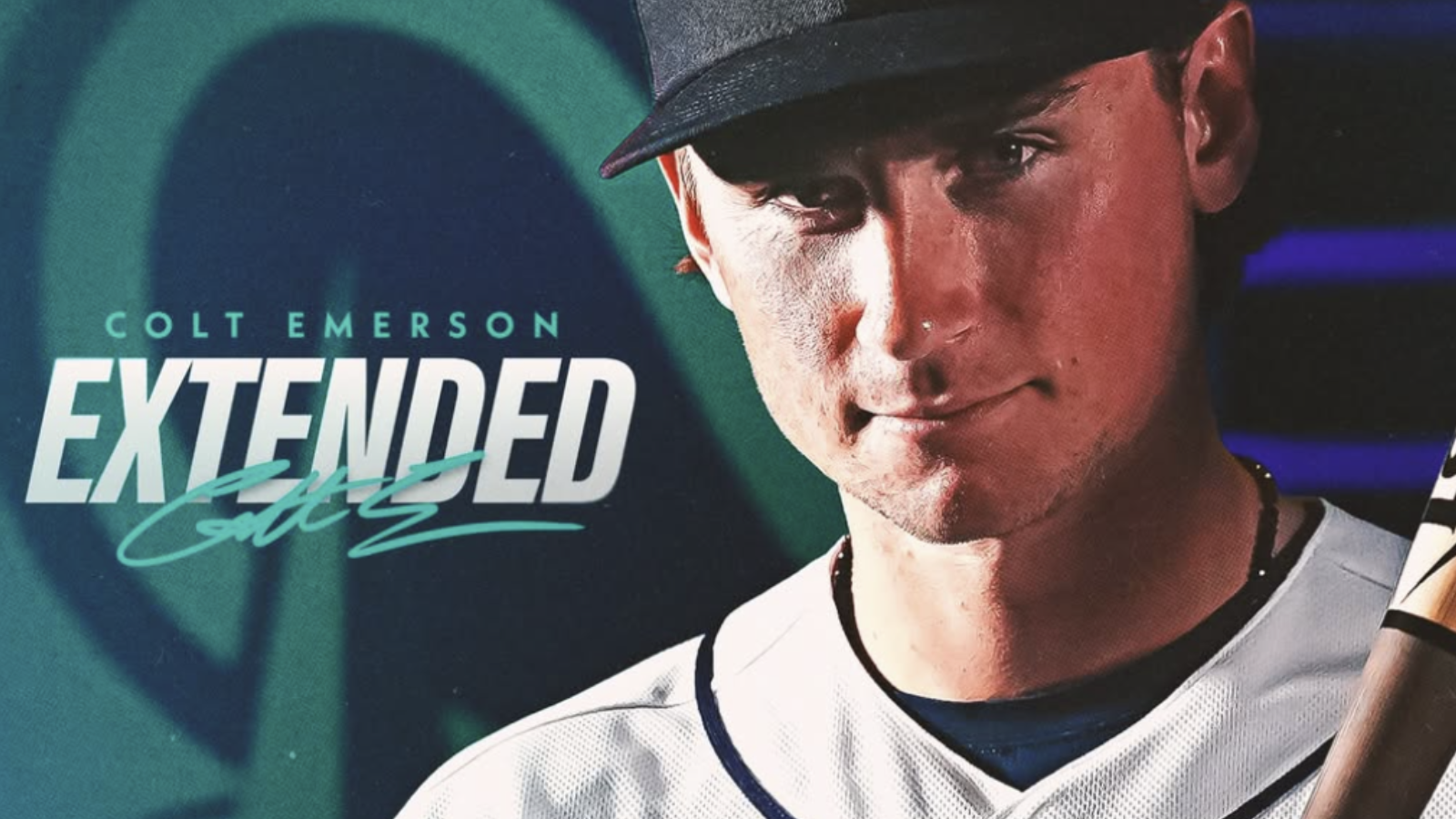
This season, they have retained their star talent in Cal Raleigh, Julio Rodriguez, Josh Naylor and now they have added the top 2026 prospect, Colt Emerson to the lineup.
Colt Emerson’s rise from first-round high school bat to cornerstone prospect hasn’t taken long and now, neither has his payday.
The No. 22 overall pick in the 2023 MLB Draft turned elite hit tools, advanced plate discipline, and organizational belief into a massive eight-year, ~$96 million contract with the Seattle Mariners.
A deal that signals long-term commitment from a franchise betting early on upside, development, and cost-controlled dominance at a premium position.
Emerson quickly established himself as one of the top shortstop prospects in baseball, showcasing an advanced approach at the plate, and defensive reliability that aligns with Seattle’s long-term infield vision.
While he has yet to log a full MLB season, his minor league production and trajectory have positioned him as a foundational piece in the Mariners’ next competitive window.
Away from the field, Emerson enters a rare financial tier for pre-arbitration players, transforming what is typically a low-earning development phase into immediate wealth-building territory.
This contract reframes his earnings not as speculative upside, but as secured capital early in his career.

Contract Details
Contract Type: Pre-Arbitration Extension
Total Contract Value: ~$96,000,000
Fully Guaranteed: Majority guaranteed (team-friendly structure likely includes club options/escalators)
AAV: ~$12M per year
Signed: 2026
Emerson’s deal is part of a growing trend across Major League Baseball, where teams are now choosing to lock in young talent prior to their arbitration periods, in exchange for long-term cost certainty.
For Seattle, this is a calculated bet: pay now at a discount relative to potential peak value. For Emerson, it’s immediate financial security before even reaching arbitration or free agency.
Salary Progression & Cap Impact
Unlike the NBA or NFL, MLB contracts don’t operate under a hard cap, but Emerson’s deal still carries major internal payroll implications.
A projected structure could resemble:
- 2026: ~$2,000,000
- 2027: ~$4,000,000
- 2028: ~$8,000,000
- 2029: ~$12,000,000
- 2030: ~$16,000,000
- 2031: ~$18,000,000
- 2032: ~$18,000,000
- 2033: ~$18,000,000
(Exact figures may vary based on bonuses, and options.) This backloaded structure allows Seattle to maintain flexibility early while Emerson develops, then pay closer to market value during his prime years.
If Emerson becomes an All-Star caliber shortstop, this contract could significantly outperform market comps by the middle years.
There are also likely incentives built into the deal in the form of bonuses, meaning if Emerson produces even just at the level expected from him, this deal could earn him more than what is being reported.
Emerson has high expectations, but he has earned it and now he is being paid generational wealth to live up to the player everyone knows he can become. However, with all that money, he will now have to become an expert at something other than fielding, his financial literacy.
$100 million is life changing money, generational even, if it is handled right, invested properly and Emerson does not inflate his lifestyle to become one of the over 70% of pro athletes who go bankrupt within just 5 years of retirement from their respective sport/league.
On-Field Performance & Projection Value
Emerson’s value isn’t based on MLB resume, yet. It’s rooted in projection.
He’s widely regarded as one of the most polished young hitters in the minors, with:
- Advanced strike zone recognition
- High contact rates
- Developing power profile
- Defensive stability at shortstop
For a franchise, locking in a potential above-average shortstop at ~$12 million AAV during prime years is a massive strategic win.
Shortstop remains one of the most valuable positions in baseball, both defensively and offensively, making Emerson’s upside even more financially impactful.
Had Emerson reached his arbitration period, this $96 million deal could have cost the Mariners hundreds of millions, or ended up in them losing the #1 SS prospect altogether. So, this early, pre-arbitration contract is actually the “best of both worlds” for both parties.
Taxes, Fees & Professional Expenses
Baseball contracts are massive in headlines, but heavily reduced in practice. Emerson’s gross earnings will face:
- Federal marginal tax: ~37%
- State income tax: Washington state has no state income tax, but jock taxes apply in road states
- Agent fees: ~3–5% (MLB range)
- Other deductions: MLBPA dues, training, housing, financial management, travel, etc.
Even without a state income tax in Washington, Emerson will still pay taxes in high-tax states like California and New York during away games.
If Emerson was not a Washington resident, he would lose another 4-12% of his earnings, so the advantage to establishing residency in Seattle is worth tens of millions in retained net income.
Estimated total deductions:
~38–45% of gross income
Washington residency provides a meaningful advantage compared to players based in high-tax states like California or New York.

Estimated Net Contract Value
After taxes, fees, and standard deductions:
Estimated net take-home over 8 years:
~$52-$60 million
That’s a massive financial outcome for a player who has not yet reached free agency, and highlights the advantage of early extensions in MLB.
While the gross number is ~$96 million, nearly half is lost to taxation and professional costs. Still, Emerson exits his age-20s with generational wealth already secured.
Endorsements & Off-Field Upside
Unlike NBA stars, MLB players typically build endorsement portfolios more gradually. However, Emerson’s profile offers upside:
- Premium position (shortstop)
- Top prospect pedigree
- West Coast market with strong fan base
- Potential All-Star trajectory
If he develops into a face-of-franchise player, regional endorsements and national brand opportunities could follow. These off-field earnings, while uncertain today, can meaningfully supplement his contract over time.
Financial Outcome
For Emerson
Immediate financial security, reduced career risk, and long-term wealth stability and net worth growth before arbitration.
He trades some upside for guaranteed capital, a common and often smart move for young MLB players.
For the Mariners
Seattle potentially locks in a franchise shortstop below market value if Emerson reaches his ceiling. This creates payroll efficiency and long-term roster stability.
For the MLB market
Deals like this reflect a shifting strategy, teams are increasingly buying out arbitration and early free agency years in exchange for upfront guarantees.
Colt Emerson’s leap from draft pick to $96 million cornerstone tells a bigger story about modern baseball economics. This isn’t just a contract’s a risk-sharing agreement between player and franchise.
Early guarantees for Emerson. Long-term upside for Seattle.
If Emerson develops into what scouts project, this deal won’t just look good, it’ll look like a steal. And if he doesn’t fully hit that ceiling?
He still walks away with life-changing wealth before most players even reach arbitration. That’s the power of betting early, on both sides.
Want the Blueprint All “Elite Earners” Use?
Read The Full APSM Report to Learn how to build wealth for yourself
and ensure you never end up broke, but rather build for generations.
- Core wealth engines used by the world’s top earners
- Multi-contract wealth acceleration modeling
- Real-estate & portfolio structures designed for long-term stability
- Tax-efficient income routing
- Brand, endorsements & equity playbooks
- Risk-tier modeling athletes use to build & protect their net worth
If you want the real path to lifelong wealth,
not hype, not cliches, this is the foundation.
Get your copy below:
Next Reads
- Why the Seattle Mariners Remain a Small-Market Team
- Should MLB Introduce a Salary Cap
- Brandyn Garcia’s Arizona Diamondbacks Contract: Taxes, Residency & Net Income Explained
- How the NBA Could Bring Teams to Seattle and Las Vegas
- Nick Emmanwori Seattle Seahawks Rookie Contract: Net Income Explained
Credits
Written By: Aidan Anderson
Research & Analysis: Apostle Sports Media LLC
Sources: Spotrac, MLB Contract Data, X Feed, ESPN, Seattle Mariners, APSM Proprietary Analysis
Featured Image: Public Domain / Wiki Commons
Disclaimer: This article contains general financial information for educational purposes and does not constitute professional financial advice.


