
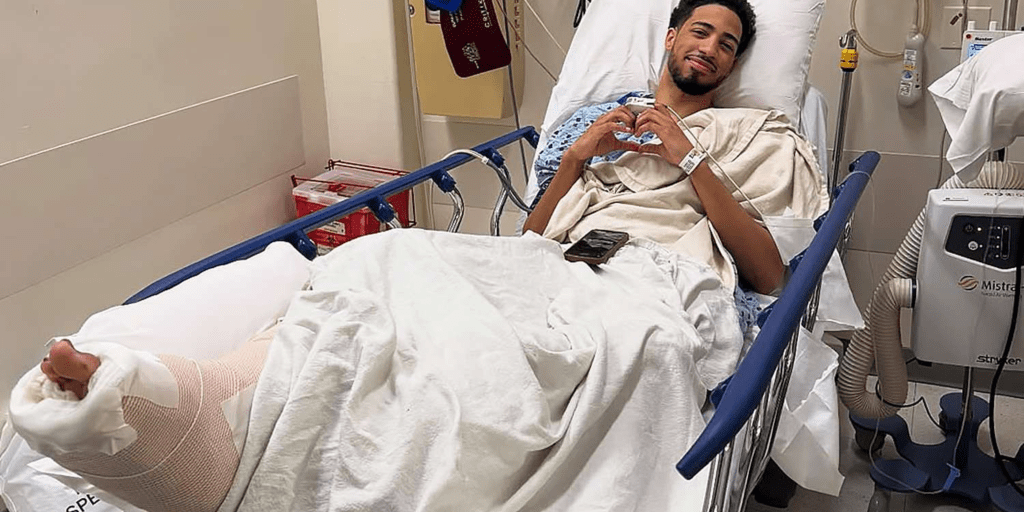
Few injuries change an athlete’s financial trajectory like a torn Achilles.
Across the NBA, NFL, and even MLB, this injury has proven time and again to be a major inflection point. Not just for careers, but for endorsement deals, future contracts, and long-term net worth growth.
An Achilles tear can quite literally tear an athlete’s money up. So, what is the financial impact of one of those most gruesome and derailing non-contact injuries in all of sports?
📉Why Timing is Everything
The biggest financial variable with an Achilles tear? When it happens.
For athletes with long-term, fully guaranteed deals (think Kevin Durant, Aaron Rodgers, or Tyrese Haliburton), the immediate salary hit is minimal.
But for the average players: An Achilles injury can wipe out tens of millions in future earnings overnight.
- On rookie deals
- Heading into contract years
- On non-guaranteed or incentive-heavy contracts
💸Historical Earnings Loss Examples
- DeMarcus Cousins (NBA): Tore his Achilles in 2018. Was in line for a 5-year, $150+ million max extension before the injury. Settled for a $5 million 1-year prove-it deal with the Warriors post-recovery.
- Cam Akers (NFL): Tore his Achilles in 2021 during his rookie deal. Although he returned quickly, his next contract opportunities have remained limited, showing how running backs with major injuries struggle to regain market value.
- Kobe Bryant (NBA): Tore his Achilles in 2013. Already had over $300 million in career earnings by then and still had a $48 million 2-year extension waiting for him, proving that Hall of Fame status + fully guaranteed contracts mitigate injury risk.
📊More Than Just Salary
Beyond contract money, Achilles injuries hit:
✅ Endorsement income: Brands and sponsors typically pause or scale back deals for athletes sidelined long-term.
✅ Future contract leverage: Players coming off Achilles rehab often get shorter, incentive-heavy, or team-option-heavy deals.
✅ On-court/field bonus clauses: Most performance-based escalators and bonuses become unachievable for the injury year (and often the next).
✅ Insurance: Some athletes have private loss-of-value insurance, but policies can be restrictive, expensive, and hard to trigger.
🏀Can Medical Advances Save Careers?
The one upside? Rehab science has improved dramatically over the last decade. Players like:
- Kevin Durant (NBA)
- Klay Thompson (NBA)
- Cam Akers (NFL)
have shown that returning from a torn Achilles is possible, but still, the average athletic/financial peak post-injury almost always declines.
💬Bottom Line:
Injury risk is one of the few things that money, training, and talent can’t fully control.
For agents, players, and teams, contract structure and timing remain the #1 defense against sudden financial fallout from devastating injuries like an Achilles tear.
We hope and are praying that the world gets to see both Jayson Tatum & Tyrese Haliburton return in 2026-2027 fully healed and right back to competing at the highest level.
🔗Next Reads
- Arch Manning’s Slow Start May Impact His Endorsement Deals
- Hulk Hogan Career Earnings & WWE Legacy
- Luther Burden III’s Fully Guaranteed NFL Rookie Contract
- Five Pro Athletes Poised to Become Billionaires
- Cooper Flagg Could Earn Over $1 Billion in Future NBA Contracts
Credits
Written by: Aidan Anderson
Research and Analysis: Apostle Sports Media LLC
Sources: ESPN, Spotrac, News 9 (OKC), APSM Proprietary Analysis.
Featured Image: Public Domain / Wiki Commons
Disclaimer: This article contains general financial information for educational purposes and does not constitute as professional advice.
“Whoever gives heed to instruction prospers, and blessed is the one who trusts in the Lord.”
– Proverbs 16:20









 Apostle Sports Media