
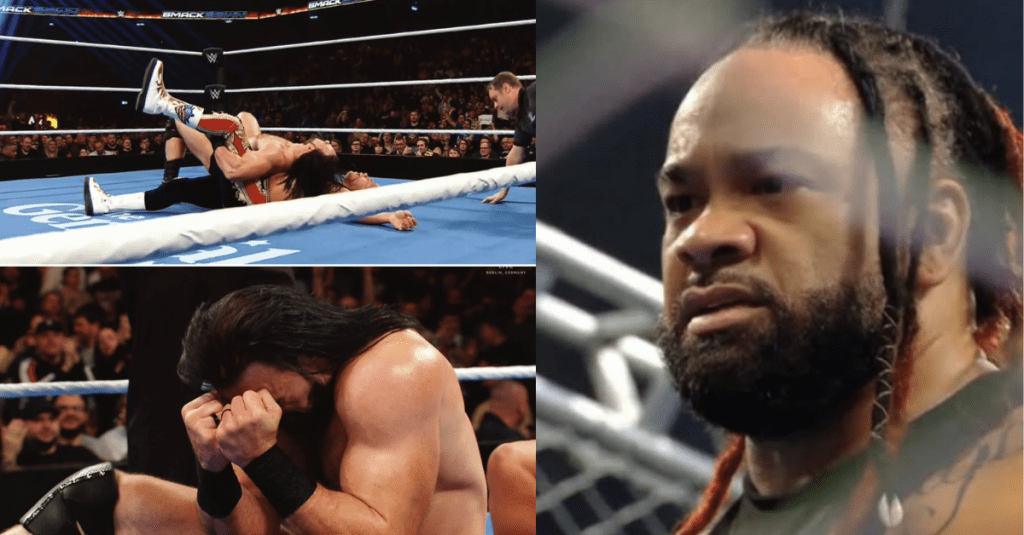
WWE is one of the most infamous sports events in the world.
It has seen the rise of legends over the past four decades, from Hulk Hogan and The Undertaker. To The Rock and John Cena, and now the rise of Cody Rhodes and Logan Paul.
After joining forces with UFC under the TKO umbrella, WWE’s media rights ecosystem has been shifting faster than a title feud at WrestleMania. What was once a simple TV deal has become a globally segmented network of streaming rights, licensing revenue, and cross-platform monetization that rivals the biggest sports media contracts in the world.
At the center of this evolution sits Friday Night SmackDown, just one part of a strategic content portfolio engineered by WWE to maximize the companies valuation and exponential growth of revenue.
USA Network and NBCUniversal
WWE’s Friday Night SmackDown returned to USA Network under a multi-year domestic media rights agreement with NBCUniversal beginning with the 2024/25 season.
Under this deal, WWE produces live weekly SmackDown content that airs in prime time on USA Network, marking a continuation of one of cable TV’s longest-running live entertainment franchises.
According to industry sources, this partnership is valued at ~$287 million per year, or ~$1.4 billion over five years, connecting WWE with a major traditional broadcast outlet that still drives reliable advertising revenue through live viewership.
Why This Matters
- SmackDown’s linear TV rights bring predictable, recurring revenue.
- Cable ad slots tied to SmackDown command strong CPMs because live sports/entertainment still outperforms on-demand content for advertisers.
- For NBCUniversal, the show is a ratings magnet on Friday nights, which increases ad yield and cross-platform leverage with other Peacock programming.
Linear broadcasting of WWE remains a core revenue layer, especially for advertisers that value real-time live audiences.
Netflix Partnership
As of January 2025, WWE’s flagship weekly show Raw became the exclusive home on Netflix in the United States, Canada, the U.K., Latin America, and other territories.
As part of this partnership, Netflix also became the streaming home for WWE’s programming outside the U.S., including SmackDown, NXT, archive content and premium live events as available.
This shift towards streaming deals between TKO and Netflix represents one of the most transformative media rights moves in WWE history, taking weekly events and migrating it to a global streaming platform with hundreds of millions of subscribers worldwide.
Value Implications:
- While WWE hasn’t publicly disclosed the full economics, this deal is often discussed in connection with a multi-billion dollar valuation for WWE’s global streaming rights, some industry sources reference a figure north of $5 billion for this Netflix partnership.
- Netflix gets a reliable weekly live entertainment driver that boosts both subscriber engagement and retention, critical metrics for streaming platforms.
- WWE gains predictable licensing revenue and global reach without the fragmentation and audience loss associated with legacy cable distribution.
For SmackDown specifically, Netflix expands its global footprint beyond U.S. specific deals, especially in regions where traditional TV rights are weaker, or non-existent altogether.
Premium Live Events and ESPN
In a landmark deal announced in 2025, ESPN platforms became the exclusive U.S. domestic home for all WWE Premium Live Events (PLEs), starting in 2026.
This includes major cultural tentpoles like WrestleMania, Summer Slam and Royal Rumble.
Industry reporting indicates this partnership is valued at ~$325 million per year over five years (~$65 million annually), a significant increase compared with WWE’s previous PLE arrangement with Peacock.
This move aligns WWE’s most valuable content, the yearly tentpole events, with one of the largest sports media brands in the world, providing multiple revenue streams:
- Subscription fees via ESPN direct-to-consumer services
- Advertising premiums around live event broadcasts
- Cross-promotion with other major sports properties
As the NFL, MLB, college sports, and now WWE converge on large streaming bundles, WWE’s inclusion positions it as a strategic asset in broader portfolio monetization.
International Distribution, Global Reach, Local Revenue
Outside the United States, Netflix is now the primary distribution partner for WWE’s weekly shows, premium events, and archival library, forming a globally unified platform that doesn’t require multiple fragmented regional deals.
This global distribution model turns SmackDown, typically a domestic broadcast property, into a worldwide monetizable asset.
Key advantages of global streaming rights:
- Scale of distribution: Netflix’s global reach (300+ million subscribers worldwide) adds enormous scale that cable channels can’t match together.
- Localized monetization: Netflix earns subscriber revenue from a multitude of global streaming markets and introduced tiered regional pricing similar to the traditional PPV format.
- Brand expansion: Global subscribers get WWE content 52 weeks a year, building fan loyalty that feeds merchandising and live attendance.
WWE’s Layered Media Monetization Model
1. Linear TV Rights
- SmackDown on USA Network (U.S. cable)
- Historically on Fox (prior to 2024)
- Ad-driven revenue, predictable contracts
2. Global Streaming Rights
- Raw and other WWE programming on Netflix globally
- Archive and documentary content on Netflix
- Expands distribution and licensing revenue
3. Premium Event Rights
- ESPN domestic exclusive for major PLEs
- Elevated event monetization via subscriptions + advertising
4. Digital & Ancillary
- YouTube content & discovery
- Social media monetization
- Merchandising licensed off broadcast attention
Each layer targets different revenue pools, subscription economics, advertising dollars, licensing fees, and merchandise engagement, creating a multi-vertical revenue stack.
Why This Matters Financially
WWE is no longer selling a weekly show into a single TV contract.
It’s selling global media rights portfolios segmented by platform and region.
The result is:
- Predictable recurring revenue streams
- Higher per-viewer monetization (streaming + advertising + subscription)
- Broader global reach = more licensing value
- Strategic alignment with major media conglomerates
- Enhanced negotiating leverage for future deals
This positioning mirrors major sports leagues (NFL, NBA, NCAA) that have adopted multi-platform relationships rather than exclusive linear television deals.
APSM Takeaway
WWE’s evolving distribution blueprint, with SmackDown as an integral piece, shows how a content brand can:
- unlock billions in rights revenue
- leverage streaming platforms for global reach
- restructure monetization away from legacy models
- extract value through multi-vertical licensing
SmackDown’s global value isn’t just in its viewership numbers, it’s in its place inside a broader strategic rights mosaic that includes Netflix, ESPN, and cable partnerships.
WWE is not just selling wrestling; it’s selling media infrastructure and SmackDown’s rights deals are a major part of that financial architecture.
Why a $100M Pro Contract Often Nets Only $35M–$55M
Enjoy Reading How Money Works In Sports? The APSM $100M Pro Contract Report Includes:
- In-depth contract structure analysis
- Taxes, agent fees, and escrow modeling
- Endorsement and bonus impact scenarios
- Investment & wealth retention strategies
- Real-world case studies of player earnings vs take-home
Everything you need to understand how multi-million dollar contracts translate into actual wealth and how to avoid common financial pitfalls in pro sports.
Next Reads
- Which Adds More Value to TKO Holdings: UFC or WWE?
- The Financial Evolution of WWE’s Royal Rumble
- How UFC Promotion Drives Revenue
- Hulk Hogan Career Earnings & WWE Legacy
- Who Really Profits From Boxing Pay-Per-View Events
Credits
Written By: Aidan Anderson
Research & Analysis: Apostle Sports Media LLC
Sources: WWE corporate releases, WSJ, ESPN, CNBC, NBCUniversal, APSM Proprietary Analysis
Featured Image: Public Domain / Wiki Commons
Disclaimer: This article contains general financial information for educational purposes and does not constitute professional advice.
“Lips of the righteous know what finds favor, mouth of the wicked only what is perverse.”
– Proverbs 10:32



















 Apostle Sports Media