
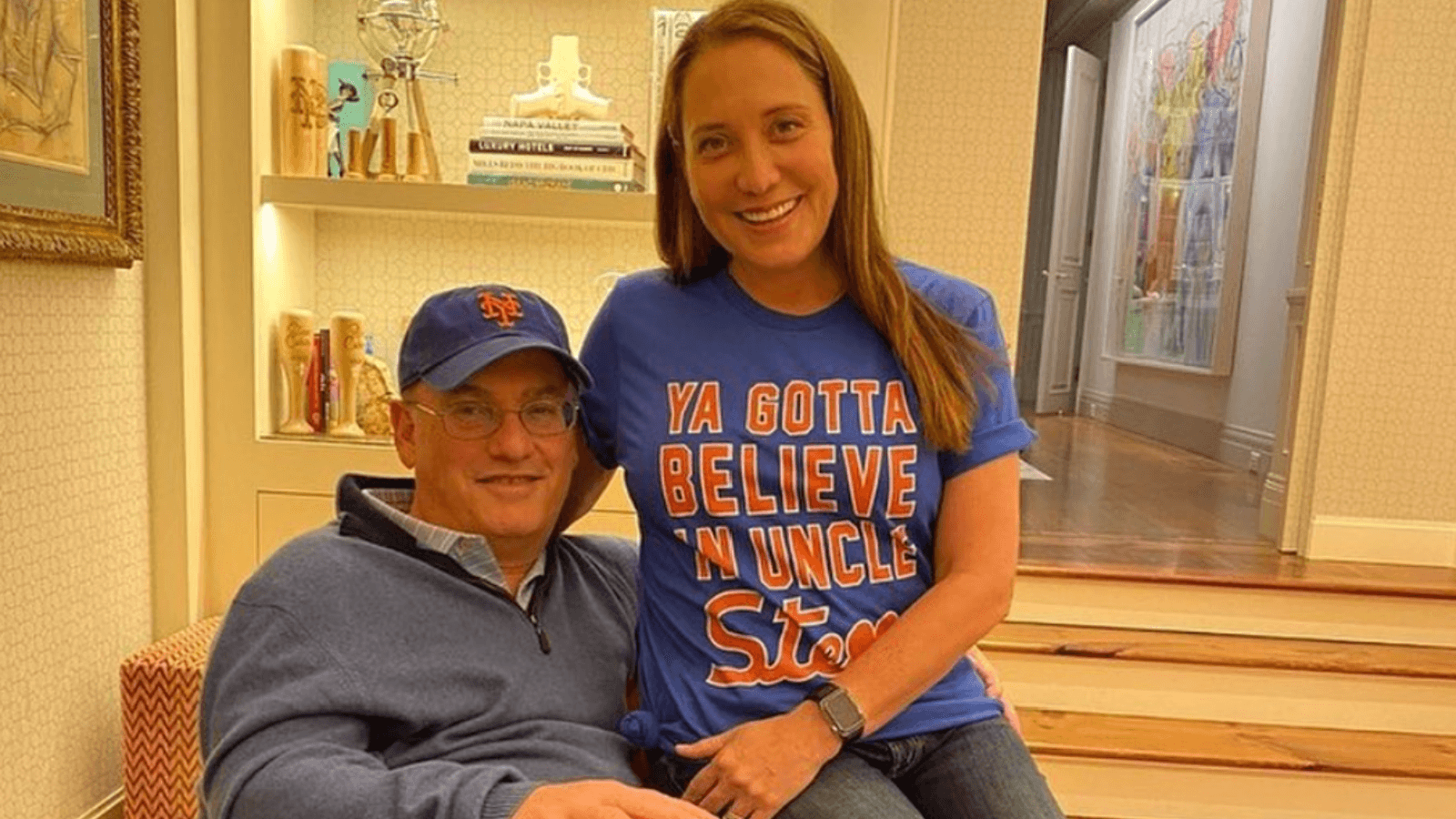
New York Mets owner, Steve Cohen, owns ~$250 million in real estate.
According to Bloomberg’s billionaire index, his portfolio is spread across a Connecticut estate with its own ice rink, a Palm Beach mansion, a fortress-like Manhattan compound, and a Beverly Hills mansion he just sold after a five-month, $10 million price cut.
None of it includes the New York Mets, and none of it includes his $1 billion art collection. This is just where the man worth ~$20+ billion actually lives, vacations, and occasionally loses money trying to sell.
You can read his Wikipedia page or a dozen “inside the mansion” slideshows, but almost nobody covering Cohen’s real estate connects the full portfolio into one financial picture, what he paid, what he’s made or lost, and why a hedge fund manager with this much money keeps having such a hard time selling his own houses.
APSM does.
Property One: The Greenwich, Connecticut Compound
Cohen’s primary residence sits on Crown Lane in Greenwich, Connecticut, purchased in 1998 for ~$14.8 million. He’s since expanded it from its original footprint to more than 35,000 square feet across 14 acres, adding a full-size indoor basketball court, a swimming pool enclosed in a glass dome, a two-hole golf course, and an ice skating rink.
He’s also reportedly building a private museum on the property for part of his art collection. This is the property real estate reporting treats as Cohen’s actual home base, and the one tied directly to his Connecticut tax residency.
As founder of Point72 Asset Management, headquartered in nearby Stamford, the Greenwich estate functions as both primary residence and a short commute to the firm managing tens of billions in assets.
Why Greenwich, Specifically
Connecticut isn’t a no-income-tax state, but it’s also not the highest-tax state Cohen could have chosen given where Point72 operates.
Greenwich and the broader Fairfield County corridor have long functioned as a hedge fund manager’s compromise: proximity to New York City’s financial gravity, without establishing full New York State residency, which would mean a meaningfully higher combined state and local income tax bill on income at Cohen’s scale.

Property Two: The Palm Beach County Mansion
In 2021, Cohen purchased a 31,000-square-foot mansion in Palm Beach County, west of Delray Beach. This is the property that does the real tax work in Cohen’s broader financial picture.
Florida has no state income tax at all, and establishing a defensible secondary residence there gives a high-net-worth individual genuine flexibility in how much time gets allocated where, and which state ends up treating which portion of the year as “home.”
For someone at Cohen’s income level, with a 13-figure net worth and income streams running through Point72, the difference between Connecticut’s income tax and Florida’s zero isn’t a rounding error.
It’s the same basic residency logic that applies to athletes weighing a move to Washington or Texas, just playing out at a dramatically larger scale.

Property Three: The Beverly Hills Estate (Sold)
This is the house that made headlines for the wrong reason in 2025, after it got mistakenly attributed online as Juan Soto’s personal mansion.
It was never Soto’s. Cohen bought the 11,540-square-foot, nine-bedroom Beverly Hills estate roughly a decade ago for about $31 million, originally purchasing it so his twin daughters, then attending USC, would have a real home base instead of hotel stays during visits.
The house also became the site of one of the most consequential meetings in recent baseball history: the December 2024 dinner where Cohen, Soto, agent Scott Boras, and Mets president David Stearns sat by the saltwater pool, and Cohen’s son played a custom recruitment video that helped close the largest contract in professional sports history.

A Rare Miss for Cohen
Cohen listed the home in May 2025 for $45 million. Five months and one $10 million price cut later, he found a buyer at $35 million, a discount of ~22% off the original asking price.
Even accounting for that markdown, the sale still represents a strong return on investment of ~$4 million based on the original ~$31 million purchase price after roughly a decade of ownership.
Property Four: The “Fortress” Compound
In 2012, Cohen purchased land at 145 Perry Street in Manhattan’s West Village for $28.8 million. Rather than buying an existing unit, he built a sprawling, more than 20,000-square-foot compound combining a mega-mansion and a separate townhouse, finished in bronze, terracotta, and wood detailing.
The design drew enough local pushback that critics called it “fortress-like” and a “moated castle,” though New York’s Landmarks Preservation Commission ultimately approved it as consistent with the historic district’s character.
This is a newer build relative to Cohen’s other properties, and it functions less like a typical Manhattan pied-à-terre and more like dedicated, permanent infrastructure for time spent in the city, separate from the financial mechanics of the Florida residency questions entirely.

The One That Got Away (At a Loss): The Bloomberg Tower Penthouse
Before the West Village compound, Cohen owned a 9,000-square-foot duplex penthouse at the Bloomberg Tower, spanning the building’s 51st and 52nd floors with five bedrooms and floor-to-ceiling glass walls.
He bought the unit in 2005 for $24 million and originally listed it in 2013 for $115 million. It didn’t sell. After eight separate price cuts over roughly six years, the listing eventually bottomed out near $45 million, a $70 million markdown from the original ask, before he ultimately sold a separate West Village condo for $30 million in 2019, about 10% below that listing’s price.
Even a hedge fund manager who built a fortune correctly pricing financial assets can badly misjudge what a unique, ultra-luxury property is actually worth to the market.
The lesson generalizes well beyond billionaires. An asset’s purchase price, or what an owner believes it’s worth, has no bearing on what a buyer will actually pay. Appreciation rates matter more than the feelings of an owner.
Adding It Up: What Is Cohen’s Real Estate Actually Worth?
Bloomberg’s billionaire index estimates Cohen’s real estate, spanning New York, Greenwich, and the Hamptons, at roughly $250 million, based on property records and comparable sales.
That figure sits alongside an art collection valued at approximately $1 billion as of 2015, and likely higher today, and a Point72 stake that anchors the bulk of his roughly $21.3 billion net worth, the highest of any Connecticut resident and good for around 35th richest in America.
Real estate, in other words, is a real but genuinely small slice of Cohen’s total wealth. It’s the part of his balance sheet that’s visible, photographed, and occasionally mocked for a bad listing price, while the much larger Point72 stake quietly does the heavy lifting.

Why This Matters Beyond Real Estate Curiosity
Cohen’s portfolio is a useful, larger-scale version of the exact same financial decisions athletes make constantly:
- Where to establish primary residency for tax purposes
- How much to spend on a secondary or vacation property
- When a high-profile property purchase doubles as something with strategic value beyond just housing
Cohen’s Greenwich-vs-Florida residency split mirrors the exact same logic NFL, NBA, and MLB players run through when deciding where to plant roots relative to where they earn income.
The Bloomberg Tower miss is also worth sitting with for anyone who assumes wealth automatically means good real estate decisions. It doesn’t.
Pricing power in financial markets and pricing power in a one-of-one luxury listing are two completely different skills, and Cohen’s own track record proves it.
The Bottom Line
Steve Cohen’s real estate isn’t flashy by billionaire standards; it’s $250 million spread across four notable properties, a fraction of a $21+ billion fortune built almost entirely on Point72.
The Greenwich estate is home. The Florida mansion is tax strategy. The West Village compound is permanent New York infrastructure. And the Beverly Hills house, ironically, ended up mattering less for what it was worth and more for the $765 million contract it helped close.
Steve Cohen Real Estate Portfolio FAQs
What is the total value of Steve Cohen’s real estate portfolio?
Steve Cohen’s real estate portfolio is valued at approximately $250 million. This luxury property footprint sits alongside an estimated $1 billion private art collection and his primary multi-billion dollar ownership stake in the financial asset management firm Point72.
Where does New York Mets owner Steve Cohen hold primary tax residency?
Steve Cohen’s primary residential home base is his 35,000-square-foot compound on Crown Lane in Greenwich, Connecticut. Establishing residency in Fairfield County allows proximity to his Stamford-based hedge fund, Point72, while avoiding New York State’s higher combined municipal and local income tax brackets.
Why did Steve Cohen buy a mansion in Palm Beach, Florida?
In 2021, Cohen acquired a 31,000-square-foot estate in Palm Beach County. Because Florida does not levy a state income tax, maintaining a secondary residential property provides ultra-high-net-worth individuals with strategic structural flexibility to mitigate exposure to high-bracket income taxes.
Which historic baseball contract was signed at Cohen’s Beverly Hills mansion?
The historic $765 million contract signing between outfielder Juan Soto and the New York Mets was brokered during a December 2024 recruitment meeting hosted alongside the saltwater pool at Steve Cohen’s 11,540-square-foot Beverly Hills estate. Cohen later liquidated the property for approximately $35 million.
Next Reads
- Inside Steve Cohen’s $35 Million Beverly Hills Mansion
- Christian Pulisic Real Estate Portfolio Value (2026)
- Travis Hunter’s $3.275 Million Jacksonville Mansion
- Jumbo Loans Explained: Why Athletes Need to Understand Them
- California State Athlete Taxes
Disclaimer: This article contains general financial information for educational purposes and does not constitute professional advice. APSM estimates are derived from publicly available information, tax assumptions, finance modeling, and industry-standard fee structures. Actual earnings may vary based on residency elections, private contract provisions, image/media rights agreements, bonuses, and tax filings.


