

For months, digital media and sports aggregators referred to a sprawling Southern California estate as Juan Soto’s Beverly Hills mansion.
It never was.
The ultra-luxury property located at 901 Oxford Way in Beverly Hills was owned by New York Mets owner Steve Cohen, who acquired the estate in February 2015 for approximately $31 million.
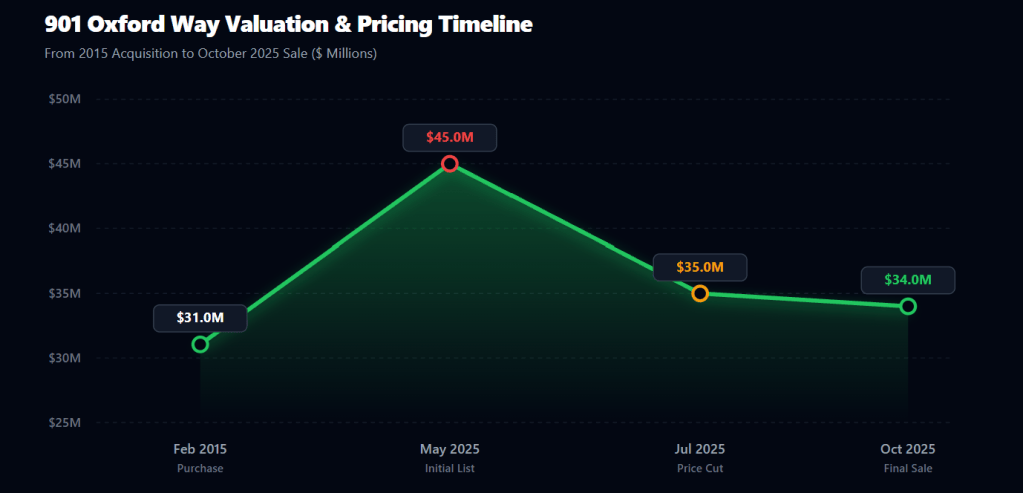
After returning to the market with an ambitious $45 million asking price in May 2025, the property underwent successive price adjustments, dropping to $35 million in July 2025 before ultimately closing for $34 million on October 16, 2025.
That factual correction transforms the property from a piece of celebrity gossip into a much more compelling narrative. This was never the private residence purchased by Juan Soto following the conclusion of the largest contract in MLB history.
Instead, it was the private enclave where the billionaire owner of the Mets orchestrated the definitive closing argument to convince Soto to bring his generational talent to Queens.
In December 2024, Steve Cohen hosted Soto, powerhouse agent Scott Boras, and key members of Soto’s family and representation team at the Beverly Hills compound during the frantic final window of free agency.
Reporting from ESPN inside the residence detailed how Cohen leveraged the property’s sophisticated atmosphere to outline his long-term organizational vision.
The presentation included a custom visual package crafted by Cohen’s son Josh, which depicted Soto wearing a Mets uniform and even rendered a speculative future statue of Soto standing shoulder-to-shoulder with Tom Seaver outside Citi Field.
Three months later, Soto officially inked a monumental 15-year, $765 million contract with New York. The agreement included an unprecedented $75 million signing bonus, zero deferred money, and a player opt-out clause following the 2029 season.
Consequently, the real story behind the so-called “Juan Soto mansion” is not about a player acquiring a $35 million trophy home. It is about how a $34 million luxury asset held in a billionaire’s portfolio served as the physical stage for one of the most consequential recruitment pitches in modern sports history. From a real-estate and asset-management perspective, the property commands a rigorous examination.
901 Oxford Way: The Beverly Hills Mansion Behind the Soto Story
Positioned at 901 Oxford Way in the elite 90210 ZIP code of Beverly Hills, California, the estate occupies an enviable footprint immediately adjacent to the iconic Beverly Hills Hotel.
Current MLS listings and public land records document the residence at 12,664 square feet of interior living space resting on a 28,747-square-foot lot, comprising nine bedrooms and 13 bathrooms. Comprehensive property documentation from Compass further indicates that total enclosed and covered areas under roof span approximately 16,646 square feet.
Architecturally, the mansion was erected in 2014 as a speculative ultra-luxury development crafted by prominent Los Angeles builder Gala Asher on the historical site previously occupied by actor Glenn Ford’s estate.
Forbes reported in January 2015 that Cohen was entering contract to acquire the residence for roughly $32 million after an initial marketing price of $35 million. Subsequent public deeds verified that Cohen closed the acquisition for $31 million on February 3, 2015.
The physical plant of the estate was engineered to satisfy the rigorous expectations of ultra-high-net-worth living:
- A high-speed residential elevator.
- A climate-controlled temperature-regulated wine room.
- A professional-grade private home theater.
- A resort-style swimming pool and spa complex.
- A private outdoor basketball area.
- Independent guest quarters for visiting family or staff.
- A secure subterranean garage concealed behind privacy gates and immaculate, mature landscaping.
Modern MLS and public record sources consistently establish the conditioned interior at 12,664 square feet. For institutional real-estate analysis, public record data remains the definitive metric for evaluating capital performance against actual transaction prices.
At a final sale price of $34 million across 12,664 square feet, the transaction closed at approximately $2,685 per square foot. This metric provides market analysts with an empirical valuation baseline absent from sensationalized viral reporting.
Why Everyone Thought It Was Juan Soto’s House
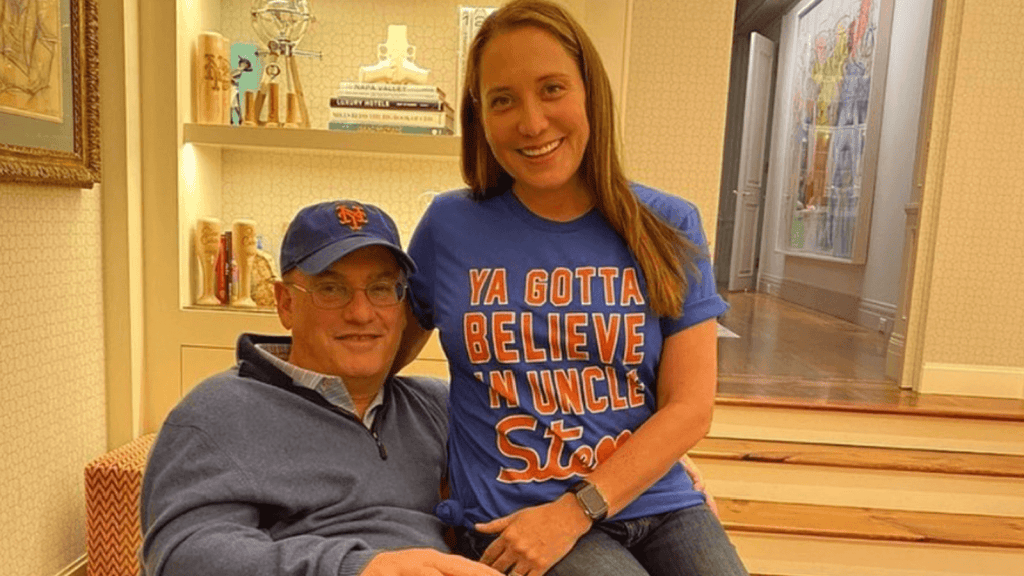
The widespread misconception linking Juan Soto to the Oxford Way estate did not materialize at random. In December 2024, Realtor.com published a widely read report detailing how Juan Soto toured Steve Cohen’s $31 million Beverly Hills mansion following his landmark agreement.
While the article’s text accurately identified Cohen as the owner, the rapid velocity of digital aggregators, social media shorthand, and search engine algorithms quickly distorted the narrative. In the ecosystem of celebrity real estate, simplifying complex ownership structures into direct athlete-property associations drives exponential engagement.
The Mansion Was Steve Cohen’s Asset, Not Soto’s
Steve Cohen’s acquisition of 901 Oxford Way in 2015 marked the beginning of a decade-long holding period prior to returning the asset to the open market in 2025. This extended timeline provides a rare window into the financial lifecycle of an elite West Coast trophy property:
- Acquisition Date: February 2015
- Purchase Price: $31 million
- Initial Listing Price (May 2025): $45 million
- Adjusted Asking Price (July 2025): $35 million
- Final Execution Price (October 2025): $34 million
- Total Holding Duration: Approximately 10.7 years
- Final Disposition Metric: Approximately $2,685 per square foot
By evaluating these parameters, financial analysts can look past the superficial headlines to assess the true economic reality of holding a billionaire-tier residential asset over an extended macroeconomic cycle.
$34 Million Sale ≠ Cohen Made $3 Million
Examining the gross transactional figures suggests a straightforward financial gain: a $34 million exit against a $31 million entry yields a $3 million nominal difference. However, luxury real estate is subject to severe structural carrying costs that routinely erode nominal gains.
Official property tax assessments illustrate the immense overhead associated with an estate of this magnitude. Public records indicate that the property’s annual tax bill reached approximately $448,387 in 2025, underpinned by an assessed valuation of $37.26 million, following an annual tax bill of approximately $439,376 in 2024.
When compounded across a decade of ownership, property taxes represent a multi-million-dollar capital drain. This baseline liability exists entirely independent of operational expenses.
$45 Million Asking Price ≠ Market Value
When Cohen initially listed the estate for $45 million in May 2025, the ask established an aggressive benchmark of approximately $3,553 per square foot. Faced with elite buyer hesitation and broader market dynamics, the listing price was aggressively trimmed to $35 million (approximately $2,764 per square foot) in July 2025, before closing at $34 million (approximately $2,685 per square foot).
- Initial Ask: $45 million
- Mid-Market Adjustment: $35 million
- Closed Transaction: $34 million
This downward trajectory illustrates that the final buyer acquired the property at a 24.4% discount relative to the initial public offering price.
In the upper echelons of residential real estate, an asking price is merely an aspirational ceiling established by sellers and brokers to test market liquidity. It does not reflect intrinsic or guaranteed value.
For professional athletes and newly wealthy buyers entering the luxury market (jumbo loans), recognizing this distinction prevents overpaying for inflated initial listings. The market dictates value exclusively through what a qualified, willing buyer is prepared to exchange.
Was Steve Cohen’s Beverly Hills Mansion a Good Investment?
Evaluating whether 901 Oxford Way was a “good investment” requires separating cold financial compounding from personal utility. From a purely mathematical perspective, the metrics are unremarkable.
Purchasing an asset for $31 million and liquidating it 10.7 years later for $34 million yields a nominal appreciation of roughly $3 million, translating to an annualized nominal growth rate of approximately just 0.87% before factoring in carrying costs, broker commissions, and transaction taxes.
Such a compounding rate lags significantly behind broader equity indices and standard inflationary benchmarks. However, Steve Cohen did not acquire the estate as a speculative investment vehicle.
The pragmatic catalyst for the purchase was entirely familial: Cohen’s twin daughters attended the University of Southern California (USC), and he desired a private, high-end base of operations during frequent West Coast trips rather than continuously renting luxury hotel suites.
Wealthy individuals frequently acquire assets that sacrifice financial yield in exchange for lifestyle optionality, security, and strategic utility.
The House Helped Sell Juan Soto on the Mets
Perhaps the most fascinating financial intersection in this entire saga is how an existing real estate asset unexpectedly morphed into a business-development tool. Steve Cohen did not purchase 901 Oxford Way with Juan Soto in mind back in 2015. Yet, owning a private, heavily secured luxury compound in Beverly Hills provided an invaluable infrastructural advantage during the closing weeks of the 2024 free-agent bidding war.
The clandestine meeting brought together Soto, his agent Scott Boras, senior Mets executives, and members of Cohen’s inner circle. According to ESPN’s reporting, Cohen utilized the controlled, high-end environment to articulate his multi-year vision for the franchise, while his son Josh delivered a personalized multimedia presentation depicting Soto as the centerpiece of the Mets’ future, complete with renderings of a future statue outside Citi Field.
Architecture and environment communicate subconscious messages during high-stakes negotiations:
- A sterile conference room communicates transactional coldness.
- A luxury hotel suite communicates transience and temporary lodging.
- An upscale restaurant communicates exposure and public distraction.
- A private Beverly Hills estate communicates unassailable resources, permanence, and absolute discretion.
By welcoming Soto’s family into a private residential estate rather than a public venue, Cohen successfully bridged the gap between corporate ownership and familial comfort. The mansion did not draft the contract, but it established the psychological and physical environment required to finalize it. That form of strategic utility represents real-world value that never appears on a standard appraisal or Zillow estimate.

Where Does Juan Soto Actually Live?
Addressing public fascination regarding Juan Soto’s personal domicile requires strict adherence to factual verification. APSM’s investigative desk has been unable to independently confirm Soto’s primary residence through credible public land records or verified reporting.
While digital platforms and social media rumor mills frequently attach Soto’s name to various luxury properties across the New York metropolitan area, unverified speculation does not constitute empirical evidence.
Distinguishing between rumor and verified real estate is not merely an editorial preference; it carries significant legal and financial weight. For an elite athlete earning hundreds of millions of dollars, establishing formal primary residency and state domicile is one of the most complex financial decisions of their career. For Soto, locking down a permanent domicile remains a distinct private chapter separate from his athletic contract.
Steve Cohen’s Real Estate Portfolio Makes This Even More Interesting
The Beverly Hills estate must be understood within the broader architecture of Steve Cohen’s personal real estate holdings. Cohen’s portfolio spans legendary institutional-grade properties, including his sprawling estate in Greenwich, Connecticut, premier penthouse assets in Manhattan, and high-value coastal holdings in South Florida.
This portfolio context highlights the fundamental asymmetry between billionaire owners and professional athletes:
- A billionaire investor can comfortably absorb hundreds of thousands of dollars in annual property taxes, maintenance, and carrying costs across multiple dormant properties without straining liquidity.
- A billionaire can maintain properties purely for intermittent personal convenience or strategic corporate utility.
- An athlete with a high-net-worth balance sheet must carefully evaluate whether a multi-million-dollar estate enhances long-term financial security or creates dangerous illiquidity.
What Athletes Can Learn From the Juan Soto Mansion Story
The overarching lesson for professional athletes and high-earning professionals extends far beyond real estate gossip. It mandates an analytical approach to asset allocation and balance-sheet management.
When an athlete evaluates purchasing a multi-million-dollar primary residence, they frequently secure only the first function while absorbing all the financial liabilities. Before committing capital to luxury residential real estate, athletes must rigorously audit key financial variables:
- What is the realistic long-term appreciation potential of the market?
- What are the projected annual property tax liabilities?
- How much will property and casualty insurance cost in high-risk zones?
- What are the ongoing monthly costs for landscaping, security, housekeeping, and maintenance?
- How much capital will be locked in an illiquid residential asset?
- Could the property generate interim rental income if unoccupied?
- How does the location interact with state income tax residency rules?
- What emergency cash reserves remain liquid after closing costs and down payments are cleared?
Answering these questions ensures that real estate serves as a pillar of wealth rather than an aesthetic vanity purchase that drains cash flow.
The Bottom Line
The Beverly Hills estate frequently misattributed online as Juan Soto’s personal residence was owned entirely by New York Mets owner Steve Cohen. Situated at 901 Oxford Way, the 12,664-square-foot compound featuring nine bedrooms and 13 bathrooms was acquired by Cohen in 2015 for approximately $31 million.
Following a 2025 market rollout starting at $45 million and a subsequent reduction to $35 million, the property ultimately traded for $34 million on October 16, 2025.
From an economic perspective, Cohen’s 10.7-year holding period generated modest nominal appreciation of roughly 9.7%; equating to an annualized growth rate of approximately 0.87% before factoring in heavy property taxes, maintenance, insurance, and transaction friction. This performance confirms that trophy residential assets are rarely superior investment vehicles when evaluated strictly on yield.
However, Cohen’s deployment of the asset transcended pure investment logic. The property provided vital personal utility, family accommodation, and ultimately served as the staging ground for one of the most critical executive recruitment meetings in baseball history, preceding Soto’s historic 15-year, $765 million contract.
Juan Soto Mansion & Real Estate FAQs
Did Juan Soto own the Beverly Hills mansion?
No. The estate at 901 Oxford Way was owned exclusively by Steve Cohen, owner of the New York Mets, who purchased the property in February 2015 for approximately $31 million.
How much did Steve Cohen’s Beverly Hills mansion sell for?
The property at 901 Oxford Way sold for $34 million on October 16, 2025, following an initial public listing at $45 million in May 2025 and a subsequent price reduction to $35 million in July 2025.
Where is Steve Cohen’s Beverly Hills house?
The estate is located at 901 Oxford Way in Beverly Hills, California, within the premier 90210 ZIP code situated near the Beverly Hills Hotel. Public land records document a 12,664-square-foot interior residence resting on a 28,747-square-foot parcel.
Did Juan Soto actually sign his $765 million Mets contract at the mansion
While the Oxford Way estate served as the premier hospitality setting for a pivotal recruitment summit between Soto, his representation, and the Mets organization, the formal contract was finalized and officially ratified by Major League Baseball on December 11, 2024.
Was Steve Cohen’s Beverly Hills mansion a good investment?
From a pure capital-appreciation standpoint, the asset moved from $31 million in 2015 to $34 million in 2025, representing an annualized nominal growth rate of roughly 0.87% before accounting for heavy annual property taxes, maintenance overhead, and transaction costs. While modest as a pure investment, the property delivered substantial personal and strategic utility throughout Cohen’s ownership.
Next Reads
- NY Mets Owner Steve Cohen Real Estate Portfolio
- Juan Soto Signs the Biggest Contract in MLB History
- New York State Athlete Taxes
- How Much New York Spent to Host the 2026 FIFA World Cup
- Garrett Wilson’s $130 Million Contract with the New York Jets
Disclaimer: This article contains general financial information for educational purposes and does not constitute professional advice. APSM estimates are derived from publicly available information, tax assumptions, finance modeling, and industry-standard fee structures. Actual earnings may vary based on residency elections, private contract provisions, image/media rights agreements, bonuses, and tax filings.