
Guaranteed money is the portion of an athlete’s contract that is promised and paid to them no matter what.
Regardless of circumstance, injury, trade, or waiver: if a sum of money amongst the terms of a contract is guaranteed, it’s getting paid by the team that is on the hook.
Guaranteed money provides security for the player and often represents the real value of a contract, rather than the inflated total number shared on social media.
Because, if a player finishes out the entirety of their deal, then yes they will get the full amount; however, it is rare that a player does not leave the organization or sign a restructured contract in the form of an extension.
There are different types of guarantees, including:
It’s considered the real value of a deal and what the athlete will actually walk away with, despite the time they actually spend with the organization.
Guaranteed Money In Different Leagues
🎓NCAA / NIL Athletes
Guaranteed money in NCAA sports is relatively rare since their are no salaries, but it has become increasingly more relevant with NIL deals and transfer portal activity.
Brands, companies and small-businesses are now able to guarantee student-athletes set amounts of money which is why the portal has become increasingly more used since the legalization of Name, Image, Likeness for NCAA athletes
NIL agreements, sponsorships, and endorsements can provide guaranteed payments to student-athletes, independent of their on-field performance, making transfers more prominent for athletes financially.
This directly impacts both universities and athletes.
It helps student-athletes secure financial stability while navigating a collegiate schedule.
However, due to athletes having the ability to switch schools annually, universities may lose money, as they take their revenue creation with them to another school upon transferring.
Use Cases
- Guaranteed NIL payouts tied to social media reach, personal brand, or academic performance.
- Transfer portal incentives where new schools offer signing bonuses or guaranteed NIL support to lure top talent.
- Multi-year deals from brands that commit to paying a student-athlete even if they transfer or sit out a season.
Example
Quarterback Caleb Williams reportedly secured a multi-year NIL deal with a major brand worth several million dollars, guaranteed regardless of whether he stayed at USC or transferred.
This deal highlights how guaranteed payments in NCAA athletics now mirror some of the financial security traditionally only seen in pro leagues.
🏈NFL
Guaranteed money is everything in the NFL. NFL contracts are notoriously non-guaranteed overall, so guaranteed money is the gold standard.
The guaranteed portion of a contract is often what gets agents paid and players direct deposits secured.
Use cases
- Comes through signing bonuses, roster bonuses, option bonuses, and partial guarantees on base salary.
- Often negotiated heavily because players can be cut at any time with limited recourse.
- Teams protect themselves by offset clauses, while players push for injury guarantees or fully guaranteed portions. These help teams compete for high-end free agents without backloading too much risk.
Example
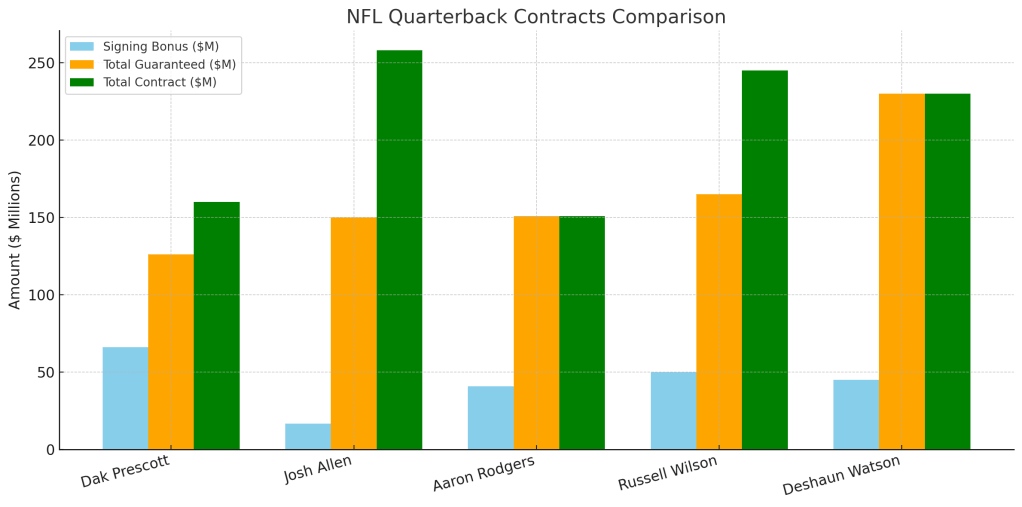
Deshaun Watson’s 5-year, $230 million deal with the Cleveland Browns is 100% guaranteed.
Even if he never plays again, he’s owed the full $230 million.
That’s why the deal shook the league and restructured how quarterback contracts are now negotiated.
🏀NBA
Guaranteed money is primarily the standard in the NBA.
Most contracts, including rookie deals are fully guaranteed unless otherwise specified.
Use cases
- Fully guaranteed contracts are the norm.
- Non-guaranteed and partially guaranteed contracts are typically for fringe roster guys, g-league and 2-way players or short-term signings.
- Stretch provision or buyouts may help teams mitigate dead money. However, the guaranteed part of a deal still hits the books.
Example
Bradley Beal had a $251 million deal with the Wizards was fully guaranteed and even included a no-trade clause. (Has the same in PHX).
This deal provided Beal max-level security, and it followed the NBA trend of locking in stars with ironclad guarantees.
⚾MLB
All MLB contracts are fully guaranteed unless clearly stated otherwise (very rare). It’s part of the league’s Collective Bargaining Agreement and player power culture.
Use cases
- Even if a player is released, they still get paid in full.
- Players have more leverage due to the league’s unionization.
- Buyouts and deferred payments are used, but the total still hits.
Example
Bobby Bonilla still gets paid over $1 million every July from a deferred guaranteed contract he signed in 1991. He was owed $5.9 million.
The Mets turned it into a 25-year payday. Guaranteed money, which ownership has extended for decades.
🏒NHL
Most NHL contracts are guaranteed, but how the money is paid (signing bonus vs base salary) is where organizations like to get strategic.
Use cases
- Players prefer contracts front-loaded with signing bonuses to protect against lockouts or buyouts
- Teams sometimes structure contracts so that the majority of money is in early years vs. to how other leagues use proration
Example
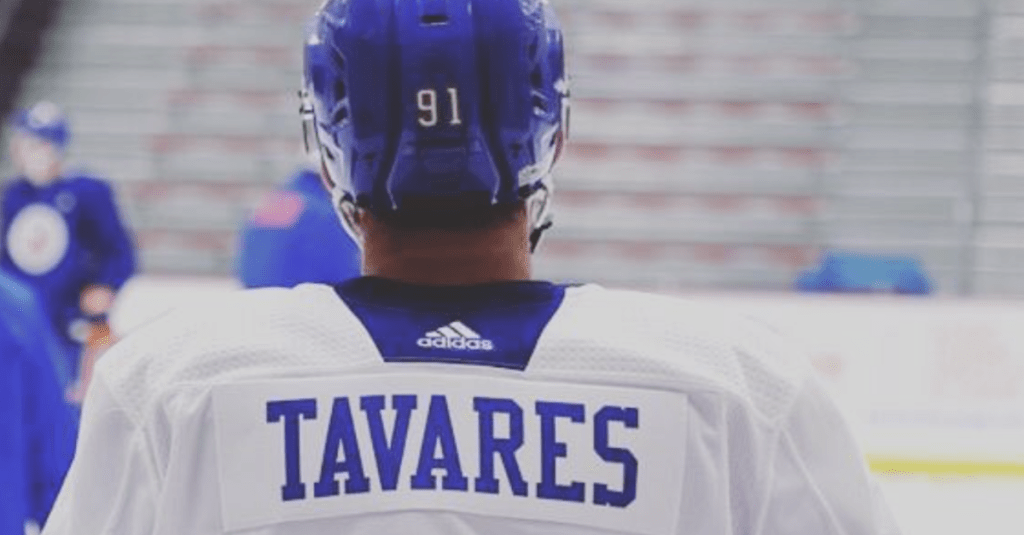
Auston Matthews’ extension with the Leafs included $60.5 million in guaranteed signing bonus money, ensuring he gets paid regardless of the potential for future injury or a union organized lockout.
⚽MLS / International Soccer
Guaranteed money in MLS and international soccer usually comes in the form of guaranteed portions of contracts, signing bonuses, or guaranteed annual wages.
Teams structure deals with guaranteed sums to attract top players while remaining compliant with salary budgets or league roster rules. This provides security for players moving internationally via transfers or between clubs on loans.
Use Cases
- Guaranteed base salaries that are paid regardless of injuries or performance.
- Signing bonuses or guaranteed wages in transfer agreements to make a deal competitive.
- Endorsements or performance guarantees integrated into the contract to supplement guaranteed earnings.
Example
Lionel Messi’s move to Inter Miami included a guaranteed base salary, supplemented by performance bonuses and endorsements.
Even if the team underperforms, the guaranteed portion of the deal ensures Messi receives a massive secured income, similar to other U.S pro league contracts and European transfers and signings.
🥊UFC / Combat Sports
Guaranteed money is rare, and varies from fighter to fighter.
It depends on the contract tier, star power, and negotiation leverage.
Use cases
- Most UFC fighters are paid a “show money” and “win bonus” structure.
- Only top fighters negotiate guaranteed minimums, or get paid even if a bout is canceled (Jon Jones, Connor McGregor in his prime, Khabib).
- Bellator and PFL are pushing new formats with more guaranteed cash.
Example
Conor McGregor has multiple deals that included guaranteed paydays in the multi-millions, even for fights he pulled out of or rescheduled.
It’s not the standard, but leverage in combat changes everything.
⛳Golf / Tennis /
Individual Sports
Guaranteed money is rare in traditional PGA/ATP events, but is common in sponsorships or new league formats like LIV Golf.
Use cases
- Traditional events pay based on finish, not guaranteed unless through appearance fees.
- LIV Golf introduced guaranteed contracts to their new “league”.
Example
Phil Mickelson reportedly received ~$200 million in guaranteed money on his new deal to join LIV Golf.
When the ink dried on to the paper, it became a never-before-seen level of guaranteed income in golf.
🏎️F1 / NASCAR / IndyCar
Guaranteed base salaries exist but vary widely.
Top drivers get big money locked in, but many rely on sponsorship deals and performance clauses.
Use cases
- F1 drivers may have a guaranteed minimum plus podium bonuses.
- Contracts can include lump-sum guarantees to switch teams.
- Most deals are kept private, but when they leak, they’re loaded.
Example
Lewis Hamilton reportedly earns $55 million a year, with a large portion fully guaranteed before incentives like wins and championships kick in.
Why Guaranteed Money Matters
Guaranteed money is the real value in every athlete’s contract.
It’s what stays when player performance dips. It’s what remains when injuries unfortunately occur.
It’s the money agents fight hardest for and lets players sleep better having locked in a guaranteed sum.
Guaranteed money isn’t just a headline figure: it’s leverage, security, and real cash in hand.
In an era where contract headlines exaggerate player earnings, guaranteed money tells the truth.
Players use it to lock in stability, especially in physical sports with high injury risk.
Teams use it to attract top talent and manipulate cap strategy when allowed.
Fans should focus less on total value, and more on what’s guaranteed when looking at an athletes contract.
When an athlete gets hurt, cut, or traded, guaranteed money keeps paying, no matter what.
It affects
- Tax planning
- Dead cap implications
- Team financial strategy
- Offseason freedom and leverage
- Player health risk tolerance
When you see a contract headline saying “$240 million,” just know that unless it’s fully guaranteed?
It’s mostly marketing and clickbait.
Endorsements and media appearances are often left out when discussing the major details of the terms of a new contract or signing.
Inflating the total value of a deal.
📊Graphic
🔗Related Terms
🔗Next Reads
- Luther Burden III’s Fully Guaranteed NFL Rookie Contract
- How Rich Paul Got a Fringe NBA Prospect a $10 Million Contract
- Canelo vs. Crawford Revenue & Purse Projections
- Tiger Woods’ Billion-Dollar Golf Empire
- All-Time Richest F1 Driver vs. Today’s Wealthiest Star
“But my God shall supply all your need according to his riches
in glory by Christ Jesus.”
— Philippians 4:19










 Apostle Sports Media