
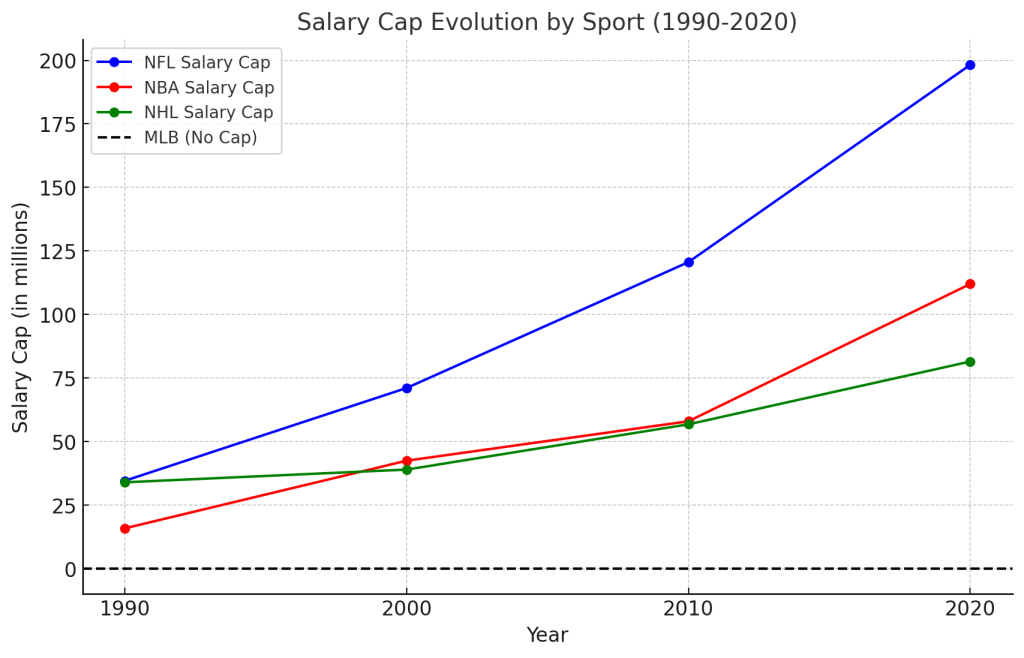
Salary Cap refers to the limit placed on the amount of money a team can spend on player salaries during a specific season.
It is one of the most critical tools leagues use to ensure competitive balance across teams with varying market sizes and financial resources.
By capping team payrolls, leagues hope to prevent larger-market teams from monopolizing talent simply by outspending everyone else.
While each league’s cap structure differs, the core idea remains the same:
the Salary Cap governs how much a team can pay its players.
How Salary Cap Works In Different Leagues
🎓NCAA / NIL Athletes
Technically, the NCAA does not have a salary cap because schools don’t pay athletes salaries (yet).
NIL introduced budget behavior that functions similarly from a market standpoint.
College football runs on soft capitalism, not a hard cap. The market sets price, not the rulebook.
Instead of cap management, schools and collectives manage:
- Collective budgets
- NIL pools
- Booster contributions
- Position group funding
- Retention strategy via NIL packages
The “cap” in college sports is informal and financial, not contractual.
Some schools can outspend others by millions, which impacts recruiting, retention, and the transfer portal.
Use Cases
- NIL Collectives set annual spend targets
- Boosters prioritize high-value sports (football, basketball)
- Position rooms receive pooled NIL “buckets”
- Players transfer to programs with more NIL upside
Example
A top QB prospect may receive $2–4 million in NIL offers from multiple schools. There’s no cap preventing the highest bidder from winning, only the size of the NIL pool and donor appetite.
🏈NFL
The NFL has a hard salary cap, meaning no team is allowed to exceed it, no matter the circumstance.
The NFL also uses dead cap.
Use Cases
- Cap set yearly based on league revenue.
- Proration of signing bonuses allows teams to work around short-term constraints.
- Teams use tools like void years, restructures, and post-June 1st cuts to create cap flexibility.
Example
The 2024 NFL salary cap is set at $255.4 million. The New Orleans Saints, who frequently operate over the cap, consistently use restructures and void years to stay compliant while remaining competitive.
🏀NBA
The NBA operates under a soft salary cap, allowing teams to exceed the limit using exceptions.
Use Cases
- Exceptions like the Mid-Level, Bi-Annual, and Bird Rights allow spending over the cap.
- Teams crossing certain thresholds trigger the luxury tax and first and second apron penalties.
Example
For the 2024-25 season, the NBA salary cap is set at $140.588 million, with a luxury tax line at $172 million.
The Golden State Warriors paid over $180 million in taxes during their dynasty era to keep their super team together.
🎾MLB
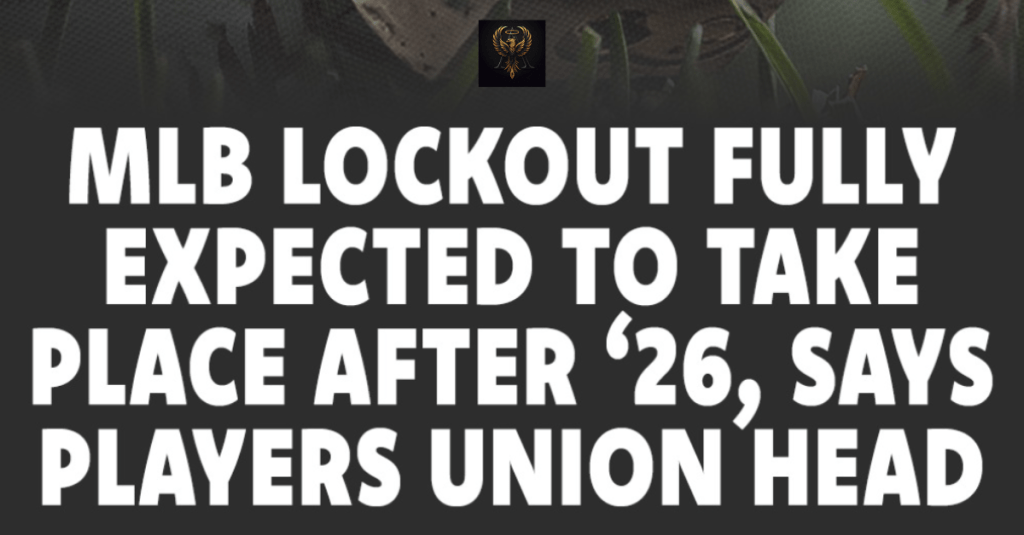
Technically, the MLB has no salary cap as they use arbitration, but the league still operates under a luxury tax system.
Use Cases
- Teams are allowed to spend freely on talent, but those exceeding thresholds pay escalating penalties.
- Larger markets (like the Yankees and Dodgers) often go over, while smaller markets try to stay under.
Example
The New York Mets spent over $300M on payroll in 2023, 2024 and 2025, triggering over $100 million in tax penalties.
This new spending trend with the Mets will likely continue after their 2025 signing of Jaun Soto.
🏂NHL
The NHL runs a hard salary cap similar to the NFL.
Use Cases
- The cap is adjusted annually based on revenue.
- Teams use Long-Term Injured Reserve (LTIR) to create space.
- Front-loaded contracts and signing bonuses are used to maximize value.
Example
The 2024 NHL salary cap is $95.5 million, a $7.7 million increase from the 2024-2025 season. The Tampa Bay Lightning used LTIR and savvy bonus structuring during their Stanley Cup runs to stay compliant.
⚽MLS / International Soccer
Soccer uses salary caps very differently depending on the league.
MLS uses a hybrid structure, part salary cap, part free market.
Soccer’s cap systems reflect its culture, MLS values parity, global soccer values capitalism.
MLS cap tools include:
- Salary budget charges
- Designated Player (DP) slots
- Allocation Money (TAM/GAM)
- Homegrown player exemptions
- Transfer/spend rules
This allows MLS to control parity domestically while still signing global stars.
International soccer uses no salary cap at all, instead relying on transfer fees, market competition, and financial regulations like UEFA’s Financial Fair Play (FFP).
Because there’s no draft and no hard cap, ROI becomes the governing financial mechanism.
Use Cases
MLS
- Cap efficiency matters for roster building
- DPs allow cap bypass for stars
- Young South American exports maximize ROI
- Competitive parity across markets
International
- Clubs outspend based on ownership wealth
- Transfer fees replace salary caps
- Wage bidding wars for top players
- FFP prevents reckless losses, not star hoarding
MLS Example
Inter Miami signed Lionel Messi as a Designated Player, bypassing the salary cap and leveraging commercial revenue, sponsors, and international branding instead of pure payroll cap space.
International Example
Real Madrid, Manchester City, and PSG operate without caps.
They compete by spending hundreds of millions in wages and transfers annually. FFP restricts financial losses, not salaries or roster size.
🥊UFC / Combat Sports
Salary cap does not exist in combat sports like UFC. Fighters negotiate contracts individually based on performance, recognition and brand.
Use Cases
- Fighter pay is largely based on star power, performance, PPV revenue shares (pre-Paramount streaming deal), and bout incentives.
- Lack of transparency and unionization = no fixed cap exists.
Example
Conor McGregor reportedly earned over $50 million in a single night when he boxed Floyd Mayweather, with no contractual cap.
⛳Golf / Tennis / Individual Sports
No salary cap in individual sports.
Use Cases
- Players earn based on placement and performance.
- LIV Golf introduced large guaranteed contracts, challenging PGA norms.
Example
Brooks Koepka reportedly received over $100 million to join LIV Golf, with no cap or ceiling on earnings.
🏎️ Racing / NASCAR / Formula 1
F1 is the only circuit to introduce a team budget cap ($141.2 million for 2025), not specific to racers salaries, rather to their performance costs.
Use Cases
- $135 million per team budget limit for most races.
- Drivers are usually excluded from cap figures.
Example
Max Verstappen’s salary isn’t limited, but Red Bull Racing must manage their performance operations under the $141.2 million budget cap.
Why Salary Cap Matters
The salary cap is the financial guardrail for nearly every front office in pro sports. It affects:
- Contract structuring
- Cap strategy / manipulation
- Free agent market competitiveness
- Team longevity
- Revenue sharing and CBA negotiations
Fans see a headline number, but GMs see cap hit, dead cap, guaranteed money, and proration.
Without the cap?
Super teams would be the norm, parity would be dead, and small markets wouldn’t stand a chance.
Move everyone to Los Angeles and call it a day.
📊Graphic
🔗Related Terms
🔗Next Reads
- NBA Salary Cap Explained
- How Media Rights & Streaming Deals Influence Player Salaries
- Juan Soto Signs the Biggest Contract in MLB History
- T.J. Watt’s 3-Year, $123 Million Contract Extension
- Why NHL Players Flock to Florida Teams: Taxes & Take-Home Pay
“The Lord is with you when you are with him. If you seek him, he will be found by you, but if you forsake him, he will forsake you.”
– 2 Chronicles 15:2






















 Apostle Sports Media