

The 2026 Chick-fil-A Peach Bowl between the Oregon Ducks and the Indiana Hoosiers is not just a College Football Playoff semifinal matchup.
It’s also one of the highest-grossing college football games of the season from a gate revenue perspective.
With tickets sold out at Mercedes-Benz Stadium in Atlanta and broad interest from fans across the country, the projected revenue from attendance and ticket sales alone will land in the tens of millions of dollars.
Prior to including additional revenue from premium seating, hospitality packages, and ancillary spending inside and outside the stadium.
Here’s how the economics of the CFP 2026 Peach Bowl break down.
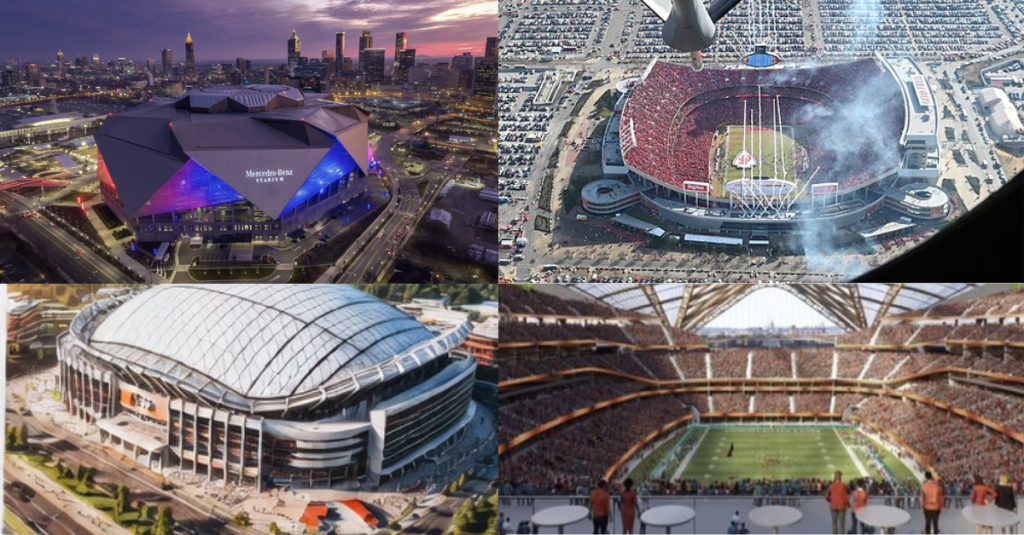
Mercedes-Benz Stadium Capacity & Attendance
Mercedes-Benz Stadium has an official capacity of roughly 71,000 for major football events, though postseason college football has historically pushed well beyond that threshold. During the 2022 CFP Semifinal, the Peach Bowl set a record with 79,330 in attendance, surpassing several major sporting events in the same venue.
For 2026, demand again exceeded standard capacity. Official attendance was announced at 75,604, putting the stadium roughly ~4,500+ above standard capacity, reflecting elevated CFP demand and aggressive utilization of standing room, suite overflow, and premium club space.
For Oregon and Indiana, two programs with strong traveling fanbases and national relevance, that level of turnout signals not just enthusiasm, but spending power.
Both teams are also in search of their first national title in school history, making fan interest soar and generate increasingly more money.
With a sold out NFL stadium over capacity ticket sales are not the only money being made at the gate.
Gate revenue is also created at the concession stands, march boxes, bars, clubs and even when the peanuts guy is walking around.
Ticket Pricing & Projected Gate Receipts
Ticket pricing for the Peach Bowl reflects the elevated stakes of a CFP semifinal matchup. Primary & secondary market pricing shows:
- Standing Room Only: ~$161+
- Standard Reserved: ~$200–$300+, with median levels around $280
- Lower Bowl / Club: ~$400–$1,400+, with premium positions reaching $2,000–$4,000+
- Suites & Hospitality: ~$18,000–$50,000+ per unit
Gate Revenue Projection
Using a blended average held between:
- SRO & lower priced inventory
- mid-market seating ranges
- high-end club/suite boosts
combined with 75,604 attendees,
Projected Gate Revenue: ~$23–$31 million
This estimate includes tickets, but excludes:
- hospitality packages sold at multipliers
- secondary market premiums
- stadium concessions, merchandise, parking
- CFP ancillary & tourism economic impact
Because of the wide range of ticket pricing, from SRO to premium club inventory total gross receipts vary significantly.
However, using real-time attendance data, it’s now reasonable to assert the Peach Bowl’s gate revenue comfortably clears $20 million and likely settles into the low-to-mid $30 million ceiling range.
What Drives the Peach Bowl’s High Gate Figures
Major postseason college football events don’t generate record gate receipts by accident.
They’re built on pricing strategy, market segmentation, scarcity, and postseason incentive dynamics that mirror premium sports properties, not traditional college athletics.
Sellout Demand & Secondary Market Prices
The Peach Bowl sold out rapidly, and secondary market pricing stayed elevated through kickoff, an indicator of strong consumer willingness to pay (WTP).
Secondary platforms essentially operate as real-time price discovery engines, revealing true market value beyond face price. When secondary pricing remains above primary issuance, it signals that the event was priced below equilibrium, meaning demand > supply.
Tiered Ticketing & Revenue Segmentation
The Peach Bowl uses tiered pricing to monetize the entire consumer demand curve.
Fans willing to pay $175–300 gain entry-level access, while high-net-worth, brand-affinity, or experiential consumers pay multiples of base rates for club seating, suites, and VIP hospitality. This segmentation allows the event to extract maximum average revenue per seat rather than using a flat pricing model.
In economic terms, segmentation reduces deadweight loss by capturing value from both price-sensitive and price-insensitive consumers.
Neutral-Site & Travel Market Dynamics
Atlanta is a logistics hub, making it easier for national fans to travel relative to regional venues.
Neutral-site locations in hub cities unlock additional pricing power by enabling events to sell beyond geographic fanbases, rather than relying on a home-market-dependent revenue model.
Postseason Prestige & Scarcity Premium
College Football Playoff games occur once per season per market, meaning the Peach Bowl benefits from scarcity economics, not pure entertainment demand.
Scarcity raises WTP, particularly among alumni, boosters, and sports travelers who view attendance as both an emotional experience and status good. CFP postseason matchups function closer to Super Bowl or Final Four economics than traditional bowl games.
Revenue Beyond the Ticket Stub
Gate revenue is only the first layer of economic activity tied to major college postseason games.
Once fans are inside the building, the event transitions into a multi-channel monetization engine.
Concessions & Merchandise Economics
High per-capita stadium spend on food, beverage, and merchandise compounds total revenue.
In major postseason settings, per-fan stadium spend can reach $25–$55+, driven by elevated emotional spending, celebratory behavior, and branded merchandise purchases.
For a crowd of ~75,604, that alone can generate low-to-mid seven figures in stadium revenue.
Parking, Hospitality & Experiential Premiums
Premium event consumers often enhance attendance with add-ons like VIP lounges, pre-game tailgates, fan experiences, and other hosted, premium hospitality.
These offerings function as profit multipliers, capturing luxury and corporate demand that traditional college events rarely monetize at scale compared to the CFP.
Atlanta, Georgia Economic Stimulus
Beyond stadium-controlled revenue, CFP events create regional economic spillovers, hotels, restaurants, transportation, nightlife, and tourism activity. Major bowl games routinely deliver tens of millions in local economic impact, effectively turning the event into a temporary tourism export industry for the host city.
APSM Takeaway
The 2026 Peach Bowl gate revenue is poised to rank among the highest CFP semifinal outcomes to date.
With 75,604 fans in attendance, tiered premium pricing, secondary market lift, and top-tier postseason stakes, the event reinforces how modern college football operates as both a media product and a physical economic export.
Postseason college games are no longer just “events,” they are financial engines sitting at the intersection of sports, media, tourism, and legalized wagering ecosystems.
Next Reads
- Total Betting Revenue on the 2026 Peach Bowl: Handle, Economics & Market Impact
- How Much the 2026 CFP Fiesta Bowl Generated in Revenue: Miami vs Ole Miss
- Lane Kiffin Could Earn $1 Million Off Ole Miss’s CFP Run After Leaving for LSU: Inside the Head Coach Postseason Bonus Structure
- Lane Kiffin Could Earn $1 Million Off Ole Miss’s CFP Run After Leaving for LSU: Inside the Head Coach Postseason Bonus Structure
- What NCAA’s New Betting Rules Mean for Future Gambling
Credits
Written By: Aidan Anderson
Research & Analysis: Apostle Sports Media LLC
Sources: SI Sports, CFP Releases, Ticketmaster & StubHub Data, APSM Proprietary Analysis
Featured Image: Public Domain / Wiki Commons
Disclaimer: Financial information for educational purposes only. Not professional advice.
Put on the full armor of God, so that you can take your stand against the devil’s schemes.
– Ephesians 6:11


























 Apostle Sports Media