
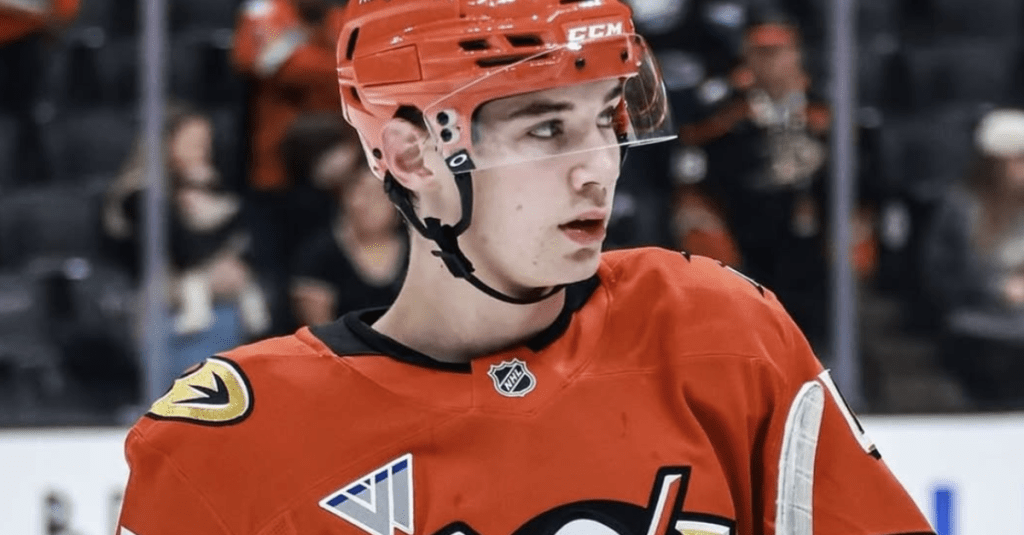
Elite draft capital doesn’t always guarantee superstardom overnight, but it does guarantee opportunity, and in the modern NHL, opportunity is the currency that shapes financial trajectories.
For Beckett Sennecke, the Anaheim Ducks’ third overall pick in the 2024 NHL Draft, that opportunity came in the form of a three-year entry-level contract that blends league structure with upside-driven bonus potential, setting the stage for both on-ice impact and early career financial foundation.
Sennecke’s rise through junior hockey reads like a highlight reel: a Toronto native who posted 68 points (27 goals, 41 assists) with the Oshawa Generals in 63 games during the 2023-24 OHL season, led draft-eligible skaters in playoff scoring, and showcased a rare scoring instinct combined with size and vision, traits that convinced Anaheim to pull the trigger at No. 3 overall.
At 6-foot-3 with playmaking instincts and a knack for winning puck battles, Sennecke is one of the most intriguing forward prospects in the NHL.
Early in his Ducks tenure, he’s already posted glimpses of impact at the NHL level, demonstrating that his offensive skill set can translate into the pro game while showing the physical tools necessary to thrive in the NHL’s evolving style.
He also has been nominated player of the month during the 2025 NHL season. After losing Connor Bedard, Seneckee seems to be the next best man up for the Ducks.
In a league where entry contracts are highly regulated, Sennecke’s deal is a textbook case of how the NHL’s entry-level framework rewards draft capital with structured earning potential, while embedding performance incentives that bridge the gap between controlled salaries and true earnings.
Contract Details
- Contract Type: Entry-Level Contract (ELC) – 3 years (2024/25–2027/28)
- Total Value: ~$2,827,500
- Cap Hit AAV: ~$942,500
- Base Salary per Year: ~$877,500
- Signing Bonus: ~$97,500 per year
- Performance Bonuses: Up to ~$3,100,000 annually (structure based on NHL ELC bonus pools)
- RFA After 2027/28: Restricted Free Agent at age 22
Unlike star veterans with multi-million dollar AAVs, Sennecke’s deal fits squarely within the NHL’s entry-level scale, but the real financial depth comes from the bonus structure.
Performance bonuses (which can trigger based on games played, point thresholds, and league awards) potentially push his earnings well above the base salary, a lever many entry contracts lack.
The combination of base salary, signing bonuses, and performance incentives creates a total earning architecture in which Sennecke’s actual cash flow could approach ~$1.9–2.0 million per season if all bonus criteria are met, a meaningful enhancement for a young player still in controlled salary years.
Estimated Salary Progression
Under the standard NHL entry-level rules, Sennecke’s salary over the contract reads like this:
- 2024-25: Minimal NHL base, primarily bonus/entry contributions
- 2025-26: ~$877,500 base + bonuses (~$3.1M) + initial signing bonus
- 2026-27: Same structure as 2025-26
- 2027-28: Continuation of base and bonuses
This progression places him in the typical pre-arbitration earnings phase, lower guaranteed base, but upside via real performance pay.
Because NHL entry contracts slide under certain conditions (e.g., <10 NHL games in a season), smart roster management can optimize cap years while still pushing Sennecke toward bonus-eligible play.
Player Profile & On-Ice Trajectory
Sennecke’s game profile adds another financial dimension: he isn’t just a first-round draft pick; he’s an offensive catalyst with a fast-rising analytic profile and production pedigree.
His 2023–24 OHL totals (27 goals, 41 assists, +33 rating) came with elite shot volume (207 shots) and situational explosiveness, traits that project into NHL transition scoring.
Multiple development camp scouts lauded his preparation and willingness to learn, and his early NHL minutes suggest a player capable of carving out top-six forward responsibility as early as Year 2–3 of his entry contract.
A leap that would accelerate bonus earnings and future arbitration leverage.
Residency & Tax Strategy
Income tax in the NHL, especially for entry-level players, is an underreported lever in net take-home calculations.
Sennecke’s contract is structured under the Anaheim Ducks payroll (California), which has one of the NHL’s higher combined state + local tax rates.
- Home Province: Ontario, Canada, no U.S. state income tax on offseason earnings
- Team Base: California, state income tax (~13.3% top marginal) applies to NHL salary
- Jock Tax Exposure: Applies for all road games in other U.S. states
Canada’s tax residency rules allow many NHL players to maintain Canadian domicile for part of the year, which can shelter portions of income from U.S. taxation, but only if time in Canada exceeds U.S. days and other residency criteria are met.
This makes smart residency planning and off-season domicile decisions financially meaningful for young players like Sennecke, especially in the early salary phase when base wages are modest.
For an NHL rookie earning under $1 million base but supplemented by bonuses, structuring residency and timing of bonus recognition can improve real net earnings by several points, compared with players living full-time in high-tax U.S. states.
Taxes, Fees & Professional Expenses
Income in professional hockey doesn’t translate one-to-one to bank accounts. Sennecke’s earnings are subject to:
- Federal Tax: ~24–35% (U.S. federal bracket and Canadian tax credits)
- State Income Tax: California (~13.3%) and jock tax across states
- Agent Fee: ~3% typical for NHL ELCs/agent fee
- Other Deductions: NHLPA dues, financial planning, travel/living costs, write-offs
For entry-level players, performance bonuses are typically paid after the season, and their taxability depends on where the income is earned, which creates a variable state tax profile that can be managed with residency strategy and offseason planning.
Estimated total deductions: ~40–48% of gross, depending on bonus realization and residency decisions.
Estimated Net Contract Value
After taxes and professional expenses are considered, Sennecke’s contract, even with substantial bonuses translates into:
Estimated net take-home over 3 years:
~$2.1 – $2.4 million
This range reflects netizing base salaries, performance bonus realization, and tax planning.
For a third-overall pick still in controlled earnings years, that’s a strong foundation, especially considering that once he reaches arbitration eligibility, his earning power will increase significantly.
Financial Outcome
- For Sennecke: This contract gives guaranteed entry-level security and upside through performance bonus potential, providing financial incentive tied directly to production, rare for a young player in a structured deal.
- For the Ducks: They secure high draft capital cost-effectively, aligning future cap hits with development timelines and bonus ceilings that reward breakout performance rather than penalize it.
- For the market: Sennecke’s deal exemplifies how high draft capital + team bonus design equals controlled dollars today and leverage later, a model that balances risk and reward for 18–20-year-old talents.
Beckett Sennecke’s three-year entry-level contract with the Anaheim Ducks is a textbook NHL rookie compensation model: modest base salary, strategic performance upside, and embedded incentives that reward production rather than mere presence.
But the value isn’t just the dollars, it’s the financial design that gives this high draft pick both security and runway while placing him on a path toward arbitration leverage and future market value.
This contract isn’t just a salary, it’s the first financial step of what could be a decade-long NHL earnings arc, shaped as much by scoring hockey goals as by smart contract structure.
Want to Learn the Wealth Framework All Elite Earners Use?
The APSM “7 Primary Ways Athletes Build Generational Wealth” Report Includes:
- Wealth engines used by the world’s top earners
- Multi-contract wealth acceleration modeling
- Real-estate & portfolio structures designed for long-term stability
- Tax-efficient income routing
- Brand, endorsements & equity playbooks
- Risk-tier modeling athletes use to build & protect their net worth
If you want the real path to lifelong wealth, not hype, not cliches, this is the foundation.
Next Reads
- How NHL Players Get Paid Compared to Other Leagues
- Why NHL Players Flock to Florida Teams: Taxes & Take-Home Pay
- How Media Rights & Streaming Deals Influence Player Salaries
- The Streaming Problem in Sports
- Inside Jayson Tatum’s $17 Million Mansion Purchase
Credits
Written By: Aidan Anderson
Research & Analysis: Apostle Sports Media LLC
Sources: Puckpedia, NHL.com, ESPN player profiles, Canadian Hockey League reports, APSM proprietary analysis
Featured Image: Public Domain / Wiki Commons
Disclaimer: This article contains general financial information for educational purposes and does not constitute professional advice.




















 Apostle Sports Media