
In likely the most shocking trade in NBA history, the Dallas Mavericks sent Luka Dončić to Lakers on February 1st, 2025. In exchange for the 25 year old Superstar, the deal involved Anthony Davis, Jalen Hood-Schifino, Max Christie, and two future first-round picks heading to Dallas.
This move, reportedly orchestrated behind closed doors by the franchises GM’s Nico Harrison and Rob Palinka, caught the world, and even Dončić himself off guard. According to both Dončić and Davis, neither player had requested a trade, nor had any prior indication that the GM’s were negotiating a deal. Beyond the on-court implications, this trade had staggering financial consequences for Dončić.
Luka lost his eligibility for a $345 million supermax extension, which would have made him one of the highest-paid players in NBA history.
True Cost of the Trade
Historically, only two players with multiple championships (Steph Curry and Nikola Jokić), have signed supermax deals and then went on to win the NBA championship.
While Luka’s superstardom trajectory suggested he would follow suit, (making an NBA Finals appearance in 2023-2024), GM Nico Harrison’s public statement was that Dallas should not commit $345 million to one player, signaling that the front office was in agreement.
The trade meant that instead of the five-year, $345 million supermax, Luka is now only eligible for a five-year, $229 million max contract. Surely a max deal is nothing to scoff at either, but the money he is missing out on now that he is ineligible and has moved to California, it is unlikely Dončić will make up the $116 million difference anytime soon.
A ~$116 million loss is significant, but the hit doesn’t stop there.
Supermax vs. Max: The Dallas-to-LA Contract Breakdown
| Scenario | Dallas Supermax | Los Angeles Max | Difference |
|---|---|---|---|
| Contract Value | $346M | $230M | -$116M |
| State Tax | $0 | ~$30.6M | -$30.6M |
| After Taxes (Est.) | ~$205M | ~$136M | -$69M |
California vs. Texas State Taxes
One of the biggest differences between playing in Texas (0% state income tax) and California (13.3%) is the massive financial impact on player contracts and take-home earnings.
The Supermax He Left on the Table
Had Luka signed the supermax in Dallas, he would have paid no state income tax on his salary. That alone would have saved him an estimated $45 million in income taxes. Instead, he’s now paying an additional $29 million a year in state income tax, on a contract that’s already worth significantly less than the deal he lost.
What LA’s Tax Stack Actually Looks Like
Playing in LA means his contract gets taxed at the highest possible bracket across the board. Between federal tax, California state income tax, jock taxes owed on road games, agent fees, and the Lakers’ own travel tax structure, Dončić is losing tens of millions in what would’ve been tax-free money in Texas, overnight, just by changing zip codes.
The Real Take-Home Number
Factor in federal tax (~37%), California state tax (~13.3%), agent fees (~2%), and NBA escrow (10%), and the combined hit lands around 62.3%.
That puts Luka’s actual take-home somewhere under $100 million, roughly $83 million, on a contract that’s already $116 million lighter than the supermax he was set to sign.
The Full $150 Million Picture
Add the contract downgrade to the tax gap and the total estimated loss lands around $150 million.
$116 million of that was gone the moment the trade happened. Another roughly $100 million is now being absorbed through California taxes, team-level fees, and the higher cost of living that comes with a four-year max deal in Los Angeles instead of Dallas.
While fans argue that LA’s marketability could help Luka recover the money, the reality is he would need to generate an additional $300 million+ off the court, to be able to break even with what he would have earned on a supermax. That’s an uphill battle regardless of the market you belong to.

Luka’s Real Estate & Strategy
Luka has been actively investing in real estate, purchasing a $12M mansion in Dallas, a market where luxury properties provide substantial long-term value. Reports have also surfaced about Doncic purchasing a home, but if that purchase was in progress, he may need to reconsider.
Dallas
A $12M mansion in Texas represents high-end luxury with low overhead costs. The only financial aspect that Los Angeles has a positive in over Dallas in regards to saving income, is property taxes. Likely due to being a no-income-tax state, the average property tax rate in the Lone Star State is 1.74%, while the state of California sees ~0.75%.
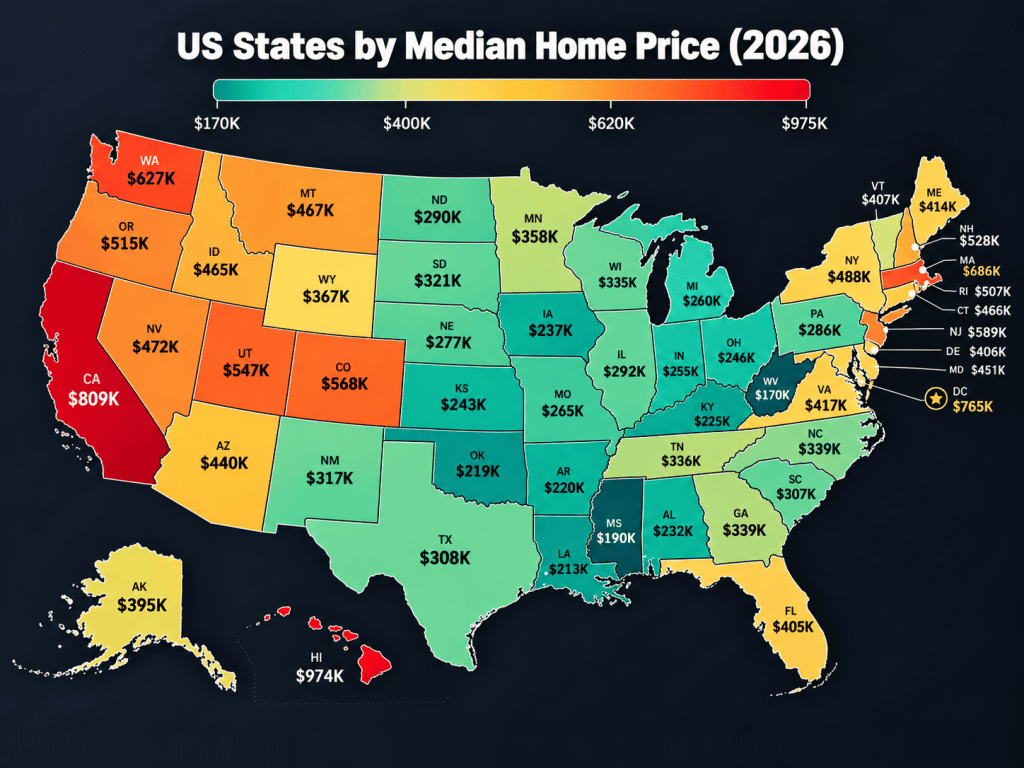
However, the average home price in the state of California is 2x, sometimes 3x of the standard residency in Texas. While the rate is 1% lower, the state likely does not profit much less, if not still more than Texas in property tax.
Los Angeles
In LA, $15 million barely scratches the surface of the luxury market, and with property taxes, insurance, and upkeep, it’s a much riskier investment.
Los Angeles is known for their ridiculous home sizes and prices. Luxury homes with appliances, rooms and features that the average person doesn’t need, as well as the weather and location of the city, has set the market for even a standard, single-family home go for upwards of $1 million or more.
In Dallas Fort Worth, the median home price is ~$390k, compared to the ~$990k median price in Los Angeles county. So, while Luka may be able to make back some of his lost money in the major players market in LA, his wealth, despite being generational, is not the top dog in LA by any means.
His home size and location are certainly still going to be outstanding, it just costs more for half of what he could get in Texas. When it comes to making money, LA is your place, when it comes to investing that cash though?
Dallas has been in the works of development for years and has a higher possibility for a market rise, rather than a crash. With the uncertainty surrounding the LA housing market, Luka’s potential real estate investments will also require a more cautious approach.
From a financial perspective, his best move might be renting a luxury condo in LA instead of purchasing property, given the volatility.
Can LA Endorsements Make a Difference?
Luka Dončić is already one of the most marketable athletes globally, with endorsement deals from Nike (Jordan Brand), Panini, BioSteel, and 2K Sports, among others.
Yet the question remains: will being in LA significantly boost his off-court earnings enough to close a ~$300 million gap?
The Market Gap Isn’t as Big as It Looks
The Dallas Mavericks rank 5th in team revenue. The Lakers rank 3rd. That’s what stood out when the trade broke and the internet lost its mind for 24 hours straight, the gap people assumed existed isn’t actually that dramatic. Yes, the Lakers are the bigger market, both franchise-wise and location-wise, but Dallas isn’t some afterthought market. It’s not Ohio.
The median home price difference throws most fans off when comparing which market is actually better for investment, since the instinct is bigger number equals better market. But Dallas is a major city in a major state. It’s not LA or Miami, but Texas markets are climbing fast while several long-established markets are more prone to flattening or correcting rather than continuing to rise.
Worth noting too: the Lakers don’t even hold the highest franchise valuation in the NBA, and the Mavericks sit just two spots behind them. LA alone isn’t the financial magic wand fans assumed it was the moment the trade broke.
Luka Was Already a Global Star Before This Trade
LA’s media exposure is undeniably larger. But Luka was already a global superstar before this trade, Slovenian-born, internationally recognized, endorsement deals already locked in across multiple continents. He wasn’t a rising domestic name who needed a bigger market to get discovered.
New Deals Won’t Close a $300M Gap On Their Own
New endorsement opportunities will likely surface simply from being in a bigger media market. But the idea that LA alone bridges a $300 million shortfall is unrealistic. Only a handful of athletes in league history, LeBron, Steph, peak Jordan, have ever built off-court earnings at that scale, and all of them did it over a full decade-plus, not overnight from a market change alone.
LA’s Housing Market & Luka’s Next Move
Beyond state taxes, Luka will now also be subject to additional international taxation on endorsements and appearances. Given that he plays for Slovenia in international competition, this adds another layer of financial considerations.
From a Dallas salary cap perspective, trading Luka meant they avoided committing $345 million long-term, which could have financially restricted their ability to build a deeper roster. Whether that gamble pays off remains to be seen. With LA’s real estate market still recovering from natural disasters, buying a $15 million+ mansion is an entirely different financial equation than in Dallas. $15 million in LA doesn’t hold the same weight, making it unlikely that Luka will get the kind of value he had in Texas.
Thus, it would make more sense financially for the Slovenian born Superstar to continue investing his money into the Dallas and greater Texas housing markets. While his brand image and stock for endorsements and partnerships will increase in LA, he was already an international star, making his climb to earn that $300 million+ difference much harder than if he was a states born rising star.
Can Luka Close the Gap?
To truly recover the $150 million lost from this trade, Luka would need to generate ~$300 million or more outside of basketball, factoring in federal, state and county taxes, as well as player fees, league fees, agent fees and potential fines and other unknown but mandatory expenses.
Life is still life for superstars. Even with LA’s market power, only a few NBA players, LeBron, Steph, and Jordan-level athletes have reached those earnings through endorsements and investments. This means Luka will have to take a strategic approach to endorsements, business ventures, and real estate to make up the difference.
The reality? LA is a better market, but the financial loss is nearly impossible to fully recoup (ROI).
Biggest Trade Cost Ever
Luka Dončić moving to LA is already a mind-numbing and groundbreaking trade, but financially, it might be one of the most costly moves for a single player in NBA history.
- $345 million supermax gone
- $116 million lost from contract downgrade
- $150 million lost when including California taxes
- $300 million+ needed outside of basketball just to break even
While LA offers marketing potential, it’s a massive financial risk for Luka unless he secures high-revenue business ventures, or decides to start his own company in LA, and this trade could cost him more money than any NBA player has ever lost in a single transaction.
Bottom Line
Luka Dončić didn’t just get traded. He took the single largest financial hit any player has ever absorbed in one transaction, a $345 million supermax gone, a $116 million downgrade on his new max deal, and another ~$30-45 million a year lost to California’s tax structure that Texas never would have touched.
Add it all together and the total swing is somewhere around $150 million, with a real, non-hypothetical need to generate $300 million or more outside of basketball just to land back where he would’ve been if the trade never happened.
LA is a better market for exposure. It is not a better market for keeping what you earn. Luka’s smartest financial move from here isn’t chasing LA real estate at double the Texas price point, it’s protecting the Dallas assets he already built, treating California as a market to earn in rather than a place to plant roots, and understanding that no city’s spotlight is worth more than the math on his own contract.
Superstardom got bigger. The net bank balance did not.
Luka Dončić Trade Cost FAQs
How much money did Luka Dončić lose in the Lakers trade?
An estimated $150 million total, combining the $116 million contract downgrade from losing supermax eligibility (from a potential $345M deal to a $229M max deal) and roughly $30-45 million in additional annual tax exposure from moving from no-income-tax Texas to California’s 13.3% top state rate.
Why did Luka Dončić lose his supermax eligibility?
Supermax eligibility is tied to remaining with the team that drafted or originally signed a player under specific NBA CBA criteria. Once traded to the Lakers, Dončić became eligible only for a standard max contract, a five-year, ~$229 million deal instead of the five-year, $345 million supermax he would have qualified for by staying in Dallas.
How much more does Luka Dončić pay in taxes now that he plays for the Lakers?
California’s top state income tax rate is 13.3%, compared to 0% in Texas. On a contract of this size, that difference alone represents an estimated $29-45 million in additional annual state tax exposure that Dončić would never have paid had he re-signed in Dallas.
Can Luka Dončić make up the money he lost through endorsements in LA?
It’s possible but historically rare. Only a small handful of athletes, LeBron James, Stephen Curry, and peak-era Michael Jordan, have ever built off-court earnings large enough to offset a gap of this size, and all of them did it over the course of a full decade or more, not from a single market change.
Should Luka Dončić buy real estate in Los Angeles?
Based on the math, renting rather than buying is the more financially sound near-term move. LA’s luxury real estate market runs roughly 2-3x the price of comparable Dallas-Fort Worth properties, carries more market volatility, and offers a lower property tax rate that doesn’t come close to offsetting the higher purchase price. His existing Dallas real estate remains the stronger long-term asset.
Next Reads
- The Business of Lakers Basketball: The $10 Billion 2025 Sale, Luka Dončić Coming to L.A, and New Team Ownership Equity Stakes
- Kevin Durant’s Trade to the Houston Rockets
- Lakers’ $10 Billion Sale
- Shai Gilgeous-Alexander’s Path to an $80 Million Per Year Contract Extension
- How the Dodgers’ Ownership Built a Multi-Billion Dollar Sports Empire
Disclaimer: This article contains general financial information for educational purposes and does not constitute professional advice. APSM estimates are derived from publicly available information, tax assumptions, finance modeling, and industry-standard fee structures. Actual earnings may vary based on residency elections, private contract provisions, image/media rights agreements, bonuses, and tax filings.