The integration of analytics into baseball has revolutionized the way teams manage finances, evaluate players, and strategize for long-term success. Gone are the days when gut feelings and traditional scouting alone dictated player signings and payroll decisions.
Today, data-driven insights are reshaping the financial landscape of the sport. Here is how exactly the import of tech analytics into the MLB is impacting the money behind the game.
📊 Player Valuation & Contract Negotiations
- Advanced Metrics: Teams use sabermetrics and proprietary data to assess player value beyond traditional stats, identifying undervalued assets who provide strong return on investment.
- Predictive Modeling: Predicting player performance trajectories helps front offices avoid overpaying for declining talent or risky contracts.
- Arbitration & Extension Strategy: Analytics inform decisions on when to offer extensions or let players test free agency, optimizing contract timing and cost.
This is where the financial shift actually starts, and it’s the piece most fans never think about when they see a headline contract number.
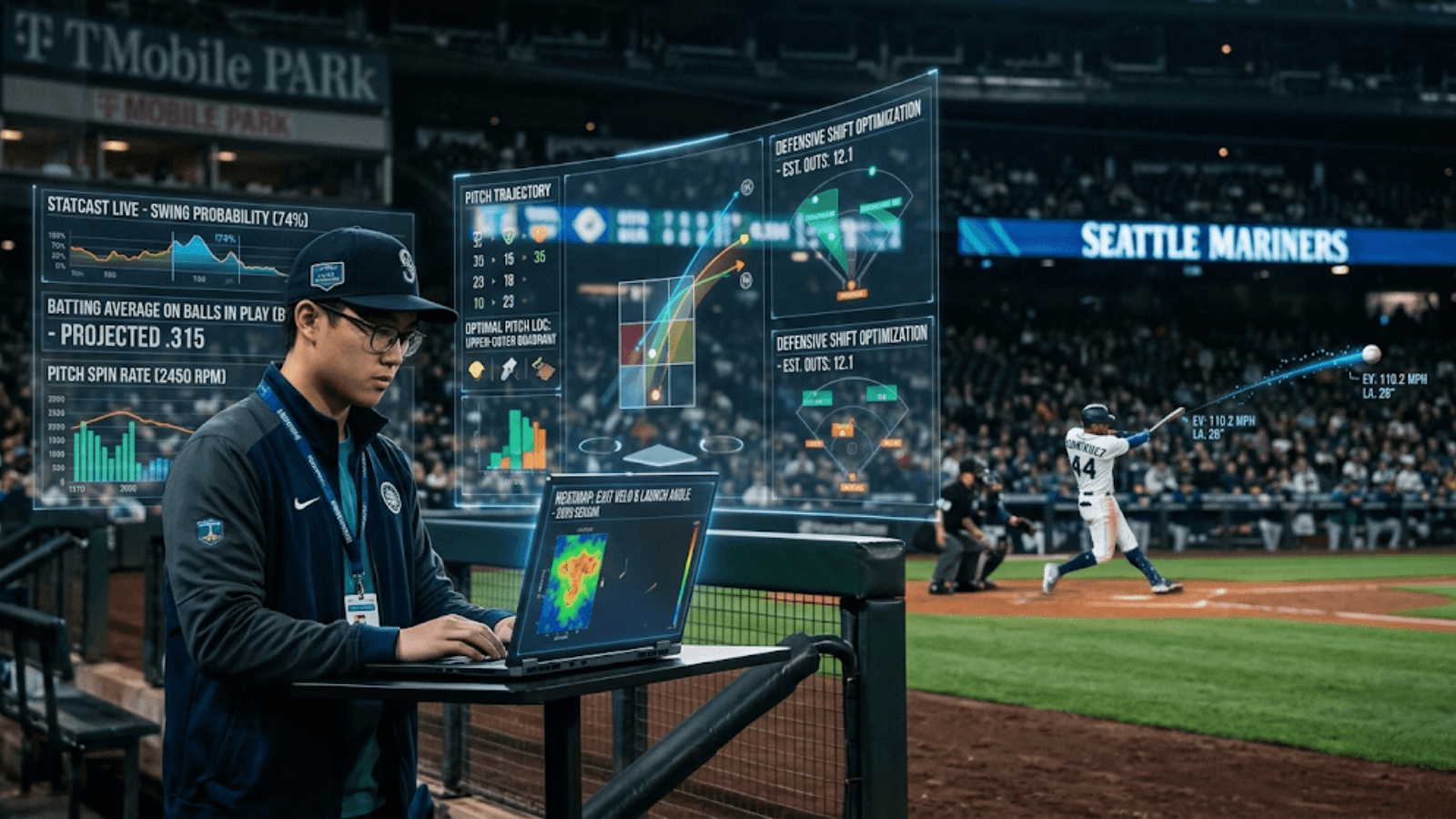
A team’s front office isn’t just watching batting average or ERA anymore, they’re building predictive models around exit velocity, spin rate, defensive positioning data, and dozens of other underlying metrics that traditional scouting reports never captured.
That data tells a front office something a batting average never could, whether a player’s current production is sustainable or whether it’s about to decline, and that distinction is worth tens of millions of dollars on a multi-year deal.
The arbitration and extension piece matters just as much financially. A team armed with strong predictive data can time an extension offer perfectly, locking in a player before their value peaks and their price catches up with it, or conversely, letting a player walk to free agency when the data suggests their decline is closer than the traditional stat line implies.
That’s not guesswork anymore. That’s a genuinely quantitative negotiation happening on both sides of the table.
💰 Payroll Optimization
- Budget Allocation: Analytics enable teams to allocate payroll more efficiently across positions, balancing star power with depth.
- Market Inefficiencies: Identifying undervalued market segments or international prospects reduces costs while maintaining competitiveness.
This is the section that explains how a smaller-market team can still field a genuinely competitive roster without matching a big-market payroll dollar for dollar.
Instead of spreading payroll evenly (proration), or chasing name recognition, data-driven front offices identify exactly where marginal payroll dollars produce the most win-equivalent value, sometimes that’s a single ace pitcher, sometimes it’s three role players who each quietly outperform their contract.
Analytics turns payroll allocation from a gut-feel budgeting exercise into something closer to portfolio construction, spreading resources across positions the same way a smart investor spreads capital across asset classes, maximizing return relative to risk rather than just spending the most money on the most famous names.
The market inefficiency piece is where the real financial edge lives. International markets and smaller college programs are frequently underscouted relative to their actual talent pool, which means a front office with strong analytical infrastructure can identify high-value prospects before the broader market catches up and drives the price higher.
That’s the same logic that applies to any market with an information gap, the team that processes the data fastest and most accurately captures the value first.
🏟️ Revenue Impact & Fan Engagement
- Ticket Pricing Models: Dynamic pricing algorithms adjust ticket costs in real-time based on demand, opponent, and external factors, maximizing stadium revenue.
- Fan Experience Analytics: Data on fan behavior guides marketing campaigns and in-stadium offerings to boost merchandise and concession sales.
Analytics in baseball isn’t just about what happens on the field, it’s reshaping the revenue side of the business just as aggressively.
Dynamic ticket pricing means a game against a last-place team and a rivalry matchup aren’t priced the same way anymore; Instead, teams are pulling in real-time demand signals and adjusting prices the same way an airline or a rideshare app does, extracting maximum revenue from high-demand games while keeping lower-demand games accessible enough to still fill seats.
The fan experience side works the same way underneath the surface. Teams now track what fans actually buy, when they buy it, and what drives repeat purchases, and that data directly shapes everything from stadium concession menus to which merchandise gets restocked and which promotional nights actually move the needle on attendance.
None of this is guesswork anymore. It’s the same customer analytics infrastructure a retail company would use, applied directly to a baseball stadium’s bottom line.
🤝 Trade & Draft Decisions
- Trade Value Assessment: Analytics provide quantifiable trade values, reducing uncertainty in player exchanges and facilitating smarter deals.
- Draft Strategy: Teams use analytics to pinpoint high-upside amateur players who fit budget and team needs, optimizing draft capital.
Trades used to run heavily on scouting reputation and gut instinct, now front offices build quantified trade-value models that put an actual number on a player’s expected future contribution relative to cost, turning trade negotiations into something closer to a financial transaction with real comparable behind it, instead of two GMs trusting their own read.
The draft works the same way. Amateur scouting has historically been one of the most subjective, reputation-driven parts of the entire sport, but analytics-driven front offices now use the same predictive modeling applied to established pros on amateur prospects.
They’re projecting which high school or college player’s underlying tools are most likely to translate at the next level, and doing it in a way that maximizes value relative to draft slot cost rather than just chasing the most hyped name available.
🔮 The Financial Future of Baseball
As teams continue to innovate with AI, machine learning, and real-time data integration, baseball finance will become increasingly sophisticated.
Organizations that leverage analytics effectively are likely to gain sustained competitive and financial advantages. The new era of tech and AI could be the second wave of financial change in the MLB in just the last few decades.
The A’s did this when they decided to pay lesser valued players over stars, depending on specific stats needed for each position. They were able to compete on a budget and as a smaller market team and changed how organizations think of their rosters from a money perspective.
With the implementation of AI and even more data into the sport, it is likely that the top talent will continue to see their salaries skyrocket while the rest of MLB rosters are filled with analytical competitive players over financial value.
What the Oakland model actually proved, and what’s continued compounding ever since, is that information asymmetry is worth real money. A front office that genuinely understands its own data better than the rest of the league doesn’t need a bigger budget to compete, it needs a better model. That’s the exact same principle behind Detroit’s own recent rebuild, cost-controlled, data-informed roster building that competes with far less payroll than the league’s biggest spenders.
Where this heads next is the widening gap the article’s own closing line points to directly, elite, provably productive talent keeps getting more expensive because the data now makes their value undeniable and quantifiable to every team bidding on them, while the rest of a roster increasingly gets filled with analytically-identified value plays rather than name-recognition signings.
Why This Matters If You’re the One Playing
The underlying metrics teams are now building their entire financial models around, exit velocity, expected stats, and defensive range, are increasingly the actual language your next contract negotiation gets conducted in, whether that’s your draft slot or your first pro extension.
Understanding what the data says about your own game, not just your traditional stat line, is no longer optional if you want to negotiate from a position of strength instead of hoping a scout’s gut feeling favors you.
Bottom Line
Baseball’s analytics revolution didn’t just change how the game is scouted and played, it fundamentally rewired how the sport’s money moves. Player valuation, payroll allocation, ticket pricing, trade negotiations, and draft strategy are all now built on quantified, data-driven models instead of gut instinct and reputation.
Teams that build genuine analytical infrastructure can compete financially with organizations spending two or three times their payroll, by finding value the broader market hasn’t priced in yet. For players, understanding what the underlying numbers say about their own game isn’t optional anymore, it’s the actual currency the entire sport now negotiates in.
Analytics & Baseball Finance FAQs
How has analytics changed MLB player valuation?
Teams now build valuation models around underlying performance metrics like exit velocity, expected production, and defensive range rather than relying primarily on traditional counting stats, directly affecting contract offers, extension timing, and arbitration outcomes.
How do analytics help small-market MLB teams compete financially?
Advanced data lets front offices identify undervalued players and market inefficiencies before the broader league recognizes their true worth, allowing smaller-payroll teams to build competitive rosters without matching big-market spending, the exact strategy that defined Oakland’s early-2000s success and Detroit’s more recent rebuild.
Does analytics affect MLB salary arbitration?
Yes. Quantified, comparable-player models built on advanced metrics increasingly shape arbitration hearings and negotiations, meaning a player’s underlying data plays a growing role in determining contract outcomes beyond traditional stats.
How is analytics changing MLB ticket pricing?
Dynamic pricing algorithms now adjust ticket costs in real time based on demand, opponent quality, and other external factors, similar to how airlines or rideshare apps price based on live demand, maximizing stadium revenue on high-demand games while keeping lower-demand games more accessible.
Will analytics make MLB player salaries more unequal?
The trend suggests yes. As data makes elite talent’s value increasingly undeniable and quantifiable, top-tier salaries continue climbing, while the rest of MLB rosters get filled through analytically-identified value signings rather than name recognition, widening the gap between star and role-player compensation.
Next Reads
- Should MLB Introduce a Salary Cap
- Highest-Paid MLB Players of 2025
- The $300M Gamble: Why Leagues Sell Data to Prediction Markets
- The Streaming Problem in Sports
- How the NBA Could Bring Teams to Seattle and Las Vegas
Disclaimer: This article contains general financial information for educational purposes and does not constitute professional advice. APSM estimates are derived from publicly available information, tax assumptions, finance modeling, and industry-standard fee structures. Actual earnings may vary based on residency elections, private contract provisions, image/media rights agreements, bonuses, and tax filings.