Professional sports leagues are no longer judged solely by the excitement of their competition on the field, court, or course; they operate as complex media conglomerates, private equity portfolios, and high-stakes entertainment enterprises.
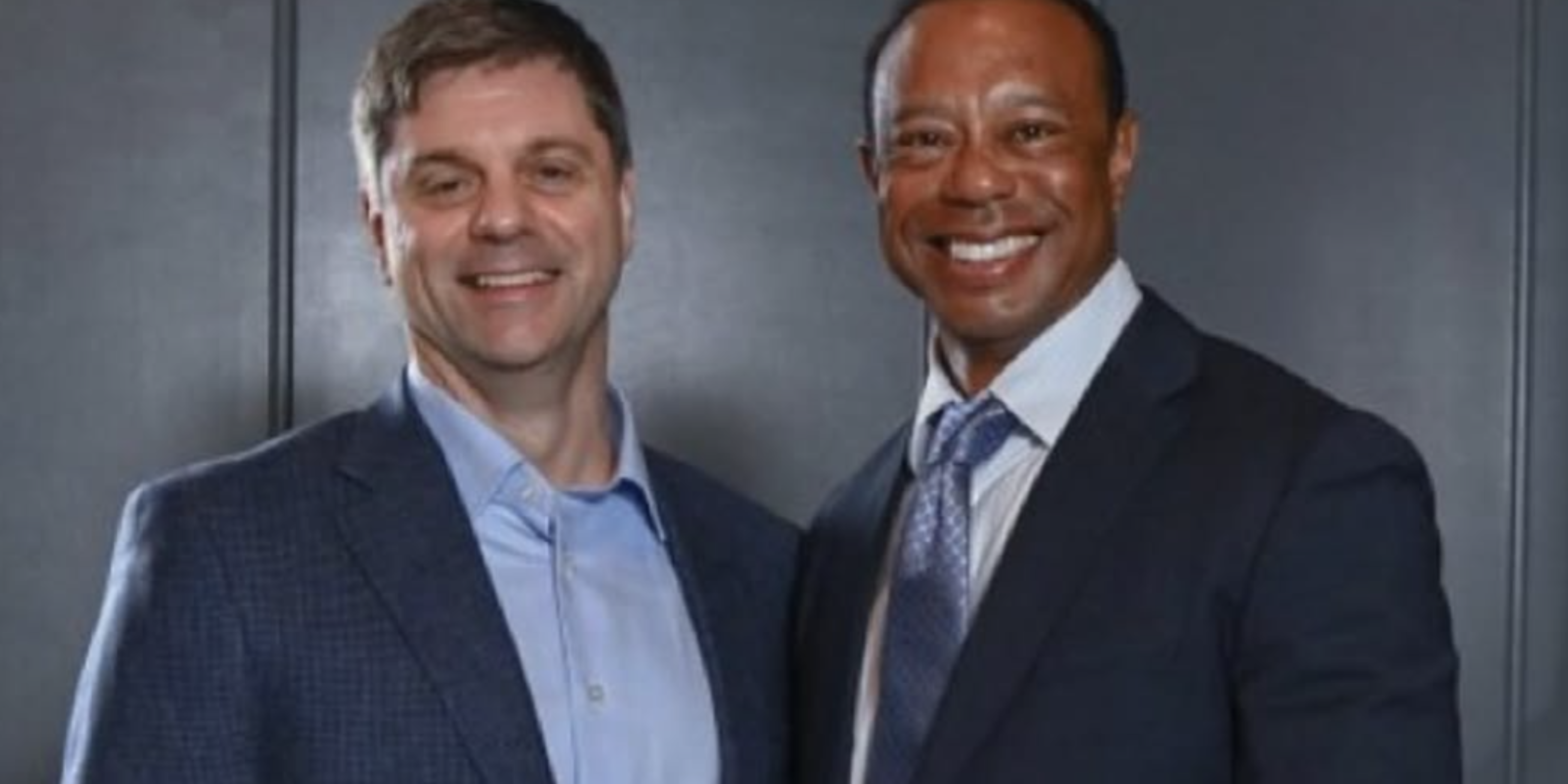
When PGA appointed Brian Rolapp as its first-ever CEO, and subsequently structured his path to become the fifth Commissioner in Tour history, it signaled far more than a simple executive shuffle.
It marked a decisive corporate pivot for PGA and the pro golf industry itself, a deliberate choice to import the aggressive, modern commercial playbook of the National Football League into a traditional, legacy-bound sport at a critical financial crossroads.
Rolapp spent over two decades as the NFL’s Chief Media and Business Officer, where he engineered landmark multi-billion-dollar broadcast deals and digital distribution platforms. He has now stepped into professional golf to overhaul how a sport generates, protects, and scales its capital.
For finance junkies, investors, and ambitious young athletes watching how modern sports business operates, understanding Rolapp’s strategy provides a masterclass in how media rights, private equity, and structural reinvention drive enterprise value.
The NFL Blueprint: Translating Scale to the Fairway
During his tenure at the NFL, Rolapp was the primary architect behind the league’s commercial dominance, orchestrating its historic $110 billion domestic broadcast agreements with traditional networks while aggressively pushing the league into the streaming era with YouTube’s Sunday Ticket and the launch of NFL+.
He understood a fundamental rule of modern entertainment economics: consumers do not just want content; they want accessibility, personalization, and cross-platform integration.
The PGA Tour is now applying that exact playbook. For decades, professional golf relied heavily on traditional cable carriage fees, standard tournament sponsorships, and linear weekend broadcast windows.
However, as media consumption habits have fundamentally shifted toward digital streaming, mobile-first engagement, and global direct-to-consumer access, the Tour’s revenue infrastructure required a radical modernization.
With the Tour’s current media rights agreements scheduled to expire at the turn of the decade, historically valued at roughly $700 million annually, Rolapp’s core objective is to position the circuit to capture unprecedented valuations when bidding opens, leveraging his deep-rooted relationships with tech giants and streaming conglomerates to target a massive valuation leap toward the $1.5 billion annual mark.
PGA Tour Enterprises and the $1.5 Billion SSG Infusion
A business model dependent entirely on tournament purses and sponsor banners is inherently limited. To truly unlock enterprise value, the PGA Tour needed to transition from a traditional nonprofit association model into a dynamic, commercialized operating structure.
This financial evolution accelerated with the formation of PGA Tour Enterprises, a for-profit commercial entity backed by a foundational $1.5 billion strategic investment from Strategic Sports Group (SSG), featuring a group of sports franchise owners and institutional capital allocators.
By uniting the Tour’s commercial operations under this for-profit umbrella, leadership created equity for top players, turning athletes into stakeholders who directly benefit from the circuit’s overall financial growth.
Rolapp’s dual remit as CEO of both the core PGA Tour and PGA Tour Enterprises places him at the absolute center of this transformation. His mandate is clear: diversify revenue streams globally, scale digital media monetization, and expand the sport’s footprint in high-growth international markets where golf consumption is accelerating.
It is the corporate equivalent of taking a legacy brick-and-mortar enterprise public, modernizing its capital stack, and optimizing its operational efficiency for maximum shareholder return (ROI).
Overhauling the Product: The New Competitive Structure
In modern sports finance, product quality dictates pricing power. If a league’s competitive format becomes stale or overly fractured, fan engagement drops, viewership declines, and media rights valuations instantly soften. Addressing this reality head-on, Rolapp and the Tour boards instituted a sweeping overhaul of the competitive structure, introducing a dynamic two-series model designed to debut across the global schedule.
By restructuring how the game’s elite players compete through the PGA Tour Championship Series and the Challenger Series, the organization solved a recurring structural problem: creating an easier-to-follow narrative arc for fans, clearer qualification stakes for sponsors, and heightened competitive urgency for the athletes.
Concurrently, navigating the ongoing, complex landscape shaped by LIV Golf requires delicate diplomacy paired with ironclad commercial strength. Rolapp’s background in managing high-stakes negotiations and building institutional consensus provides the precise executive temperament needed to stabilize professional golf’s ecosystem without compromising the Tour’s core competitive integrity.
PGA Tour Leadership Evolution
| Metric / Corporate Pillar | Legacy Operating Model | Modernized Enterprise Model (Rolapp Era) | Financial Impact |
| Primary Revenue Driver | Traditional cable TV & gate receipts | Digital streaming, global media rights, equity stakes | Maximizes valuation resilience across economic cycles |
| Corporate Structure | Non-profit association model | For-profit entity (PGA Tour Enterprises + SSG) | Unlocks institutional capital & player equity alignment |
| Media Distribution | Linear television and legacy networks | Cross-platform streaming, digital apps, tech partners | Captures younger demographics and higher ad-yields |
| Target Media Rights Value | ~$700 Million annually | Projected target scaling toward $1.5B+ | Substantially expands annual baseline cash flow |
Bottom Line
Brian Rolapp’s transition from the NFL to the helm of professional golf proves that sports administration has permanently evolved into high-stakes corporate finance. The challenges facing the PGA Tour, navigating digital disruption, integrating private equity, optimizing media rights, and modernizing tournament structures, mirror the exact hurdles facing modern businesses across the global economy.
For aspiring athletes, sports executives, and financial analysts, the lesson is unmistakable: long-term success in the modern era requires honoring traditional foundations while ruthlessly embracing structural innovation, digital distribution, and smart capital allocation.
PGA Tour Business & Leadership FAQs
What is Brian Rolapp’s role within the PGA Tour?
Brian Rolapp serves as the Chief Executive Officer of the PGA Tour and PGA Tour Enterprises, having been appointed in June 2025. Following a unanimous board approval in June 2026, he is also set to officially succeed Jay Monahan as the fifth Commissioner in PGA Tour history, effective January 1, 2027.
How does PGA Tour Enterprises function financially?
Formed as a for-profit commercial arm of the circuit, PGA Tour Enterprises houses the commercial and media operations, bolstered by a $1.5 billion investment from Strategic Sports Group (SSG). This structure allows the Tour to generate outside investment, build enterprise equity, and distribute ownership shares directly to participating players.
Why is media rights renegotiation critical for the PGA Tour?
With the Tour’s current broadcast agreements expiring near the end of the decade, shifting consumer habits toward streaming and digital platforms present an opportunity to significantly increase annual rights fees, projected by analysts to potentially scale from roughly $700 million toward $1.5 billion annually under expert executive guidance.
What lessons can athletes and finance professionals learn from this leadership shift?
The integration of NFL-style media monetization into professional golf highlights the reality that sports are fundamentally media and entertainment businesses. Understanding how capital stacks, media rights, and private equity investments operate is essential for anyone looking to build lasting wealth or scale enterprise value in the modern sports economy.
Next Reads
- Jumbo Loans: Underwriting Mortgages for Pro and NIL Athletes
- NY Mets Owner Steve Cohen Real Estate Portfolio
- Christian Pulisic Real Estate Portfolio Value
- Assets vs. Liabilities (Finance Glossary)
- Property Tax (Finance Glossary)
Disclaimer: This article contains general financial information for educational purposes and does not constitute professional advice. APSM estimates are derived from publicly available information, tax assumptions, finance modeling, and industry-standard fee structures. Actual earnings may vary based on residency elections, private contract provisions, image/media rights agreements, bonuses, and tax filings.