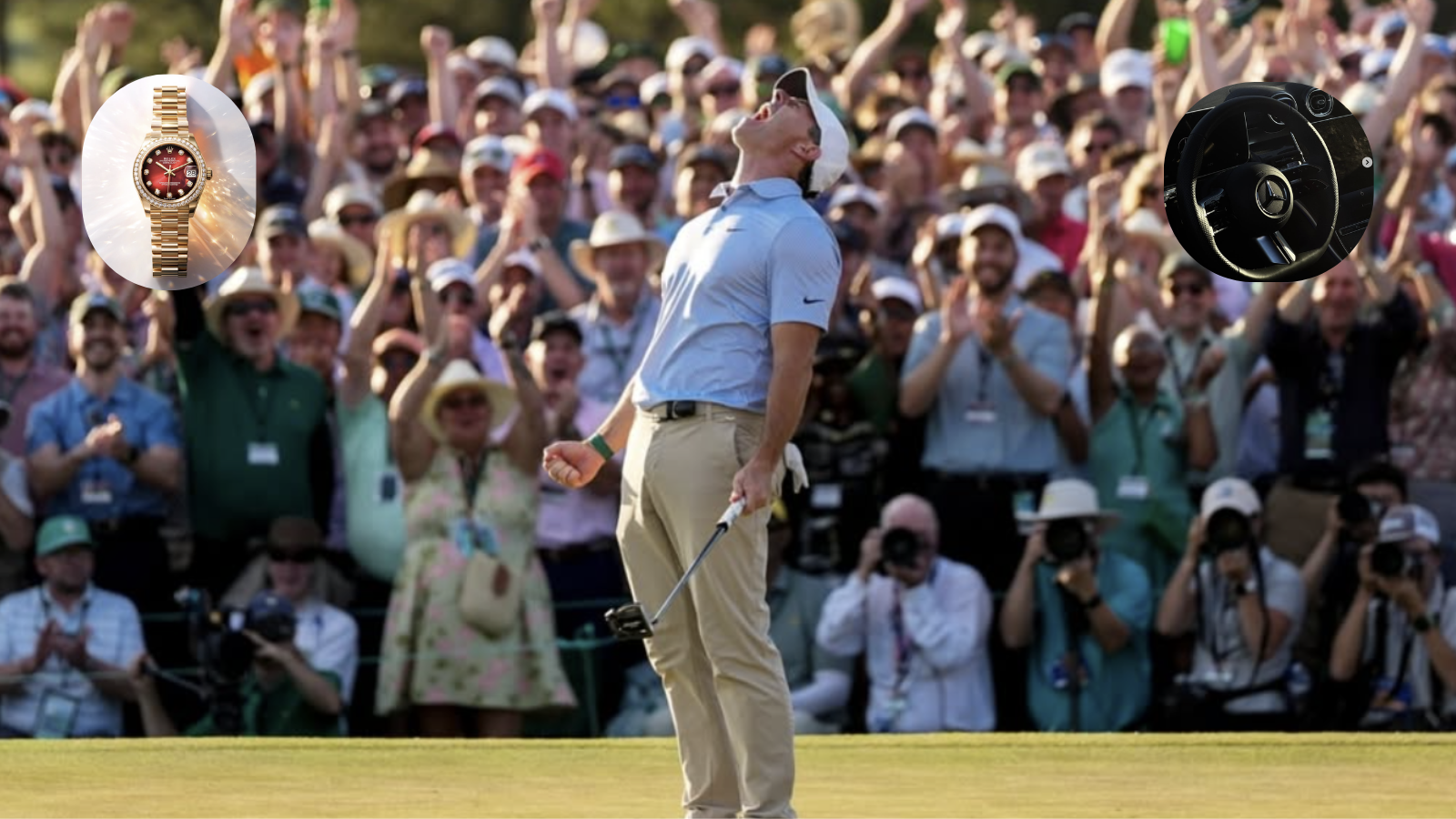
Every April, the world watches the Masters championship at Augusta National and sees azaleas, green jackets, and the greatest golfers alive competing for history.
What most people don’t see however, is the business model running quietly underneath every swing.
The Masters Tournament operates one of the most deliberately restrictive and financially powerful sponsorship structures in the history of professional sports. It’s an exclusive club, reserved for exclusive spenders.
No on-course signage or branded merchandise at the venue. Commercial breaks limited to just four minutes per hour during broadcast.
A total sponsor roster of seven brands in a two-tier system, when most major sporting events have dozens and can’t go more than 30 seconds without running a commercial or ad during the broadcast.
Yet the Masters generates an estimated $60 million annually in sponsorship revenue alone. That’s four times what the US Open generates in entirety of all revenue streams, from just a fraction of the competition.
This is the business of Augusta. Patient, Reputable and Exclusive.
Here are the five biggest sponsorship investments at the 2026 Masters Tournament and exactly what each brand is buying.
How Masters Sponsorship Actually Works
Before breaking down individual sponsors it’s important to understand what makes the Masters model structurally unique, because it directly affects the financial value of each deal.
Augusta National does not sell TV rights to CBS, ESPN, or Amazon. The broadcast partners invoice Augusta for production costs, ~$10 million, and Augusta forwards those invoices to its Champion Partners to cover.
In exchange sponsors receive the only commercial airtime during domestic broadcasts, four minutes per hour, exclusively reserved for official partners. No outside advertiser can buy a spot during Masters coverage.
If you see a commercial during the Masters it is from one of seven approved brands. That exclusivity is the product.
The result is a sponsorship environment where scarcity drives value.
Fewer brands means each brand carries more weight. Less commercial noise means each message lands harder. An audience that skews C-suite, affluent, and global means every impression reaches the demographic that matters most to premium brands.
Augusta National is estimated to deliberately leave ~$300 million in potential annual revenue unrealized by refusing to over-commercialize.
That restraint is what makes the remaining $60 million worth so much more per dollar than any other event in golf.
The Two-Tier System:
Champion Partners vs Tournament Partners
The Masters operates a strict two-tier sponsorship hierarchy.
- Champion Partners: The top tier receive the highest level of integration including broadcast commercial rights, on-site presence, and deep institutional partnership. In 2026 the four Champion Partners are Bank of America, AT&T, IBM, and Mercedes-Benz.
- Tournament Partners: The second tier maintain significant presence and association with the event but at a lower investment level. The three Tournament Partners are Rolex, Delta Air Lines, and UPS.
Now here are the five biggest investments in the 2026 Masters.
#5: Rolex | Tournament Partner
Estimated Annual Investment: $5-$10 million annually
(Undisclosed) | “Tournament Partner tier”
Rolex occupies a unique position in the Masters sponsorship ecosystem.
As a Tournament Partner rather than Champion Partner, Rolex’s investment sits at the second tier, but the brand alignment is arguably the most natural fit of any sponsor in the entire roster.
Rolex has been synonymous with golf for decades across the PGA Tour, DP World Tour, and major championships globally.
The brand’s presence at Augusta is quiet, intentional, and perfectly calibrated much like Augusta National itself.
There is no Rolex signage on the course. No aggressive branding at the venue. Instead Rolex’s association with the Masters works through decades of accumulated prestige, the leaderboard clocks, the subtle tournament presence, and the consistent broadcast mentions that embed the brand into the fabric of the event without commercial intrusion.
For a luxury watch brand whose entire value proposition is built on exclusivity, heritage, and precision, the Masters is not just a sponsorship, it is a brand alignment that reinforces the same values Rolex has built its $8 billion annual revenue business on.
The Masters doesn’t need Rolex’s money as much as Rolex needs the Masters’ prestige. That dynamic gives both parties exactly what they’re looking for.
Financial significance: Tournament Partner tier. Exact investment undisclosed. Brand alignment value that significantly exceeds the fee paid.
#4: Mercedes-Benz | Champion Partner
Estimated Annual Investment: $5-$10 million annually
(Undisclosed) | “Champion Partner tier”
Mercedes-Benz has been a global Masters partner since 2013 when it stepped up from its international partner role following ExxonMobil’s departure from the sponsor roster.
For Mercedes the Masters alignment is brand strategy at its most precise. Augusta National represents exclusivity, tradition, craftsmanship, and elite performance, the exact values Mercedes-Benz spends billions annually trying to associate with its vehicles globally.
The Masters audience of affluent professionals and executives is the primary Mercedes buyer demographic.
Unlike IBM and AT&T whose Masters investments include operational integration, Mercedes-Benz’s play is more classically brand-driven, television commercial exclusivity in the automotive category during the most prestigious golf broadcast of the year.
Helping the prestigious car brand to reach the audience most likely to be in the market for a $70,000-$150,000 vehicle. No other automotive brand can advertise during domestic Masters coverage. That category exclusivity in front of a premium demographic is the core of what Mercedes is paying for.
The partnership has also included off-course activations with upgraded hospitality, better content production, and social campaigns tied to the tournament window, though Augusta’s strict aesthetic rules keep all of it tasteful and understated by design.
Financial significance: Champion Partner tier investment. Automotive category exclusivity across all domestic Masters broadcasts.
#3: AT&T | Champion Partner
Estimated Annual Investment: ~$9.45 million annually
AT&T has been a Masters Champion Partner for decades and alongside IBM represents the tournament’s longest-standing corporate relationships at the top tier.
AT&T’s investment at the Masters serves a dual commercial purpose.
First, the broadcast commercial exclusivity, AT&T ads run during Masters coverage without competition from Verizon, T-Mobile, or any other telecom brand.
Secondly, the connectivity infrastructure that supports Augusta National’s operations during tournament week itself.
Running a global broadcast of this scale across multiple platforms simultaneously like CBS, ESPN, Amazon Prime Video, and international feeds across 200+ countries, requires serious telecommunications infrastructure. AT&T’s partnership extends into the operational backbone of how the Masters reaches its audience.
The ~$9.45 million annual fee estimate puts AT&T and IBM at comparable investment levels at the Champion Partner tier below Bank of America’s reported record commitment. Both receive the same broadcast exclusivity and institutional association, the Masters imprimatur that no amount of conventional advertising spending can replicate.
Financial significance: ~$9.45 million estimated annual investment. Multi-decade partnership with both broadcast and infrastructure integration.
#2: IBM | Champion Partner
Estimated Annual Investment: ~$9.45 million annually
IBM has been a Masters sponsor since 1996, making it one of the longest-running partnerships in the tournament’s history and one of the most deeply integrated.
IBM doesn’t just buy commercial time at Augusta. It builds and maintains the entire Masters digital infrastructure, the website, the mobile app, the real-time scoring systems, and the AI-powered highlight generation that produces shot clips for broadcasters and digital audiences globally.
The partnership is architecturally invisible and commercially brilliant. IBM’s branding doesn’t appear on the course. It doesn’t run loud advertising campaigns during tournament week.
Instead the Masters digital experience, used by tens of millions of fans globally, is built on IBM technology, with a quiet IBM logo in the corner of every screen.
For a technology company selling enterprise solutions to Fortune 500 companies, the same C-suite audience watching the Masters that embedded credibility is worth more than any banner advertisement.
IBM Watson’s role in producing Masters content has expanded year over year, positioning IBM not just as a sponsor but as a functional infrastructure partner.
That depth of integration makes the relationship genuinely difficult to replace, which is exactly the kind of long-term commercial anchor both parties benefit from.
Financial significance: ~$9.45 million estimated annual investment. 30-year partnership. Digital infrastructure integration that extends well beyond traditional sponsorship value.
#1: Bank of America | Champion Partner
Estimated Annual Investment: Tens of millions |
Highest fee in Masters sponsorship history (undisclosed)
Bank of America is the newest and reportedly the most expensive sponsorship commitment in Masters history.
Announced in September 2024 and debuting at the 2025 Masters, Bank of America joined the Champion Partner tier after years of involvement at the secondary level, sponsoring the Augusta National Women’s Amateur since 2019 and several international amateur championships.
When Augusta National chairman Fred Ridley announced the partnership he specifically noted Bank of America’s community investment history in Augusta as a factor.
Augusta does not just sell logo placement, it selects partners whose institutional values align with the tournament’s identity.
What Bank of America is buying is straightforward from a financial services perspective. The Masters audience is one of the highest concentrations of high-net-worth individuals, C-suite executives, and institutional decision-makers of any annual sporting event in the world.
For a bank offering wealth management, private banking, and institutional services that demographic is not just desirable, it is the exact client profile they are trying to reach.
Bank of America’s exclusive commercial airtime during Masters broadcasts reaches that audience in an environment with zero competition.
No other bank gets air time or gets to run a single ad during the event. No other financial brand is allowed to try and steal customers from BofA.
Just Bank of America, four minutes per hour, in front of the wealthiest sports audience in the world. That’s worth paying a record fee for.
Financial significance: Reportedly the largest single annual sponsorship commitment in Masters history. Exact terms are undisclosed per Augusta’s standard policy.
The Bigger Financial Picture
Seven sponsors. An estimated $60 million in annual sponsorship revenue. Four minutes of commercials per hour. Zero on-course signage. Zero outside advertisers. That’s the Masters business model and it’s genuinely one of the most sophisticated commercial structures in the history of sport.
For context, the US Open generates approximately $15 million from a much larger and less exclusive sponsor roster. The Masters generates four times that revenue from roughly one sixth of the commercial noise.
The professional golf sponsorship market overall is projected to grow from $2.3 billion in 2024 to $4 billion by 2032.
Financial services brands in particular are deepening their golf investments because no other sport delivers their target demographic, high net worth individuals and institutional decision makers, with the same concentration and engagement.
Bank of America, IBM, and AT&T didn’t invest in the Masters because it has the largest audience in sports.
They invested because it has the right audience.
At Augusta National, the right audience in a distraction-free environment is worth a premium that no volume-based sports property can replicate.
Scarcity is the product. The seven brands who understand that paid accordingly to sponsor the 2026 Masters Championship.
Want to Learn the Wealth Framework All Elite Earners Use to Build Generational Wealth?
The APSM “7 Primary Ways Athletes Build Wealth” Report Includes:
- Core wealth engines used by the world’s top earners
- Multi-contract wealth acceleration modeling
- Real-estate & portfolio structures designed for long-term stability
- Tax-efficient income routing
- Brand, endorsements & equity playbooks
- Risk-tier modeling athletes use to build & protect their net worth
If you want the real path to lifelong wealth,
not hype, not cliches, this is the foundation.
Buy the Report Now.
Next Reads
- The 2026 Masters Tournament Provided Six Golfers Million-Dollar+ In Purse Payouts: Gross Income, Taxes & Net Reality Explained
- Rory McIlroy Wins Back-to-Back Masters Titles, Takes Home $4.5 Million Purse: Gross Income, Taxes & Net Reality Explained
- Masters Tournament 2026 Produced Biggest Purse Pool in Golf Major History with ~$22.5 Million in Payouts: Taxes, Residency and Net Income Explained
- Scottie Scheffler’s Primary Residence & Real Estate Portfolio Estimate: Dallas, Texas and the Financial Logic Behind It
- Top 5 Wealthiest Golfers of All Time
Credits
Written By: Aidan Anderson
Research & Analysis: Apostle Sports Media LLC
Sources: SponsorUnited, European Business Magazine, The Sponsor, CNBC, Bank of America Newsroom, Tandem Partnerships, APSM Proprietary Analysis
Featured Image: Public Domain / Wiki Commons
Disclaimer: This article contains general financial information for educational purposes and does not constitute professional financial advice.