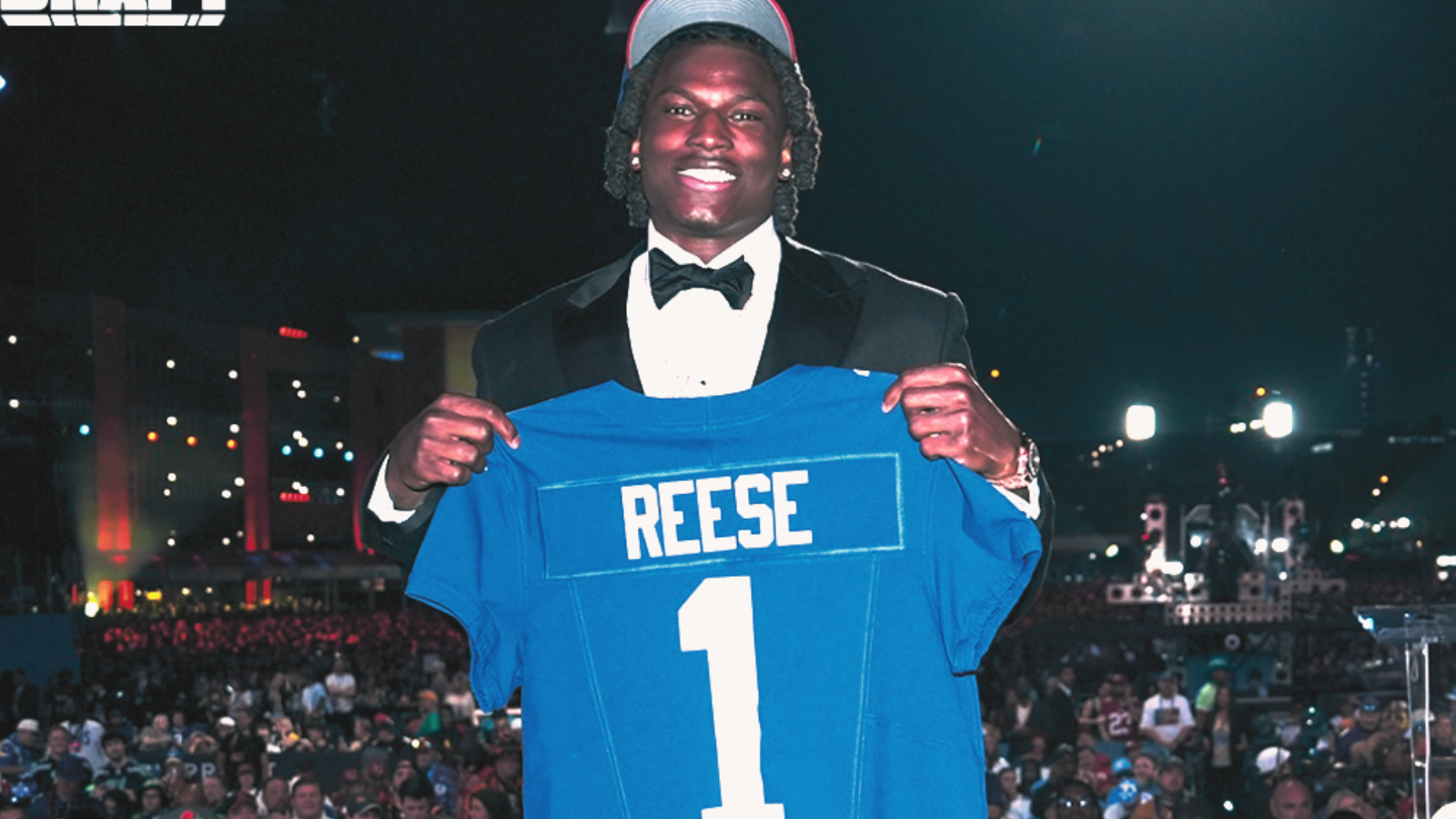
Arvell Reese, the No. 5 overall pick in the 2026 NFL Draft, enters the league with a $47.83 million rookie contract and a $31.2 million signing bonus.
He’s a Cleveland kid through and through, attended Glenville High School, went to The Ohio State, became a national champion, won Big Ten Linebacker of the Year, and now the rookie is heading to the New York Giants as the potential centerpiece of a new era.
The Glenville to New York story is picture perfect.
The tax situation is no where near picture worthy.
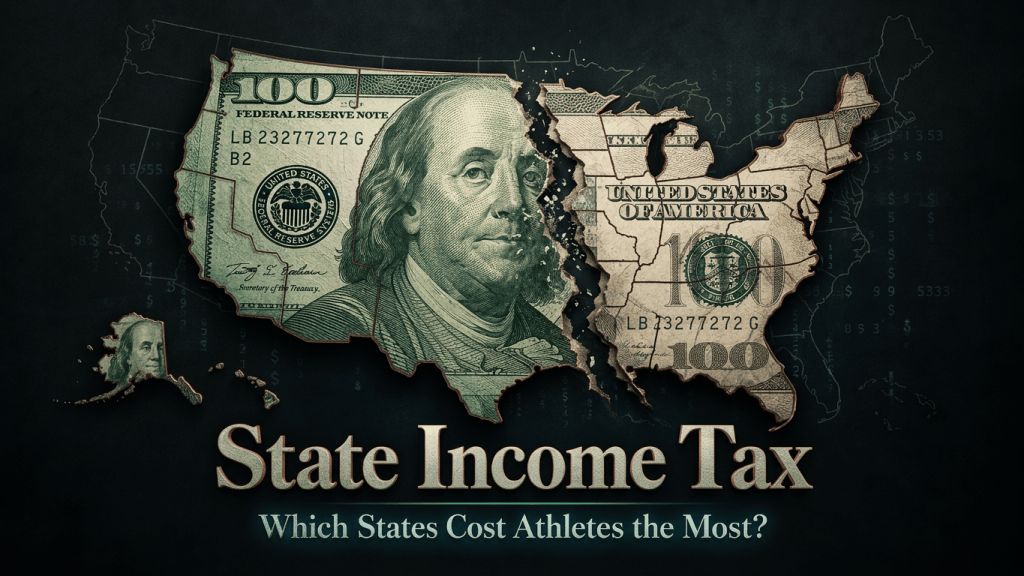
Before Reese makes a single tackle in blue, he has to answer the question that will quietly decide how much of his rookie money he actually keeps:
Will Arvell Reese stay an Ohio resident and spend half the year “at home”, or let New York or New Jersey become his tax home?
APSM breaks down Reese’s real estate landscape and suggests where he could establish his primary residence to maximize his net worth across the four states that now define his financial future:
- His home and college state (Ohio)
- His drafted state (New York)
- His playing state (New Jersey)

Does Arvell Reese Own Any Property?
Reese grew up on the east side of Cleveland, starring at Glenville High School before heading to Columbus to become a Consensus All‑American at Ohio State.
There are no public records of Reese owning real estate during his time at Ohio State or prior to the 2026 NFL Draft.
Like most NIL‑era stars, he likely:
- Rented during college
- Stacked NIL earnings
- Delayed major real estate purchases until after the draft
That means his first big real estate decision will likely come now, as a top‑5 pick with a ~$31.2 million signing bonus and a move to New York in store.
That’s exactly where the danger is.
Want to Learn the Wealth Framework
All Elite Earners Use?
The APSM 7 Primary Ways Athletes Build
Generational Wealth Report Includes:
- Core wealth engines used by the world’s top earners
- Multi-contract wealth acceleration modeling
- Real-estate & portfolio structures designed for long-term stability
- Tax-efficient income routing
- Brand, endorsements & equity playbooks
- Risk-tier modeling athletes use to build & protect their net worth

If you want the real path to lifelong wealth,
not hype, not cliches,
this is the foundation.
Market #1: Ohio (Home State & College State)
- Median Home Price (Ohio): ~$235,000
- Property Tax Rate: ~1.6%
- State Income Tax: 3.75%
- Cost of Living: ~10% below U.S. average
- Market Trend: Slow, steady appreciation (2–4% annually)
Pros
- Lower state income tax (3.75%)
- Affordable housing
- Familiar environment (Cleveland + Columbus)
- Stable, predictable real estate market
- Strong sports culture and community roots
Cons
- Not a no‑income‑tax state
- Lower long‑term appreciation than coastal or boom markets
- Limited ultra‑luxury corridors compared to New York
APSM Take
For Reese, Ohio is already a financial advantage compared to where he’s going (the same is true for anyone drafted to New York/New Jersey that is not from there or the state of California, the two highest tax-states.
On a ~$31.2 million signing bonus:
- At 3.75% (Ohio) → ~$1.17M in state tax
- At 10.9% (New York) → ~$3.40M in state tax
That’s ~$2.23 million in extra tax just for changing his address.
If he accidentally establishes New York City residency, the combined state + city rate (~14.8%) pushes that gap to over ~$3.4 million on just his signing bonus. This could become tens of millions over the course of his pro career.
Ohio isn’t Florida or Tennessee tax-wise, but compared to New York, the state of Ohio becomes more of .
Market #2: New York (Team Market and the Trap)
- Median Home Price (New York State): ~$650,000
- Median Rent (NYC): $3,500–$5,000+ per month in many Manhattan/Brooklyn neighborhoods
- Property Tax Rate: ~1.7% (statewide average)
- State Income Tax: up to 10.9% (top bracket)
- NYC Income Tax (if resident): up to ~3.876%
- Cost of Living: ~25–40% above U.S. average in NYC
- Market Trend: long‑term appreciation in prime NYC areas, but they come with high volatility and costs that may not be worth the trouble
Pros
- Proximity to Giants HQ and team facilities
- Global media, branding, and endorsement hub
- Strong luxury rental and condo markets
Cons
- 10.9% state income tax
- Up to ~14.8% combined state + city tax if NYC resident
- Extremely high cost of living
- Aggressive residency and audit enforcement
- One of the worst tax environments in the NFL for high earners

APSM Take
This is one of the worst residency decisions any player in this draft could make. On his ~$31.2 million signing bonus alone:
- Ohio residency (3.75%) → ~$1.17M to state tax
- New York residency (10.9%) → ~$3.40M to state tax
- New York City residency (~14.8%) → $4.6M+ to state + city tax
That’s:
- ~$2.23M more if he goes from Ohio → New York State
- ~$3.4M more if he goes from Ohio → New York City
That’s before base salary, incentives, or second contract (extension).
New York and New Jersey are where Reese works.
Neither should not be where he legally lives on paper.
Should Reese Explore a No‑Income‑Tax State?
Reese is represented by Klutch Sports, one of the most sophisticated agencies in the game. The smart play for a client like this is:
- Keep Ohio residency, or
- Explore legitimate ties to a no‑income‑tax state (Texas, Florida) through:
- Property ownership
- Family ties
- Actual time spent there
If Reese can legally and defensibly establish residency in a no‑income‑tax state, the savings over his career could be eight figures.
Not becoming a New York or NYC resident is already a multi‑million‑dollar win.
Residency Impact on Reese’s Signing Bonus
- Gross Signing Bonus: $31,200,000
- Federal Tax (37%): $19,656,000
| Residency | State/Local Tax Rate | State/Local Tax on Bonus | Estimated Net Signing Bonus |
|---|---|---|---|
| Ohio | 3.75% | $1,170,000 | ~$18.486M |
| New York State | 10.9% | $3,400,800 | ~$16.64M |
| New York City Resident | ~14.8% | $4.62M+ | ~$15.42M |
Difference (Ohio vs New York State):
- ~$2.23M more in tax if he becomes a New York resident
Difference (Ohio vs NYC Resident):
- $3M+ more in tax if he becomes a New York City resident
That’s the cost of falling in love with Manhattan and putting it on your driver’s license.
Investment Scenario:
Letting Glenville Money Compound
Using the Ohio residency scenario:
- Gross Signing Bonus: $31,200,000
- Federal Tax (37%): $19,656,000
- Ohio Income Tax (3.75%): $1,170,000
- Estimated Net Signing Bonus: ~$18,486,000
| ROI Rate (5 Years) | Projected Value on $18.486M |
|---|---|
| 10% Return | ~$29.7M |
| 12% Return | ~$32.6M |
| 15% Return | ~$37.1M |
| 20% Return | ~$46.0M |
Now zoom out to 10 years at a 12% average return:
- ~$18.5 million invested at age 20
- Left untouched for a decade
- Approaches $60+ million from the signing bonus alone
That’s before:
- Base salary
- Incentives
- Endorsements
- Second contract money
Reese has time on his side, more than almost anyone in this class.
If he treats this like his one guaranteed payday and lets it compound, he’s not looking at $35-$40+ million when he’s done with football.
He’s looking at a completely different number that he will then have to decide how to diverse to last for generations.
This is the power of investing and choosing wealth at home over flash outside, on social media, etc.
Jock Tax Considerations
NFL players pay jock taxes in nearly every state they play road games in.
Residency affects:
- How much income is taxed at home
- How much is taxed on the road
- How much of the signing bonus is taxed
- How much of the base salary is protected
Ohio Advantage
- Lower state income tax (3.75%)
- No city income tax drag like NYC
- Familiar, defensible residency
New York / NYC Disadvantage
- 10.9% state income tax
- Up to ~3.876% NYC income tax
- Aggressive residency audits
- One of the highest combined tax burdens in the country
APSM Take
Reese could:
- Keep Ohio residency, or
- Explore a no‑income‑tax state if it’s legitimate and defensible
But under no circumstance should he:
- Put a New York or New York City address on his legal documents
- Sign long‑term leases in Manhattan that make him look like a resident on paper
New York/New Jersey is where Reese he plays. Ohio, or a no‑tax state, should be where he lives financially (and for 182 days in a calendar year).
APSM Real Estate Verdict
Ohio Should Be His Primary Residence (for Now).
New York Should Be Treated as a Workplace, Not a Tax Home.
If Arvell Reese wants to maximize his rookie earnings, protect his signing bonus, and build long‑term wealth, the move is simple:
- Do not establish New York or NYC residency.
- Maintain Ohio residency while he plays for the Giants.
- Work with Klutch’s financial team to explore a no‑income‑tax state if it fits his life.
Financial literacy from Glenville to Giants Stadium.
Reese has all the tools on the field. His residency decision will determine how much of the money he actually keeps.
Don’t let New York take what Ohio doesn’t have to give.
Suggested Real Estate Strategy for Arvell Reese
- Primary residence: Ohio (Cleveland/Columbus corridor)
- Secondary: Short‑term rental in New Jersey/New York for convenience (not residency)
- Long‑term option: Explore no‑income‑tax state residency if life and family structure allow
- Invest: Majority of signing bonus into index funds and diversified assets
- Goal: Turn ~$18.5M into $40-$60+ million over the next decade
Next Reads
- 2026 NFL Draft: Every 1st Round Contract Details, Net Income & Residency Analysis
- Jets #2 Pick David Bailey Is Headed to New York: The $36.8M Residency Mistake That Could Cost the Rookie Millions
- Fernando Mendoza Real Estate and Residency Analysis: Florida vs Indiana vs Nevada
- Jalen Brunson New York Knicks $156.5 Million Contract: Taxes, Residency & Net Income Explained
- New York State Athlete Taxes
Credits
- Written By: Aidan Anderson
- Research & Analysis: Apostle Sports Media LLC
- Sources: NFL Draft Data, Sportico, Spotrac, Zillow / Redfin Market Research, ESPN, WSJ, APSM Proprietary Analysis
- Featured Image: Public Domain / Instagram
- Disclaimer: This article contains general financial information for educational purposes and does not constitute professional financial advice.