
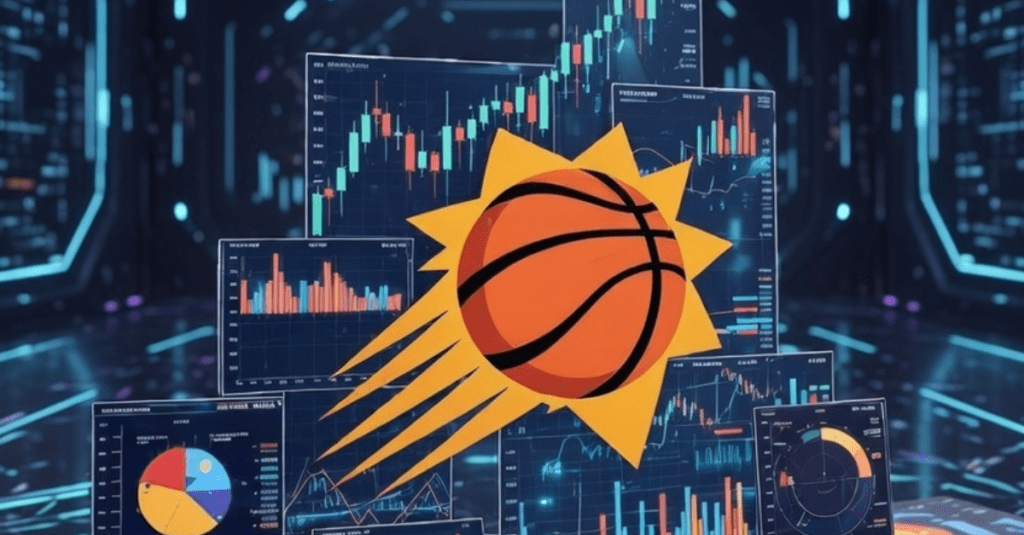
The Phoenix Suns aren’t just navigating roster reconstruction, they’re now operating through a shareholder dispute over how an NBA franchise should be monetized, valued, and financially managed.
What began as an internal disagreement between majority owner Mat Ishbia and minority investors has evolved into litigation that raises fundamental questions about sports franchise ownership in the streaming and private equity era of pro basketball.
The Dispute: Control vs. Monetization Strategy
Minority shareholders Kisco (Andrew Kohlberg) and Kent Circle (Scott Seldin) allege that Ishbia:
- “Knowingly forwent significant revenue opportunities”
- Overspent on team payroll
- Leveraged capital calls in ways that risk diluting minority equity
- Mismanaged revenue architecture through concession cuts & free-to-air broadcast strategy
They argue the result reduces short-term revenue capture and suppresses distributable earnings to minority holders.
Ishbia’s side calls the suit “a shameless shakedown,” arguing that investing in the product and fans is good business, and that minority investors are prioritizing quarterly returns over the best interests of the Suns and Mercury long-term ROI and organization value.
This is the exact financial tension that defines modern sports ownership.
Short-Term Profit vs. Long-Term Valuation
Professional sports franchises generally produce low operating profits but high asset appreciation.
Minority holders often rely on:
- Distributions
- Liquidity events
- Buybacks
- Forced sale premiums
Majority owners usually focus on:
- Asset value appreciation
- Brand equity expansion
- Media distribution footprint
- Compounding future cash flow
The Suns case is a classic divergence of horizons: LPs want cashflow; GP wants valuation.
Ishbia’s Market Strategy: Fan Share > Margin
Ishbia didn’t simply “spend aggressively”, he reallocated the Suns’ revenue model toward fan capture and enterprise valuation.
A strategy more common in tech and private equity than legacy sports ownership. He made three key strategic decisions:
Lowered Concession Pricing
On paper, this reduces stadium RevPerCap, meaning fewer dollars per attendee at the point of sale.
Financially, that’s a drag on short-term margin. In practice, it increases:
- fan loyalty and goodwill
- game attendance frequency
- time-in-stadium consumption
- brand affinity & lifetime fan value
Sports franchises make most revenue on lifetime brand monetization, not per-transaction profit. Concession cuts trade margin for retention economics, the same logic Costco uses for $1.50 hotdogs.
Free-to-Air Broadcast Rights
Moving off RSN/streaming channels leaves near-term money on the table, as RSN deals historically paid guaranteed carriage fees.
But broader distribution increases:
- audience share
- local household penetration
- sponsorship CPM leverage
- fan conversion outside core demos
- franchise cultural relevance
In finance terms, Ishbia traded yield for scale. Scale raises franchise valuation multiples faster in the new digital era of streaming, sponsorship and partnership deals than traditional media rights.
Payroll & Coaching Spend
Heavy spend on roster + coaching is a capital expenditure designed to increase competitive window probability, which increases:
- national broadcast exposure
- playoff revenue potential
- merchandise uplift
- ticket pricing power
- fan engagement flywheel effects
Winning is a multiple-expanding asset. To a minority LP, these look like P&L headwinds lower cashflow, fewer distributions, tighter margins.
To a GP, these are valuation accelerants more eyeballs, more brand equity, higher enterprise value.
Private Equity Era Ownership Mechanics
The dispute is really about how to value a sports franchise.
Legacy view: teams should pay distributions and operate profitably
Modern view: teams are long-duration growth assets with limited liquidity and massive terminal value.
The Suns valuations reflect the second model:
- ~$1.6 billion purchase (Sarver exit)
- ~$3+ billion estimates today
That appreciation occurred without major cash distributions to LPs.
That’s identical to PE models: low yield, high mark-to-market expansion.
LPs argue revenue was sacrificed. GP argues valuation multiple widened.
Both statements can coexist.
Dilution Risk
The lawsuit centers on capital call mechanics, where LPs must contribute fresh capital or have their equity diluted. In PE/VC, this is standard governance, capital calls are how GP mandates reinvestment.
In traditional sports LP structures, the expectation is inverted:
LPs want passive exposure + capital gains, not recurring injections.
Capital calls + dilution = control leverage. LP lawsuits = resistance to reinvestment
The legal fight is simply the financial model playing out.
LP framing → maximize near-term operating revenue and distributions.
GP framing → maximize terminal exit valuation and cultural equity.
Both models are rational, they just operate on different timelines.
In the modern sports economy, valuation is winning.
APSM Takeaway
The Suns dispute isn’t about basketball, it’s about:
- governance rights
- capital allocation
- time horizon mismatch
- valuation math
- control economics
Minority investors want liquidity.
Majority owners want legacy. Sports teams rarely generate distributions, but routinely generate billions in unrealized equity gains. That is the new sports finance paradigm.
Next Reads
- Did Kevin Durant’s Trade Actually Help the Suns Financially?
- Kevin Durant’s Trade to the Houston Rockets
- Cooper Flagg Could Earn Over $1 Billion in Future NBA Contracts
- Shai Gilgeous-Alexander’s Path to an $80 Million Per Year Contract Extension
- Trae Young Trade to Wizards Salary Implications, Cap Impact & Long-Term Financial Outlook
Credits
Written By: Aidan Anderson
Research & Analysis: Apostle Sports Media LLC
Sources: Sportico, Legal filings & commentary, Forbes valuations, APSM Proprietary Analysis
Featured Image: Grok Images
Disclaimer: Financial information for educational purposes only. Not professional advice.
As far as the east is from the west, so far has he removed our transgressions from us.
– Psalm 103:12







 Apostle Sports Media