
When you’re Kevin Durant, changing area codes isn’t anything newt; this marks the fifth stop on a storied, Hall of Fame career. But when a trade rocks the Western Conference by shipping a 36-year-old scoring machine from the desert to Space City, the shock waves aren’t just felt on the hardwood. They echo straight through front-office spreadsheets, salary cap thresholds, and franchise valuations.
Houston Click to open side panel for more information just pressed fast-forward on its rebuild. By leveraging draft capital instead of gutting their young core, the Rockets didn’t just acquire an elite bucket-getter; they engineered a high-stakes financial and operational gamble. Meanwhile, Phoenix Click to open side panel for more information is left staring down the barrel of a complete organizational teardown.
Let’s pull back the curtain on the numbers: how cap flexibility makes the extension work, why Phoenix is trapped in a roster deadlock, and how adding an icon moves the needle on a multi-billion-dollar enterprise.
The Anatomy of a Blockbuster Trade
What Houston Sent Out & What Phoenix Received
The transaction mechanics are straightforward on paper but carry massive long-term structural implications. The Phoenix Suns shipped Kevin Durant to Houston in exchange for a package centered around Jalen Green, veteran forward Dillon Brooks, the coveted No. 10 pick in the 2025 NBA Draft, and five valuable future second-round selections.
For the Suns, this package signals an immediate pivot away from short-term win-now luxury toward asset accumulation and future cap relief. For the Rockets, parting with mid-tier salary filler and draft capital to land a top-tier superstar without sacrificing foundational cornerstones represents textbook asset management.
The Preservation of the Rockets’ Core
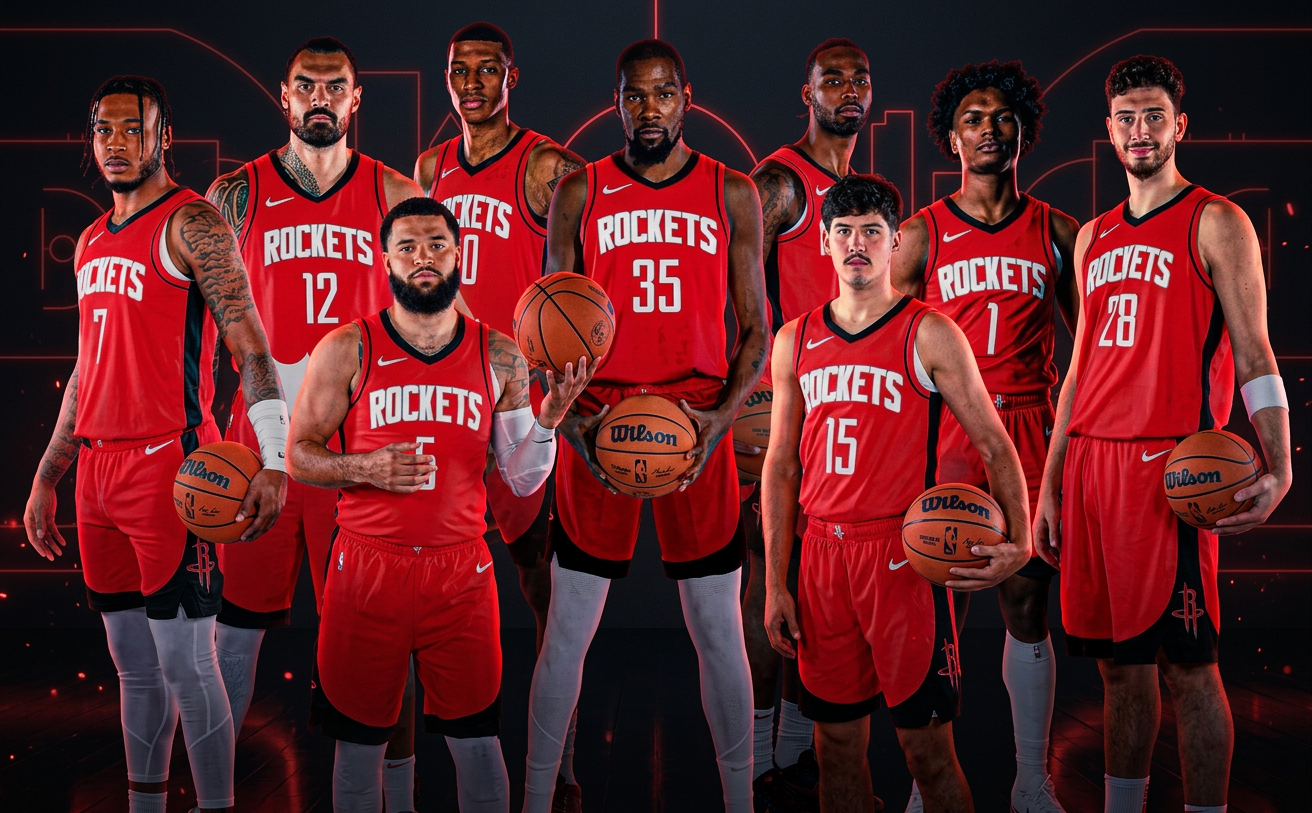
What makes this trade uniquely brilliant from a front-office perspective is what Houston kept. Rather than gutting their roster to match salary floors or giving up their premier blue-chip assets, the Rockets preserved their entire foundational core:
Alperen Şengün, Amen Thompson, Fred VanVleet, and Jabari Smith Jr. Staying disciplined and leveraging surplus draft picks instead of trading proven young upside means Houston didn’t mortgage its long-term future to acquire a 36-year-old. They layered generational veteran excellence directly on top of an already ascending young roster.
Salary Cap Architecture & Extension Economics
Durant’s Current Deal & the $122M Extension Horizon
Durant enters the partnership carrying a massive $54.7 million cap hit for the upcoming season, with just one year remaining on his current agreement. However, the financial engine driving this trade isn’t just his expiring salary, it is his immediate extension eligibility.
This summer, Durant becomes eligible to ink a lucrative 2-year, $122 million contract extension that would lock him into Space City through his age-38 and 39 seasons.
Navigating the Second Apron and MLE Flexibility
In the modern collective bargaining agreement (CBA) era defined by restrictive luxury tax aprons, managing the second apron is a matter of franchise survival. Astoundingly, thanks to clever veteran roster construction and disciplined prior spending, the Rockets entered this deal holding roughly $14.1 million in Mid-Level Exception (MLE) space.
(More on how the NBA Salary Cap Works) –> NBA Salary Cap 2026-27 Explained: The Aprons, the Numbers, and What They Actually Mean
This financial breathing room allows Houston to absorb Durant’s massive salary footprint and facilitate his forthcoming extension without instantly triggering debilitating second-apron roster freezes, though maintaining depth via veteran-minimum signings will remain an ongoing executive chess match.
The Phoenix Paradox: Rebuild vs. Roster Stagnation
The Devin Booker Dilemma
While Houston celebrates its ascension to elite contender status, Phoenix finds itself at a historical crossroads. Acquiring Green, Brooks, and draft assets is the textbook definition of hitting the reset button.
The immediate existential question facing the Suns’ front office is simple: Can they convince franchise superstar Devin Booker to endure a second major organizational rebuild in his prime, or will mounting frustration force a trade request of his own?
Bradley Beal’s No-Trade Clause Deadlock
Complicating Phoenix’s rebuild strategy is the immovable anchor of Bradley Beal’s contract. Armed with a rare, absolute no-trade clause, Beal holds total leverage over the front office.
Because his massive salary and no-trade-clause restriction, moving him is virtually impossible without his explicit consent, and so Phoenix is forced to structure its teardown around his contract, leaving front-office executives with minimal flexibility to clean the books completely.
Franchise Valuation & Revenue Levers
Unlocking a Multi-Million Dollar Valuation Bump
Prior to executing this blockbuster, the Houston Rockets held an estimated baseline franchise valuation of roughly $3.2 billion. In professional sports economics, the acquisition of a globally recognized superstar like Kevin Durant acts as an immediate catalyst for enterprise value expansion.
Historical precedent suggests that dropping a transcendent household name into a major media market like Houston can easily unlock a $300 million to $400 million valuation bump, boosting the team’s standing among the league’s financial elite.
Ticketing, Suites, and Sponsorship Yields
The valuation bump isn’t just abstract paper wealth; it is driven by aggressive, tangible revenue levers. Durant’s arrival instantly triggers a massive spike in season-ticket renewals, single-game sales, and waiting list conversion rates.
Furthermore, corporate sponsorship demand surges, local and national brands scramble for arena real estate, and premium suite leases and Personal Seat License (PSL) revenues experience an immediate, cash-accretive windfall.
Macroeconomic & Roster Risk Management
The Aging Curve and Injury Fragility
From a pure asset allocation standpoint, investing over $60 million annually in a player entering their late-30s carries undeniable risk. Durant remains an elite offensive engine, consistently pouring in 27+ points per night with preternatural efficiency, but his recent durability history introduces volatility. A single lower-extremity injury could instantly derail title aspirations and diminish his secondary trade value, turning a championship anchor into a rigid cap impediment.
Future Draft Capital Deficit
By parting with the No. 10 pick in the 2025 NBA draft and five second-round selections, Houston has temporarily depleted its pipeline of cheap, cost-controlled rookie contracts.
In a salary-capped league governed by luxury tax aprons, cheap rookie-scale labor is the lifeblood of roster depth. The Rockets will eventually need to replenish their asset cabinet through savvy scouting or future asset consolidation to sustain their championship window past Durant’s tenure.
The Bottom Line
The trade sending Kevin Durant to Houston Click to open side panel for more information is a masterclass in calculated asset deployment. By keeping their young core intact, utilizing flexible cap space, and unlocking massive commercial revenue upside, the Rockets transformed themselves from a play-in challenger, to a legitimate Western Conference juggernaut.
The rockets are betting on legacy, economics, and championship timing.
Kevin Durant’s Trade to the Rockets FAQs
How does Kevin Durant’s contract impact the Houston Rockets’ salary cap?
Durant enters the season with a $54.7 million cap hit with one year remaining. Because the Rockets managed their prior cap sheets efficiently and held MLE flexibility, they can absorb his salary and execute his upcoming extension eligibility without immediately crossing restrictive second-apron financial penalties.
Why did the Phoenix Suns trade Kevin Durant?
The Suns traded Durant to pivot away from an expensive, aging roster that failed to capture a title. By acquiring Jalen Green, Dillon Brooks, and valuable draft capital including the No. 10 pick, Phoenix kickstarted a necessary asset accumulation phase.
How does this trade affect the Houston Rockets’ franchise valuation?
Adding a globally recognized superstar like Kevin Durant to a major market franchise like Houston typically unlocks significant enterprise value growth, with industry experts projecting a valuation bump in the $300 million to $400 million range driven by ticketing, suites, and sponsorships.
What is Bradley Beal’s role in the Suns’ rebuild?
Bradley Beal holds a rare no-trade clause in his contract, giving him complete veto power over any trade. This severely restricts Phoenix’s ability to trade him and complicates their long-term rebuilding timeline.
Next Reads
- Did Kevin Durant’s Trade Actually Help the Suns Financially?
- Phoenix Suns Minority Owner Lawsuit: Revenue Strategy, Valuation Math & Control Rights in the Modern NBA
- Texas State Athlete Taxes
- Trae Young Trade to Wizards Salary Implications, Cap Impact & Long-Term Financial Outlook
- Luka Dončić Lost $345 Million: How the Lakers Trade Cost a Supermax
Disclaimer: This article contains general financial information for educational purposes and does not constitute professional advice. APSM estimates are derived from publicly available information, tax assumptions, finance modeling, and industry-standard fee structures. Actual earnings may vary based on residency elections, private contract provisions, image/media rights agreements, bonuses, and tax filings.