The 2026 March Madness NCAAM Tournament didn’t just deliver crazy moments like buzzer-beaters and upsets, it delivered a financial reality check. For the first time in March Madness history, entire rosters weren’t built on recruiting pipelines or coaching progression, instead as of 2026, all NCAA rosters are built on multi-million dollar NIL portfolios.
At the top of that financial mountain for men’s basketball sat the most expensive roster in college basketball: The Kentucky Wildcats. A program that turned NIL collectives, transfer portal aggression, and high-end talent acquisition into a ~$20+ million roster (some reports say ~$22 million), the highest in the entire tournament field.
But what makes this story interesting? Is that unlike what many believed, money didn’t equal wins. At least not in the way that the most expensive rosters automatically means a spot in the title…

The Wealthiest March Madness Roster
Team: Kentucky
Estimated NIL Roster Value: ~$20+ million
Tournament Seed: No. 7
Result: Round of 32 Exit
Kentucky didn’t just lead the tournament in roster and NIL “salary” spending, they reset the market.
The Wildcats used a mixture of transfers, high-value recruits, and proven contributors, to build what many considered the most expensive roster in college basketball history.
On paper, this was a Final Four-caliber investment. In reality? They were bounced in the second round by a more efficient, and significantly cheaper, Iowa State Cyclones squad.
That’s the new NIL era: You can buy talent. You can’t guarantee execution.
Contract Structure, For College?
Unlike in pro sports, NIL deals aren’t centralized to universities in the sense that contracts are signed directly with schools (yet).
Kentucky’s ~$20 million isn’t a “contract”, it’s a portfolio:
- Booster-funded collective payments
- Brand partnerships
- Transfer portal inducements
- Local and national endorsement deals
At the top end, players like elite recruits and transfers can command multi-million dollar NIL valuations individually, reshaping roster construction entirely. This is essentially free agency, just without a formal salary cap.
Other Top Spending Teams
Duke Blue Devils
Estimated NIL: ~$12 million
Result: Sweet 16+
Duke represents the “ideal” NIL model. They spent big compared to lower bracket teams, but rather than spending as much as possible, they focused on aligning talent with development and system fit.
Led by elite freshmen and high-end recruiting, Duke turned NIL into actual postseason value, advancing deep into the tournament and justifying their spend.
Arkansas Razorbacks
Estimated NIL: ~$11.5 million
Result: Sweet 16
Arkansas followed a “concentrated capital” approach.
Instead of spreading money across the roster, they targeted impact players, especially in the backcourt. The result being that the Razorbacks became a legitimate second-weekend team with a strong return on investment for the school relative to their spending.
The Overpay Tier (High Spend, Low Return)
BYU Cougars
Estimated NIL: ~$13 million
Result: First Round Exit
BYU had one of the most expensive and top-heavy rosters in the country. Headlined by a single superstar NIL valuation north of $5-7+ million, the roster lacked durability and depth.
Despite elite individual production, injuries and imbalance led to a first-round exit for the Cougars.
Now, the school will await to see the decision that the top recruit in the nation A.J. Dybansta makes in whether he will wear an NBA uniform or stay at BYU next fall.
Louisville Cardinals
Estimated NIL: ~$10.5 million
Result: Round of 32 Exit
Louisville invested heavily in transfers and roster depth. They made the tournament, but ultimately performed in line with mid-tier outcomes despite top-tier spending.
A classic case of high payroll, average return. However, any team that makes the tournament is likely to turn a profit, as ad share, media rights, team licensing rights, surging ticket costs and more contribute to revenue.
The Value Teams (Low Spend, High Return)
Iowa Hawkeyes
Estimated NIL: ~$8 million
Result: Elite Eight
Iowa might be the best ROI story in the tournament.
Moderate spending. Elite results.
The Hawkeyes were able to knock off higher-funded teams and made a deep run compared to BYU who had high tournament expectations, proving that efficiency still beats raw capital.
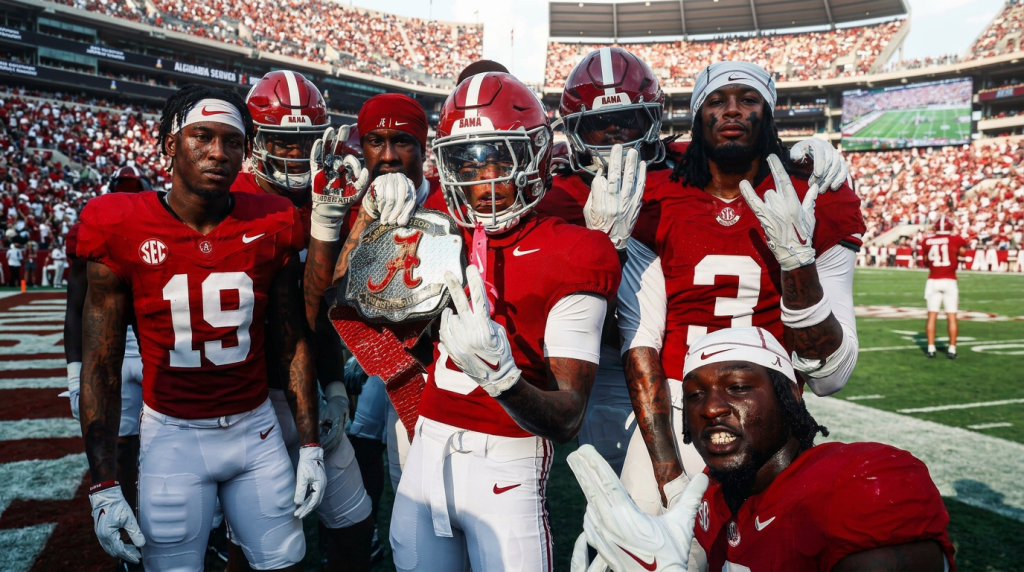
Alabama Crimson Tide
Estimated NIL: ~$5 million
Result: Sweet 16
Alabama operated well below the top spenders, but still delivered.
A Sweet 16 run at roughly a quarter of Kentucky’s budget?
That’s elite financial efficiency.
NIL Economics: The Salary Cap Without Rules
By 2026, college basketball NIL spending reached nearly $932.5 million annually, transforming roster construction into a financial arms race.
Key realities:
- There’s now a “floor” (~$7-8 million) just to compete at a high level
- Elite rosters push $10-$20+ million
- Talent consolidation is accelerating toward power programs
March Madness hasn’t lost chaos, but it’s lost randomness.
Money now sets the baseline.
Estimated Net Value of Kentucky’s $20M Roster
Unlike pro contracts, NIL money is:
- Less tax-efficient (varies by deal structure)
- Often subject to agent/management fees
- Paid across multiple entities (not one contract)
Estimated deductions:
- Federal + state taxes: ~35–45%
- Agent/management: ~10–20% (higher than pro sports)
- Misc/business costs: variable
Gross NIL Pool: ~$20 million
Estimated Net Distributed Value: ~$10-$12 million
That’s what actually hits pockets.
Not gross headlines.
Financial Outcome
- For Kentucky: A $20 million investment resulted in a second-round exit, raising serious questions about roster construction vs raw spending.
- For the Tournament: NIL didn’t eliminate upsets, but it raised the cost of entry. You don’t need $20 million to win. But you probably need $7-$10 million just to compete.
- For College Basketball: This is no longer amateur economics. It’s a decentralized pro league, without contracts, caps, and guarantees.
The 2026 tournament proved one thing clearly…
The wealthiest roster doesn’t win March Madness. But it does change what it costs to even have a shot.
Kentucky bought the most talent. Iowa bought efficiency. And somewhere in between, that’s where championships are actually built.
Want the Blueprint All “Elite Earners” Use?
Read The Full APSM Report to Learn how to build wealth for yourself
and ensure you never end up broke, but rather build for generations.
- Core wealth engines used by the world’s top earners
- Multi-contract wealth acceleration modeling
- Real-estate & portfolio structures designed for long-term stability
- Tax-efficient income routing
- Brand, endorsements & equity playbooks
- Risk-tier modeling athletes use to build & protect their net worth
If you want the real path to lifelong wealth,
not hype, not cliches, this is the foundation.
Get your copy below:
Next Reads
- Kentucky Wildcats $20+ Million 2025-26 NCAAM NIL Roster Value, Player Earnings & March Madness Impact
- What NCAA’s New Betting Rules Mean for Future Gambling Revenue
- BYU Cougars $13+ Million 2025-26 NCAAM NIL Roster Value, Player Earnings & March Madness Impact
- Inside the House v. NCAA Settlement and Its Impact on College Sports
- College Football Has Entered Its Contract Era: The Financial Fallout of the Demond Williams Jr. Case
Credits
Written By: Aidan Anderson
Research & Analysis: Apostle Sports Media LLC
Sources: CBS Sports, ESPN, Betting Data Research, On3 NIL Valuations, APSM Proprietary Analysis
Featured Image: Public Domain / Wiki Commons
Disclaimer: This article contains general financial information for educational purposes and does not constitute professional financial advice.