
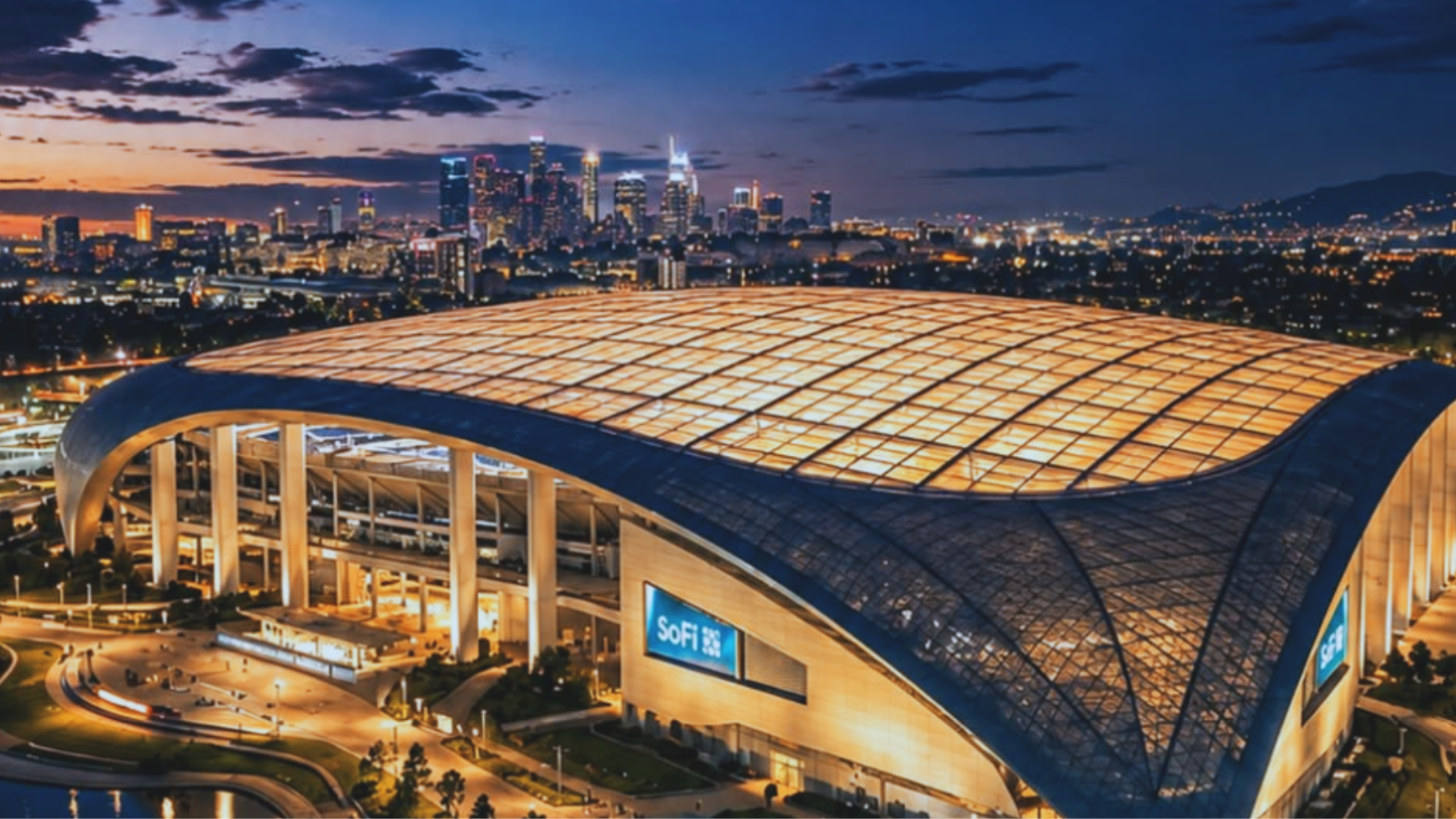
Los Angeles, California is the center of entertainment on the west coast, and the world capital of technology (outside of Seattle, Washington), and has been selected as a host city for the 2026 FIFA World Cup coming up on June 12, when the U.S.A takes on Paraguay.
Unlike it’s northern coastal counterpart, Seattle, which will be hosting six World Cup matches, Los Angeles has been given eight matches.
However, beyond the hype for the World Cup, and beyond the game on the pitch, there is a financial story looming prior to thee first kick-off.
A $5.5 billion privately built stadium. A city that can’t, or won’t, tell its taxpayers how much any of this is actually costing them, and a strike that was voted on by 96% of workers.
Here’s the twist that makes LA’s fiscal story completely different from every other host city: nobody actually knows the full number of what has gone into city spending in preparation for the event.
LA Mayor Karen Bass told reporters:
“taxpayers will not be on the hook”, but then a ProPublica review of host city contracts found that almost all organizing and hosting costs fall on taxpayers anyway.
The city’s host agreement with FIFA is marked confidential. The final contract hasn’t been shared.
A 2018 legal analysis warned that FIFA’s bidding process didn’t give city staffers enough time to, “conduct a full financial analysis and implement measures to protect the city’s general fund.”
So, we’ll work with what’s confirmed, explain what’s still being buried, and tell you what the structure of this spending actually means.
Lock in, because APSM breaks down what’s really going on with the money inside the sports and entertainment industry.
📩 Subscribe to APSM
Get APSM’s free weekly breakdowns on contracts,
taxes, real estate, and athlete wealth.
Join hundreds of readers learning financial literacy
through sports, every week.
Don’t borrow against your future
to pay for your pride.
Subscribe to the APSM Wealth Letter.
What We Know:
The Confirmed Funding Picture
Unlike Seattle’s relatively transparent line-item appropriations process, LA’s spending is fragmented.
Spending has been spread across the city government, the county, federal grants, and private organizing structures, some of which are actively withholding details from the public.
Here are the financial details that can be confirmed as of date:
Federal transit funding:
~$9.6 million
The Los Angeles-Long Beach-Anaheim area received ~$9,603,284 in federal World Cup Public Transportation Formula Apportionment funding, advocated for by Senators Padilla and Schiff.
This covers infrastructure upgrades, safety and security enhancements, and transit services for the 750,000+ fans expected across eight match days.
The Los Angeles Metro is set to deploy 300 additional buses running direct, nonstop shuttles to SoFi Stadium for every match, with a $1.75 single fare to push fans off the 405.

FEMA World Cup
Security Grant Program:
share of ~$625 million national pool
FEMA awarded ~$625 million across all 11 U.S. host cities specifically for security preparations.
California’s allocation (covering both LA and the Bay Area), was still being finalized as of late spring, the DHS government shutdown delayed disbursement, and LA officials declined to publicly comment on their expected cut.
Meanwhile, other host cities like Miami and Kansas City were raising alarms about the delay.
LA will also draw from FEMA’s separate ~$250 million Counter Unmanned Aircraft Systems (C-UAS) grant program for drone mitigation.
The transparency gap:
the MOA nobody has seen
The Los Angeles World Cup 2026 Host Committee, led by the nonprofit Los Angeles Sports & Entertainment Commission (LASEC) and including representatives from the Rams, SoFi Stadium and Hollywood Park, the LA Galaxy, and LAFC, is the entity that signed the FIFA host agreement.
That contract is classified as confidential. LA’s city government isn’t even formally part of the host committee. Yet city agencies are clearly spending public dollars on security, transit, and operations.
The number remains officially undisclosed.
The Spending Breakdown:
What Each Layer Covers
| Funding Source | Allocation | Purpose |
|---|---|---|
| Federal transit grant (LA area) | $9.6M | Transit infrastructure, bus service, safety upgrades |
| FEMA security grant (LA share, TBD) | $625M national pool | Police, cybersecurity, emergency response, venue security |
| FEMA drone grant (CA share) | $250M national pool | Counter-drone operations and personnel |
| LA Metro World Cup operations | Included in transit grant | 300 additional buses, direct match day service |
| City of LA public safety operations | Undisclosed | LAPD overtime, perimeter management, crowd control |
| Fan festival at LA Memorial Coliseum | Partially grant-funded | 5-day fan zone, public activations across the county |
The concentration of what’s confirmed:
transit and security.
Very little of it is capital infrastructure that will permanently improve the city of Los Angeles in the future.
Most of the cities preparations have been strictly operational, it services the tournament and stops when the tournament ends.

The SoFi Stadium Difference
This is where LA’s story diverges sharply from Seattle’s.
Seattle hosted six matches at Lumen Field, a publicly subsidized stadium where the city’s appropriations covered perimeter security, SDOT barriers, and a range of facility-adjacent costs.
The stadium is embedded in the city fabric, surrounded by city-controlled right-of-way that required city spending to secure.
SoFi Stadium is a different animal.
At $5.5 billion, it’s the most expensive sports venue ever built, privately financed by Stan Kroenke and the Rams/Chargers ownership group, sitting on the Hollywood Park development in Inglewood.
The city of Los Angeles doesn’t own it. Inglewood doesn’t own it. No public money went into building it (so its proclaimed).
That matters purely for the fiscal math.
The venue itself required zero public construction investment. The economic footprint of the development, from hotels, restaurants, the performance venue, retail, all of it, was built to capture event-driven spending.
Inglewood, Santa Monica, Long Beach and other Los Angeles metro cities will have the opportunity to capture significant sales from tourism and hotel tax revenue that goes directly to its own budget.
The city of Los Angeles, which is providing public safety resources for a venue in a different city, doesn’t capture that same direct tax upside.
When you hear “LA is hosting the World Cup,” the fiscal reality is: multiple overlapping jurisdictions are absorbing costs, and the revenue is distributed across LA County and LA City in ways that don’t directly reimburse the entities doing the spending.
Enjoy Reading How Money Works In Sports?
The APSM “$100M Pro Contract Report” covers how when players sign big contracts in sports,
the reality of the situation is that depending on their residency, they may net just 35-50%
of their reported gross figures.
This report shows you how to properly think of money, from $100k to $100M, and the importance of understanding taxes, residency, agent fees and professional expenses including topics like:
- In-depth contract structure analysis
- Taxes, agent fees, and escrow modeling
- Endorsement and bonus impact scenarios
- Investment & wealth retention strategies
- Real-world case studies of player earnings vs take-home

This report is everything you need to understand how multi-million dollar contracts translate into actual wealth and how to avoid common financial pitfalls in pro sports.
If you want real financial literacy,
the kind that protects you, not just informs you,
this is the blueprint.
The Strike Nobody
Wanted to Talk About
Here’s the angle that changes everything.
Unite Here Local 11, representing nearly 2,000 SoFi Stadium workers, cooks, dishwashers, concession workers, bartenders, servers, suite attendants, voted 96% in favor of authorizing a strike, with the first match just days away.
The demands from the workers and the union have two tracks:

Potential Economic Impact
Workers employed for the FIFA World Cup preparations in LA have been without a contract since their previous one expired (weeks ago).
Legends Global, the company managing hospitality services at SoFi on behalf of FIFA, offered a deal that included wage freezes for some suite attendants and bartenders, and just a 25-cent annual hourly wage increase for cooks and dishwashers.
In a city where a one-bedroom apartment averages well above $2,000 a month, a quarter-an-hour raise is not a serious offer when billions are on the table for FIFA and the cities hosting the World Cup.
Potential Immigration Impact
Another potential fiscal flashpoint is ICE. The Department of Homeland Security announced that ICE and Homeland Security Investigations (HSI) agents would be deployed “every day” at World Cup venues, officially to combat counterfeit tickets, drug smuggling, and human trafficking.
For a workforce that is heavily immigrant and includes workers on visas from multiple countries, that presence is not a formality.
Kurt Petersen, co-president of Unite Here Local 11, didn’t mince words in his public statement:
“FIFA and its corporate sponsors will pocket billions from Los Angeles while refusing to even acknowledge the cooks, servers, and stand attendants who make this event possible.”
He added:
“If we’re forced to strike, those $100,000 FIFA suites will have nothing but bottled water and Doritos.”
Negotiations with Legends Global and FIFA were scheduled to continue, but have recently come to a halt, with FIFA management refusing to comment to reporters or respond to questions involving the strike in Los Angeles.
The union also framed this moment explicitly as preparation for the 2028 Olympics, a preview of what organized labor intends to bring to every major event LA hosts going forward.
The financial stakes of a strike
A work stoppage at SoFi during a World Cup match would mean ~70,000 fans without concessions, suite service, or hospitality operations.
FIFA’s premium hospitality packages and luxury suites selling for six figures per match would collapse, potentially losing FIFA tens of millions or more in revenue collection and expected profit.
The economic pressure on Legends Global and FIFA to settle is enormous, which is exactly why the union picked this moment.
This is the labor equivalent of leverage:
A 96% vote, one week before the biggest match in American soccer history, yet no one seems to want to dive into the financial reasons as to why, and may brush it off as a push for “quick cash”.
However, when FIFA is projected to see an ROI of ~$9 billion or more, workers throwing a strike in one of the highest spending cities in the U.S. a week before kick-off could mean hundreds of millions, if not billions lost.
This is good for athletes to see that when people come together for a common cause, and work together, they can accomplish their goals, even against one of the biggest corporations globally.
As cost of living continues to rise, gas prices spike and housing becoming more unaffordable than ever before, an agreement to ensure that workers are making a living seems greedy, but the fiscal math gives them the leverage.
A quarter cent raise for ~2,000 workers would accost to ~$500/hour more for FIFA.
If even a third-to-half of those workers are working part-time, 30 hours on average, at $500/hour would cost FIFA ~$15,000/week and ~$60,000 a month.
If FIFA raised wages let’s say for example sake, $2:
$500 at $0.25 cents x 8 ($2) = $4,000/hour
x 30 hours (estimated average) = $120,000/week
x 4 weeks = $480,000/month
As the math shows, a quarter and $2 is a massive pay-gap when you see the full picture, but this is to show that if an agreement were to be had, that workers having the same starting wage and all receiving a $1 raise, could potentially be the best benefit to both sides (meet in middle concept).
This is just to zoom out and show both sides, but also to show that a solution could be had and that there is a lot more to the story than what get’s reported in gross headline figures.
The Regional Economic Picture
LA’s host committee projects ~$343 million in direct economic impact to the LA region from eight World Cup matches.
Tourism Economics estimates the U.S. will receive up to 1.24 million international visitors for the full tournament.
FIFA, for its part, now projects $11 billion in total revenue from the 2026 World Cup, up from the $9 billion figure cited earlier in the year.
Television rights, hospitality, sponsorships, ticket sales, and marketing rights all flow to FIFA’s Switzerland-based nonprofit structure.
None of it flows to the city of Los Angeles.
| Entity | World Cup Revenue/Spend | Nature |
|---|---|---|
| FIFA | ~$11B projected revenue | TV rights, hospitality, marketing |
| LA region economy | ~$343M projected impact | hotels, restaurants, transport, retail |
| City of Los Angeles | Undisclosed public cost | Operational spending, no direct FIFA revenue share/profitability |
| Inglewood | Sales/hotel tax capture | Direct beneficiary of SoFi-adjacent spending |
| Legends Global | Hospitality fees | Private contractor managing SoFi concessions |
The structure is identical to every other host city but the dollar amounts are larger:
FIFA books billions, private hospitality captures event spending, and the city absorbs the cost of public safety and transit without a direct claim on the revenue it enables.
California’s Tax Angle:
The 13.3% Problem
One layer that never shows up in World Cup spending coverage but belongs in an APSM breakdown:
The athletes playing in LA World Cup Matches during the event are also going to face California’s 13.3% state income tax on earnings made in the state, the highest in the nation, on all income earned while in California.
Athletes playing the World Cup that are California residents will also be subject to pay jock taxes.
FIFA pays players through national federations using per-match, per-tournament compensation structures.
For any player whose federation routes taxable compensation attributable to California matches, the jock tax applies.
Given that several high-earning World Cup rosters will compete at SoFi, including two USMNT matches, this is a real number for real players, even if it’s buried in the fine print of international compensation agreements.
The APSM Read:
Three Things to Watch
1. The confidential FIFA host agreement
The MOA between the host committee and FIFA is the document that determines who pays what and who gets reimbursed. It hasn’t been released.
A ProPublica analysis already found that almost all host city costs fall on public entities rather than FIFA.
Until LA’s agreement is made public, by court order, by legislation, or by a future mayoral administration with less to hide, the full fiscal picture remains incomplete.
2. The Unite Here Local 11 settlement
Whether the workers get a deal before June 12 determines the financial and reputational stakes for Legends Global and FIFA.
If they settle, the cost of that settlement, higher wages, job security protections, whatever ICE language gets agreed, becomes a precedent for every future major event in LA, including the 2028 Olympics.
If they strike, the economic disruption to premium hospitality at an $11 billion FIFA event becomes global news.
Either outcome will be a massive financial story.
3. The per-match cost frame
With at least $9.6 million in confirmed transit funding alone, once the FEMA security grant disbursement is public, LA’s per-match public spend will likely exceed Seattle’s $5.3 million figure meaningfully.
While this may reflect on the scale difference (8 vs. 6 matches), the operational complexity of a ~70,000-seat private venue in a multi-jurisdiction metro area is similar, as Lumen has a similar max-capacity and has a booming tech market and rising cost of living as well. (high appreciation market since 2020)
Whether the World Cup will benefit “The City of Angels”, in the long-term is yet to be seen, but prior to kick-off, LA has a lot to handle behind the scenes.
This is why understanding the money in sports is important. Because it is actually one big display of how corporations work, contracts, collective bargaining agreements and unions, and how money flows in general, which can be applied to your own financial journey.
Learn the Wealth Framework
All Elite Earners Use for Yourself
The APSM “7 Primary Ways Athletes Build Generational Wealth” Report covers seven of the safest and historically proven ways to build wealth.
These Strategies Include:
- Core wealth engines used by the world’s top earners
- Multi-contract wealth acceleration modeling
- Real-estate & portfolio structures designed for long-term stability
- Tax-efficient income routing
- Brand, endorsements & equity playbooks
- Risk-tier modeling athletes use to build & protect their net worth

If you want the real path to lifelong wealth,
not hype, not cliches,
this is the foundation.
Bottom Line
Los Angeles’s World Cup story is the most complicated of all host cities, and that’s the point.
Seattle had a transparent appropriations process, a clear $32 million headline, and a city council bill you could read line by line.
LA has a confidential FIFA contract, a mayor insisting taxpayers aren’t on the hook while reports say otherwise.
The city also has a ~$5.5 billion private stadium absorbing zero public construction cost but requiring substantial public safety resources from multiple jurisdictions, and 2,000 workers who voted 96% to shut the whole operation down.
FIFA is projecting ~$9-$11+ billion in revenue.
LA’s workers are fighting for 25 cents an hour.
The city of LA can’t tell you what it’s spending.
The numbers may not be fully public or ever be entirely transparent.
The structure, though, is already visible.
Who pays, who benefits, and who captures the margin, that question has the same answer in Los Angeles as it does everywhere else on this list.
Next Reads
- How Much Seattle Is Spending to Host the 2026 FIFA World Cup
- Why U.S. Investors are Buying European Soccer Clubs
- Luka Dončić Lost $345 Million: How the Lakers Trade Cost Him a Supermax
- Lakers’ $10 Billion Sale
- California State Athlete Taxes
Disclaimer: This article contains general financial information for educational purposes and does not constitute professional financial advice.


