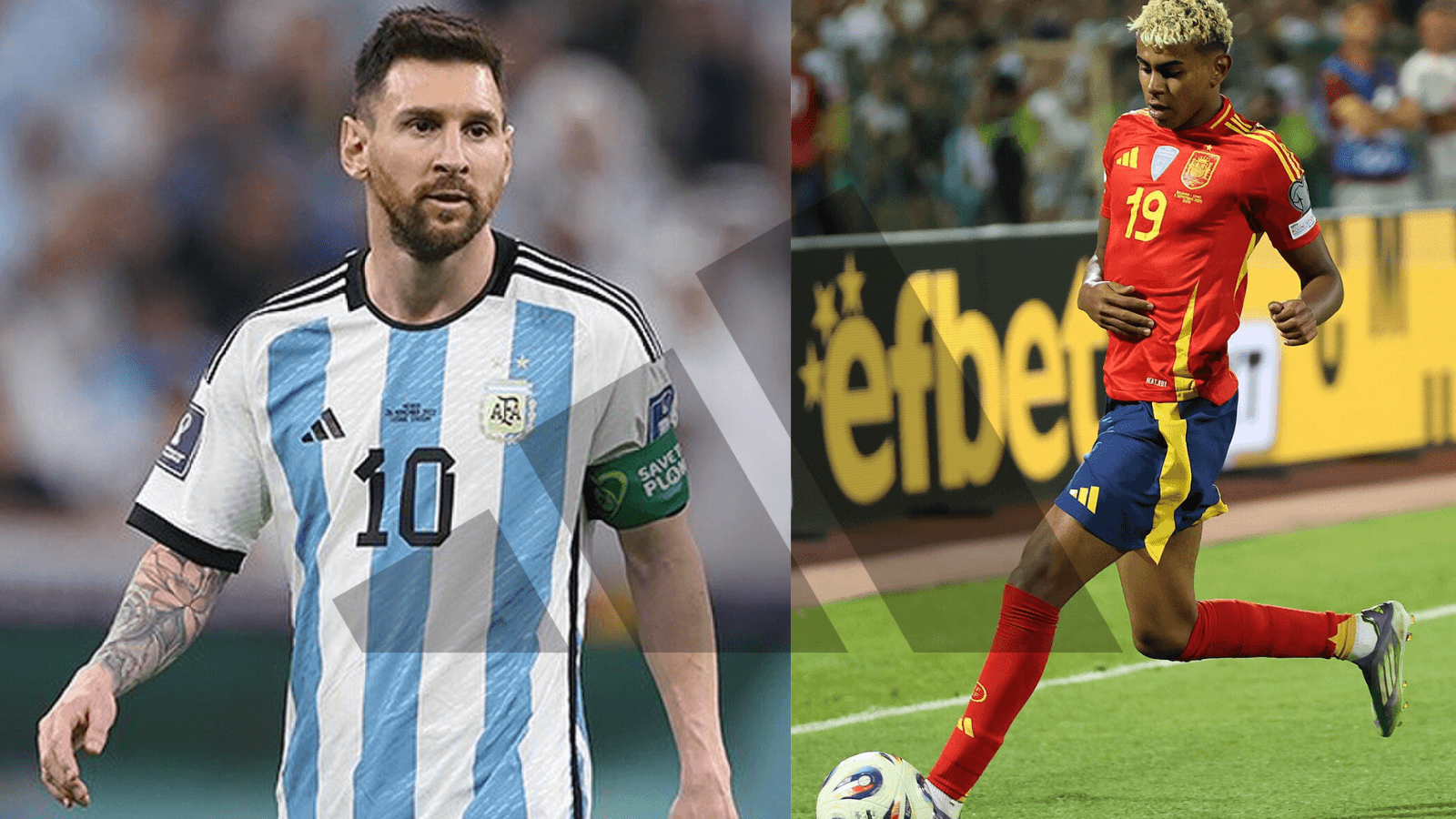
Adidas pays Lamine Yamal a reported $3-4 million a year to wear its boots. It pays Lionel Messi a deal reportedly worth up to $1 billion over his lifetime. On paper, those numbers sound like marketing expenses. In practice, at least one Wall Street analyst has argued the at a single athlete signing, Messi’s 2023 move to Inter Miami, was worth ~$10 billion in added market value to Adidas, ten times the size of his entire contract.
That gap between what Adidas pays an athlete and what that athlete is actually worth to the company is the real story behind how this business makes money, and it’s a story most “Adidas revenue 2026” coverage never actually gets to.
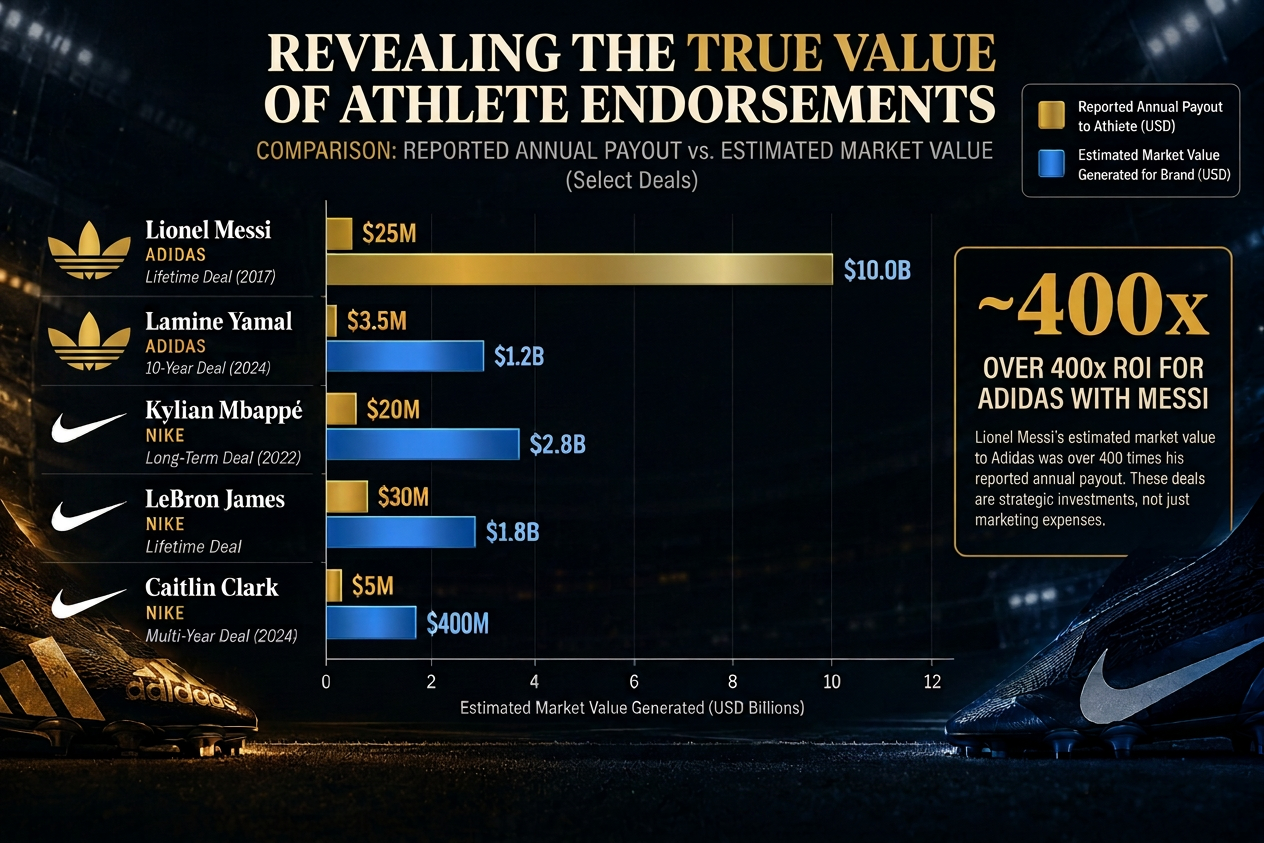
| Athlete Asset | Contract Type / Length | Estimated Annual Payout | Direct Revenue-Share Mechanics | Portfolio Role | Estimated Corporate Value/ROI |
| Lionel Messi | Lifetime Contract (2017) | ~$25,000,000 | Yes (Merchandise) | Global Icon Anchor / Inter Miami | ~$10 Billion Market Cap |
| Lamine Yamal | 10-Year Deal (Feb 2024) | ~$3,500,000 | Scaled Tier Upgrades (Post-World Cup) | “Prodigy Premium” / Face of Future | Exclusive Signature Boot Transition |
Adidas isolates individual ambassador spending into distinct asset tracking buckets; which allows corporate finance teams to weigh the upfront cost of an active contract against immediate inventory velocity, retail margins, and long-term equity growth across key product categories.
The Basic Mechanics: Where Adidas’s Money Actually Comes From
Adidas posted record full-year 2025 revenue, with currency-neutral growth across nearly every region and category. Footwear, the largest single category, grew ~12% on a currency-neutral basis for the year, while apparel grew even faster at ~15%.
Football specifically, the category Messi and Yamal sit at the center of, drove growth through new versions of the brand’s signature Predator and F50 boot lines, along with apparel tied directly to the FIFA World Cup 2026 home kits rolling out across the year.
Strip away the accounting language and the business is simple: Adidas designs, manufactures, and sells shoes and clothes, and makes money on the gap between what it costs to make a product and what someone pays for it at retail or wholesale.
The part that actually moves that equation, isn’t the shoe, it’s who’s wearing it on television in front of a billion people during a World Cup.
How Adidas Officially Accounts for Athlete Deals
This is the detail that almost never makes it into mainstream coverage, and it’s worth knowing because it tells you how seriously Adidas itself takes this spending. In its own financial reporting, Adidas explicitly separates “marketing investment”, which it defines as sponsorship contracts with teams and individual athletes, plus advertising and events, from regular point-of-sale marketing and from general overhead.
Athlete deals aren’t a footnote in Adidas’s accounting. They’re their own tracked category of capital allocation, treated with the same seriousness as a factory investment, because Adidas’s own finance team understands that the deal itself isn’t the product, it’s the engine that sells the product.
Lamine Yamal and the “Prodigy Premium”
Yamal signed with Adidas in February 2024, switching from a previous youth association with Nike, in a long-term deal reported at around 32 million euros (roughly $34 million) over a 10-year term, meaning Yamal’s actual annual sponsorship income lands somewhere in the $3-4 million range, a figure that was reportedly increased after his breakout performance at Euro 2024.
Exact athlete endorsement figures are almost never officially confirmed by either party, so the numbers circulating in Spanish and football finance media should be read as well-reported estimates, not disclosed fact.
What makes the Yamal deal a genuinely interesting case study isn’t the dollar figure, it’s the bet underneath it. The disproportionate value brands place on an athlete who reaches elite status at an unusually young age, because it buys 15-20 years of association rather than the 5-8 years a typical star signing gets.
Adidas isn’t really paying for the Yamal of today. It’s paying for exclusive access to whichever version of Yamal shows up at the 2030 and 2034 World Cups, while he’s still young enough to be the face of the brand’s next generation of boots.
The structural detail that makes this deal worth real attention, because at just age 18, Yamal became the only player besides Messi himself permitted to wear Messi’s exclusive signature “Spark Gen10s” boot line. That’s not an accident. Adidas is using its biggest current athlete asset to endorse the brand’s next one, a literal transfer of brand equity from one Adidas football icon to the one the company is betting will eventually replace him.
The Messi Deal That Moved $10 Billion
Messi’s relationship with Adidas dates back to 2006, when the brand made a modest offer for an 18-year-old’s gear that Nike reportedly turned down over a disagreement involving free tracksuits for his family, a decision retrospective analysis has since estimated cost Nike tens of billions in lost brand value over the following two decades.
In 2017, Adidas locked Messi into a lifetime contract, the only such deal in football history from a major sportswear brand, reportedly worth around $25 million annually with a total value that could exceed $1 billion across his lifetime once retirement-era brand work is included.
The number that actually demonstrates the real ROI math came in 2023, when Messi signed with Inter Miami. A Bernstein analyst upgraded Adidas’s stock rating specifically citing the move, noting the brand’s three core football franchises, the X, Predator, and Copa lines, stood to benefit from the resulting surge in U.S. attention, and Forbes-cited estimates pegged the resulting boost to Adidas’s market capitalization at ~$10 billion.
That’s not Adidas’s full marketing budget, or even close to it. That’s the estimated value created by one player’s decision to play in a specific league, layered on top of a deal Adidas had already locked in years earlier.
This is also the deal that introduced something genuinely new to athlete sponsorship structures. Rather than a fixed annual fee alone, Messi’s Inter Miami arrangement reportedly includes an actual revenue-sharing agreement with Adidas tied to merchandise sales growth driven by his MLS move, meaning Messi doesn’t just get paid by Adidas, he gets paid more the better Adidas’s football business performs because of him.
That structure, alongside similar profit-sharing built into his Apple TV+ relationship, has been called genuinely unprecedented in team sports by multiple sports law experts, and it points toward where the biggest future athlete deals across other sports may eventually head.
Why the World Cup Supercharges This Math
None of this spending happens in a vacuum, it’s timed deliberately around the sport’s biggest stage. Adidas’s own 2025 reporting specifically called out new FIFA World Cup 2026 home kits as a direct driver of football category apparel growth well before the tournament itself even began.
A World Cup is the one event where a boot deal, a kit deal, and a single moment of a star player scoring on global television can all combine into the kind of brand exposure that no traditional advertising budget could buy at any price. The Yamal and Messi deals were both structured as long-term bets rather than short-term campaigns, so Adidas needed both players locked in well before this exact tournament, not after.
The Bottom Line
- Estimated value created by tentpole signings: $10,000,000,000+
- Primary product drivers: Predator, F50, and World Cup Kit pipelines.
While the face value of retail operations is simple, capturing the margin between shoe production costs and wholesale pricing, the corporate engine running Adidas relies on calculated, multi-decade capital allocations.
Upfront commitments to generational players are structured as fundamental equity plays rather than superficial sponsorships. By anchoring long-term portfolios around current global anchors like Lionel Messi and transitioning brand equity into next-generation assets like Lamine Yamal, Adidas insulates its market share. This strategic structure allows the brand to capitalize on massive international distribution spikes, directly converting on-field visibility into compounding corporate value.
How Adidas Turns Futbol Contracts into Corporate Revenue FAQs
How does Adidas track high-profile athlete contracts in its financial reporting?
Within its internal corporate financial ledgers, Adidas explicitly isolates tentpole marketing investments, which cover individual star endorsements, club kit contracts, and large-scale global activations, from localized, point-of-sale promotional spending. This strict categorization allows corporate treasury teams to track player acquisitions similarly to physical capital investments, evaluating long-term brand equity alongside direct inventory liquidation.
What is the “prodigy premium” in sports apparel marketing, and how does it apply to Lamine Yamal?
The prodigy premium represents the disproportionate financial value a brand assigns to an elite athlete who achieves world-class status at an early stage of their career. By securing Lamine Yamal to a long-term contract at a young age, Adidas secures prime brand association for multiple World Cup cycles, drastically lowering the long-term cost of asset acquisition compared to signing a veteran star at peak market pricing.
How does Lionel Messi’s revenue-sharing agreement with Adidas generate corporate returns?
Departing from standard fixed-fee sponsorship parameters, Lionel Messi’s contract structure features direct revenue-sharing incentives tied to merchandise sales growth driven by his club moves and global appeal. This performance-driven alignment mimics traditional corporate equity arrangements, enabling the athlete to participate directly in the retail scale he generates while motivating massive product velocity across key footwear and apparel franchises.
How do international tournaments like the FIFA World Cup impact Adidas’s apparel revenues?
Large-scale global tournaments compress years of brand exposure into short operational windows, supercharging the sales velocity of team kit lines and signature boot rollouts. Corporate financial reporting demonstrates that the rollout of home kits and special edition apparel lines drives massive, double-digit growth across key performance categories well before an international tournament’s opening match even begins.
How does Adidas actually make money from retail sales and wholesale distribution?
At its structural base, Adidas designs, manufactures, and distributes athletic footwear and apparel, generating revenue on the net margin gap between production costs and wholesale or direct-to-consumer (DTC) retail pricing. However, the true driver of this revenue engine isn’t the physical product itself, but the deliberate, multi-billion-dollar monetization of elite athlete assets who elevate these mass-market items into premium, high-margin consumer demands.
Next Reads
Disclaimer: This article contains general financial information for educational purposes and does not constitute professional advice. APSM estimates are derived from publicly available information, tax assumptions, finance modeling, and industry-standard fee structures. Actual earnings may vary based on residency elections, private contract provisions, image/media rights agreements, bonuses, and tax filings.