

The dream for most people is simple, they want to own a home and never have to deal with upstairs stomping or salty downstairs neighbors again.
Some want a condo on the Oregon coast; others dream of a 100-acre farm in Wisconsin or Alabama. Then there are those aiming for prime real estate in major hubs like Los Angeles, New York, or Miami. Everyone’s taste is different, but the ultimate goal is identical, to stop renting and to own your own shit.
For the average American, the path is relatively linear. You build up a credit file, save a 20% down payment, hire a local realtor, and put in offers on your dream home. Once accepted, verifying your income is a straightforward process of handing over W-2 paychecks and tax returns to prove to a lender that you aren’t a financial risk.
For NIL athletes and professional earners, that standard playbook breaks down completely.
Athletes don’t earn income through a traditional weekly “payroll agreement.” NIL athletes are technically classified as independent contractors or self-employed earners filing 1099s, their compensation structure looks nothing like what a standard retail bank expects to see.
Even if a star athlete at Miami University is pulling in $500,000 per season through sponsorships, brand partnerships, licensing, and collective payouts, traditional underwriters still flag them as “high risk.” Why? Because automated banking algorithms view athletic cash flow as inherently volatile, and most young adults haven’t built the deep credit history required to bypass this quiet hurdle in standard lending.
This is why NIL earners, content creators, and young athletes should seriously consider operating like a business entity. You don’t need to run a drop-shipping store or sell forex courses to benefit from corporate structuring, you just need to protect and leverage the revenue you are already generating.
Buying a property is the entry point to long-term wealth creation. Understanding the difference between utilizing leverage to acquire appreciating assets versus taking on debt for illiquid liabilities is the exact reason APSM exists. Here is how mortgage qualification actually works for athletes and 1099 high-earners:
What Is a Mortgage
A mortgage is a debt instrument secured by the collateral of specified real estate property, obligating the borrower to pay back a principal balance plus interest over a set term (typically 15 to 30 years).
For standard buyers, the mechanics are fairly straightforward: a bank assesses “regular” employment W-2 income and calculates a predictable monthly payment against a fixed salary.
For professional athletes and NIL earners, however, a mortgage is not just a loan; it is a complex balance-sheet decision. Athletic income that is not backed by a union or league comes in front-loaded bursts, riddled with signing bonuses, 1099 brand deals, non-guaranteed back-end years, and multi-state tax withholdings that cause traditional banking systems to treat athletes as high-risk borrowers.
Headline figures ($10M+ deals, $500K packages), mean almost nothing to a retail bank’s automated underwriting algorithm. If you don’t understand how lenders measure verifiable qualifying cash flow versus gross contract numbers, you risk getting tied to high-interest debt, overleveraging your capital on illiquid luxury assets, or getting flat-out rejected on pre-approval.
If a collegiate athlete signs a six-figure NIL deal, or a top draft pick signs an eight-figure rookie contract, then everyone assumes the same thing: buying a house is as simple as picking a location and signing on the dotted line. In reality, getting a home loan as a young athlete is often an infuriating reality check.
Why? Because the entire American mortgage underwriting framework was built around a predictable 30-year W-2 employee, not a 20-year-old college athlete collecting 1099 brand revenue, nor an NFL rookie with a four-year deal that has money on the back-end years that aren’t guaranteed.
Understanding how mortgage qualification actually works, why automated banking systems flag athlete compensation, and how to properly deploy capital into real estate is one of the first real wealth-retention tests of a sports career.
Why Athletes Have Different Qualifications Than the Typical Homeowner
Traditional mortgage underwriters love predictable consistency with an individuals’ income. Lenders typically want to see two consecutive years of W-2 tax returns showing a stable or growing base salary, which makes athletes the exact opposite of the typical first-time homeowner.
Instead, NIL and pro athletes enter the mortgage process with front-loaded income, high cash volatility, short career windows, and multi-state tax liabilities. When a standard loan officer at a local branch sees an athlete’s $2 million gross earnings, they actually see a high-risk applicant, simply because their money isn’t guaranteed over a 30-year span, let alone beyond their competitive days.
To be fair, almost nobody stays at a single company for 40 years with a pension anymore. But, if someone works at Amazon or manages a retail store, they build up a resume and experience that allows them to land another job at, or above, their previous pay grade if they get laid off. Others get promoted, start making more money, build equity faster, start their own business, or eventually retire and pay off their mortgage. The point is that most careers move in a logical upward direction where you build skills, strengthen your resume, and earn more over time rather than less.
For NIL and pro athletes, the trajectory is completely flipped. When the playing days end and the sports checks stop coming in, an athlete might hold a college degree, but they are stepping into the job market a decade behind everyone else in real-world work experience. Specialized private banking divisions evaluate athletes using Portfolio Underwriting or Asset Depletion Models, focusing on total liquid balance sheets and net-retention projections rather than standard W-2 pay stubs.
That reality is why learning how to preserve capital and utilizing the same wealth vehicles the rich use matters far more than just learning how to make a quick dollar. It is the exact difference between an athlete who clears $1 million in school and sets themselves up for life, versus someone who ends up slinging hash as a line-cook at Denny’s.
Types of Mortgages for NIL Athletes
Not all home loans are structured the same way. Choosing the wrong mortgage product can artificially restrict your buying power or drain your liquid cash reserves unnecessarily. Fast-scanning buyers and high-net-worth athletes typically navigate four distinct mortgage categories:
| Loan Type | Target Applicant | Key Income Requirement | Major Advantage | Main Risk / Limitation |
| Conventional Loan | Everyday Buyers / Entry Homes | 2-year W-2 history; conforms to GSE limits | Low down payments, predictable fixed rates | Capped loan limits; strict W-2 requirements |
| Jumbo Loan | High-Value Primary Homes | High W-2 / verified contract; strict DTI | Financed above standard GSE loan limits ($766k+) | Demands 6–12+ months cash reserves |
| Private Bank / Portfolio Loan | Pro Athletes / High Net Worth | Overall balance sheet, liquid assets, total deal value | Custom underwriting for bonuses & contracts | Often requires keeping significant deposit assets with the bank |
| Bank Statement Loan | College NIL Athletes / 1099 Stars | 12–24 months of continuous bank deposits | Bypasses 2-year tax return requirement | Higher interest rates and larger down payment requirements |
1. Conventional Mortgages
These are standard Fannie Mae and Freddie Mac loans. They feature strict limits on total loan size and require rigid historical income documentation. They work fine for modest off-season starter homes, but rarely fit multi-million-dollar primary residences or non-standard athlete income structures.
2. Jumbo Mortgages
When a home purchase exceeds local conforming limits, the loan crosses into Jumbo territory. Jumbo loan underwriters enforce much stricter Debt-to-Income (DTI) ceilings and require 6 to 12 months of liquid reserves remaining in the bank after your down payment is completed.
3. Private Bank / Portfolio Loans
Issued directly by specialized wealth management divisions (like Morgan Stanley, JPMorgan, or Merrill Lynch Sports & Entertainment), portfolio loans are held on the bank’s internal balance sheet rather than sold to government agencies. This gives underwriters the flexibility to approve loans based on total contract value, asset depletion, and overall relationship banking.
4. Bank Statement Loans
The premier loan structure for NIL athletes and 1099 contractors. Instead of waiting two full tax years to prove self-employment income, lenders review 12 to 24 consecutive months of business or personal bank deposits to establish qualifying monthly cash flow.
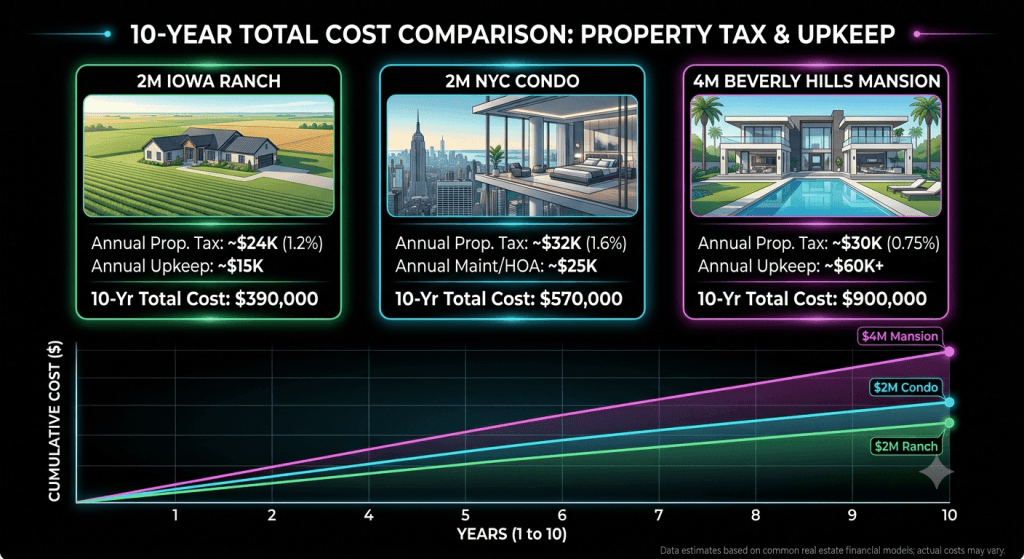
The $2M Asset vs. The $4M Mansion: A 5-Year Net Worth Reality Check
The biggest mistake young athletes and NIL earners make right after signing their first major contract isn’t failing to qualify for a mortgage, it’s qualifying for the wrong mortgage on an overleveraged luxury asset.
When a 21-year-old athlete earns $1.5 million in gross NIL or rookie money, traditional loan officers or eager real estate agents often push them into a $4 Million Los Angeles or Miami Mansion using a maximum-leverage Jumbo Loan.
Here is how that decision plays out over a 5-year timeline versus buying a $2 Million Property in high-growth, lower-cost markets like Iowa City, Waukee, or the Phoenix East Valley:
The 5-Year Real Estate Asset Comparison
| Financial Metric | $4.0M Coastal Market Home | $2.0M Midwest / Sunbelt Growth Asset |
| Est. Down Payment (20%) | $800,000 | $400,000 |
| Monthly Payment (P&I @ 6.25%) | ~$19,700/month | ~$9,850/month |
| Income Tax Impact on DTI | High Drag (7 – 13.3%) | Low Tax Drag (0 – 3.8%) |
| Annual Property Tax & Maintenance (Upkeep) | ~$70,000+/year | ~$22,000/year |
| 5-Year Holding Cost Overhead | ~$1.55 Million+ | ~$680,000 |
| Post-Playing Days Viability | High risk of forced sale/liquidation | Fully sustainable or rentable equity pivot |
Why the Midwest / Sunbelt Model Wins
- Livable Operating Expenses: High-end homes in expanding Midwestern hubs, or Sunbelt markets feature lower property tax burdens and stable appreciation (~3.1% to 5.0% YOY). The monthly nut is easily covered by guaranteed base salary or low-risk liquid yield.
- The “Post-Career Overhang” Trap: High-end coastal mansions require massive monthly carrying costs. If an athlete’s playing days end or their NIL deal isn’t renewed after year three, that $4M mansion turns into a toxic asset that drains liquid cash reserves. The $2M property preserves liquid leverage, keeping cash available for higher-yielding income investments.
What Lenders Actually Look At
Regardless of contract size, every mortgage approval rests on four pillars: Income, Credit, Debt, and Assets. For athletes, every single one of these pillars gets calculated through a specialized lens.
Income: Reported vs. Verifiable
Standard mortgage qualification requires two years of documented history. An NIL athlete or rookie has zero corporate history.
- Guaranteed Salary: Counted by underwriters.
- Signing Bonuses: Lump-sum bonuses are usually classified as Liquid Assets for down payments rather than monthly recurring income
- Incentives & Performance Bonuses: ignored by underwriters because they are not guaranteed.
Thin Credit Files vs. High Net Worth
A 20-year-old athlete with $3 million in the bank can easily be rejected by an automated underwriting system if they have a “thin credit file” (no prior credit cards, car loans, or utility history). Establishing early trade lines is critical to converting raw capital into a high credit score.
Debt-to-Income Ratio (DTI) & The NIL 1099 Trap
DTI compares monthly debt obligations against verified net income. NIL athletes face a massive trap here: 1099 Income requires self-employment tax withholding. If an NIL athlete earns $500,000 in brand deals but hasn’t set aside 30–35% for federal and state taxes, their true qualifying income drops significantly, spiking their DTI and ruining loan pre-approvals.
Assets and Reserves
This is where athletes have maximum leverage. Lenders issuing Jumbo Loans ($766,550+ baseline threshold in most standard markets) require 6 to 12 months of Post-Closing Liquidity Reserves (cash, stocks, or liquid money market funds) sitting untouched in the bank after the down payment is made.
How NIL Deals Change the Game for College Athletes Buying Homes
The legal growth of NIL income has fundamentally transformed collegiate real estate financing. College athletes are no longer penniless students; they are independent business entities (1099 contractors or LLC owners).
Standard W-2 Employee ──►
2 Years Paystubs ─────────►
Conventional Mortgage
NIL Athlete (1099) ──►
1-2 Yrs Tax Returns/LLC ──►
Bank Statement / Portfolio Loan
Pro Rookie (Contract) ──►
Signed NFL/NBA Contract ──►
Private Bank Jumbo Loan
The 1099 Tax Return Requirement
Unlike W-2 pros, NIL athletes receiving corporate sponsorships, trading card deals, or collective payouts receive 1099-NEC forms.
Under Fannie Mae and Freddie Mac guidelines, 1099 income requires at least 12 to 24 months of documented tax filing history before a conventional lender will touch it.
Bank Statement Loans for NIL Stars
To bypass the two-year tax return hurdle, specialized sports lenders issue Bank Statement Mortgages. Instead of tax returns, the lender analyzes 12 to 24 months of personal or business bank deposits to calculate average monthly cash flow, allowing top NIL earners to acquire primary residences or investment properties while still in college.
Why Rookie Contracts Create Friction for Traditional Lending
The day a rookie signs an NFL, NBA, or MLB contract is when they are most eager to buy a primary residence. It is also the exact moment their financial profile looks the most erratic to a standard retail bank. Automated underwriting algorithms flag rookie deals because:
- The contract duration is short (often 3 to 4 years).
- Non-guaranteed years cannot be projected as long-term income.
- Multi-state “Jock Taxes” reduce gross monthly paychecks unpredictably throughout the season.
This friction is why the sports finance ecosystem relies on Private Banking & Portfolio Lenders. These specialized divisions keep the mortgage on their own balance sheet rather than selling it, allowing them to look past automated rules and underwrite loans based on total contract value, guaranteed signing bonuses, and overall relationship banking assets.
Pre-Approval vs. Pre-Qualification
- Pre-Qualification: A meaningless marketing estimate based on unverified, self-reported contract numbers.
- Pre-Approval: A formal, underwritten commitment where a lender verifies the actual signed contract, runs tax calculations, reviews liquid reserves, and hard-locks usable qualifying income.
For an athlete whose income involves multi-state tax withholdings or variable NIL payouts, a pre-qualification is worthless. Entering a luxury real estate negotiation without a full portfolio pre-approval exposes the buyer to failed escrows and lost earnest money deposits.
How Mortgage Qualification Matter to the Bigger Picture
Qualifying for a mortgage doesn’t happen in a vacuum. The size of the loan a bank approves directly impacts:
- Property Tax Exposure: Buying in high-tax corridors eats away at liquid monthly cash flow.
- State Residency Elections: Establishing primary legal domicile in zero-tax jurisdictions (Florida, Texas, Washington, Nevada) increases net take-home pay, directly lowering your effective DTI.
- Long-Term Wealth Retention: Real estate should serve as a long-term capital preservation bucket—not an illiquid money pit that drains liquid earnings during post-playing years.
The Bottom Line
Estimated Qualifying Leverage Difference: Up to $1.2M+ in extended borrowing capacity when utilizing specialized private portfolio underwriting versus standard retail banking.
Qualifying for a mortgage as an athlete isn’t easier just because the headline contract number is big, in many ways, it’s harder because traditional banking systems aren’t built for athletic compensation.
Knowing the difference between headline contract value and verifiable qualifying income is what separates athletes who build lasting real estate portfolios from those who end up overleveraged on assets they can’t sustain.
Whether you are navigating a college NIL deal or structuring a first-round rookie contract, real estate decisions must be made through the lens of Net Tax Retention and Residency optimization, Liquid Reserves, and Long-Term Asset Stability.
Want to see how real rookie contracts and NIL deals translate into qualifying home loan income? Download our Free Net Income Calculator or explore the [Playbook Store] to access our full suite of Financial Guides.
Athlete Mortgage Qualification & Underwriting FAQs
How do mortgage lenders verify income for a rookie athlete with no W-2 history?
Lenders verify rookie athlete income using a fully executed, signed professional contract. To count toward qualifying income, the lender evaluates guaranteed base salary and contract duration. Non-guaranteed incentives, performance bonuses, and unearned future contract years are excluded from traditional conventional calculations.
How can college athletes with NIL income qualify for a home loan?
NIL athletes earn 1099 contractor income, which typically requires a 1- to 2-year tax return history under standard guidelines. However, NIL stars can qualify earlier through Bank Statement Mortgage Programs or Private Bank Portfolio Loans, which evaluate 12 to 24 months of continuous deposit statements to verify monthly cash flow without requiring standard W-2 paystubs.
Can a professional athlete use a signing bonus to qualify for a mortgage?
Yes, but how it is counted depends on the loan structure. In standard underwriting, a lump-sum signing bonus is treated as a liquid asset used for down payments and closing reserves rather than recurring monthly income. Specialized portfolio lenders may allow athletes to amortize guaranteed signing bonuses over the contract term to boost qualifying monthly income.
Why do multi-million dollar athletes get denied for standard home loans?
Athletes are frequently flagged by traditional automated underwriting systems due to short contract lengths, non-guaranteed compensation, lack of two-year W-2 history, and multi-state jock tax deductions. Retail banks treat short-term athletic deals as high-risk compared to standard 30-year corporate careers.
What is the difference between an athlete portfolio loan and a traditional jumbo mortgage?
A traditional jumbo mortgage adheres to strict agency debt-to-income (DTI) and Fannie Mae/Freddie Mac guidelines. An athlete portfolio loan is backed directly by a private bank that holds the loan on its own balance sheet, allowing underwriters to evaluate net worth, liquid asset reserves, and total relationship banking potential rather than strictly past tax returns.
How does state residency affect an athlete’s mortgage pre-approval?
State residency dictates net take-home pay after state income taxes. Establishing primary legal residency in a zero-income-tax state increases net monthly cash flow. Because Debt-to-Income (DTI) calculations rely on net income and verified cash reserves, a lower tax burden increases total qualifying borrowing capacity for home purchases.
Next Reads
- Jumbo Loans Explained for Athletes – Underwriting Mortgages, Lack of Credit & The 30-Year Trap
- Property Tax Explained for Athletes – Homeownership, Residency & The Real Costs of Buying Real Estate
- Residency Rules for Athletes – Domicile Laws & Athlete Tax Audits
- State Income Tax Explained for Athletes – The States That Cost the Most
- Assets vs. Liabilities (Finance Glossary)
Disclaimer: This article contains general financial information for educational purposes and does not constitute professional advice. APSM estimates are derived from publicly available information, tax assumptions, finance modeling, and industry-standard fee structures. Actual earnings may vary based on residency elections, private contract provisions, image/media rights agreements, bonuses, and tax filings.