
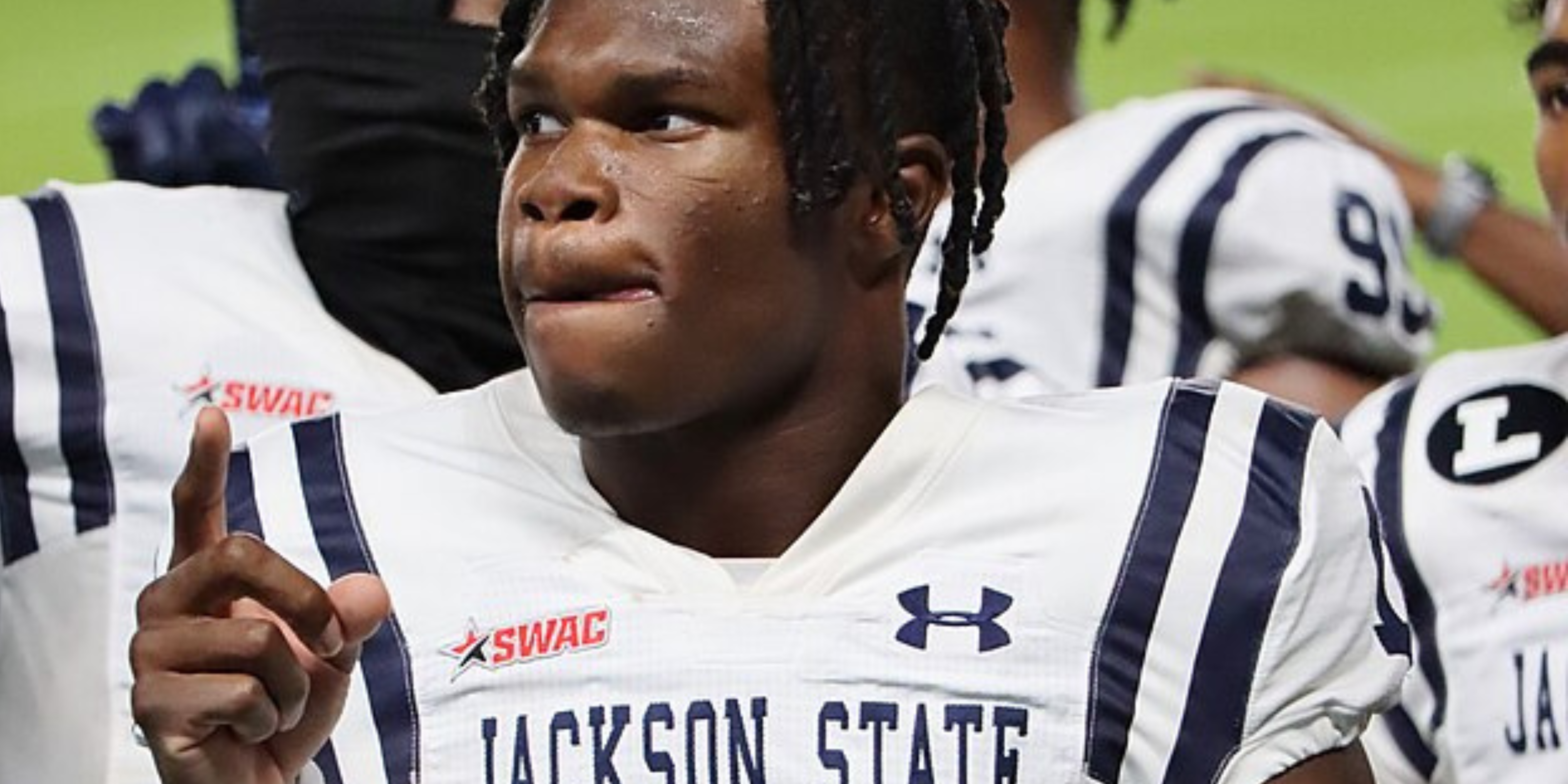
Travis Hunter has been in the news for many reasons over the last few years, but the last couple of weeks could prove to be pivotal for his development, both as a player and a man.
Fresh off winning the Heisman Trophy Award on December 14th, 2024, the highest honor in college football. Hunter has made a massive statement, as throughout the 2024-2025 CFB season, Hunter dominated on both sides of the ball.
He won the award over runner-up Ashton Jeanty. The Boise State Running back who also took the nation by storm in the 2024 CFP season, rushing for 2,601 yards and 29 Touchdowns and leading the Broncos to the CFP.
Offensively, Hunter finished with nearly 100 receptions (96), 1,258 yards, 15 receiving touchdowns, and one rushing TD. On defense, Hunter posted 35 tackles, 11 pass deflections, 1 forced fumble, and 4 interceptions.
Despite Colorado’s failure to make it to the College Football Playoff, Hunter is became the second overall pick in the 2-2025 NFL Draft, but this was his potential residency outlook prior to draft day when it was unknown who was going to get the young man.
What is interesting about the mock drafts for Hunter, is that no one had the Jaguars on any of them, and they are the team that ended up selecting the former Heisman.
At the time this article was written, Hunter was projected to end up in one of these four locations:
- Tennessee Titans
- Cleveland Browns
- New York Giants
- New England Patriots
While all four teams need a quarterback (Not TN), Hunter’s versatility and dominance could make him the number 1 pick regardless. (He landed at #2 and Cam Ward went #1 to the Titans).
APSM breaks down what Travis Hunter’s rookie contract would have looked like, as this article dropped pre-draft and he was selected second overall in the 2025 NFL Draft.
| Potential Draft Position | Projected Team | 4-Year Contract Face Value | Primary State Tax Drag | Projected Resident State Tax | Estimated Post-Tax Contract Value |
| Pick #1 | Tennessee Titans | $42,198,750 | 0.00% (N/A) | $0 | ~$26,585,212 |
| Pick #2 | Cleveland Browns | $40,337,224 | 3.50% (flat) | ~$1,411,802 | ~$21,800,000 |
| Pick #3 | New York Giants/Jets (NY) | $39,152,644 | 10.90% (top) | ~$4,267,638 | ~$20,398,527 |
| Pick #3 | New York Giants/Jets (NJ) | $39,152,644 | 10.75% (top) | ~$4,208,909 | ~$20,457,256 |
While the difference in raw contract value between Pick #1 and Pick #3 was ~$3.04 million on paper, the underlying state tax brackets widened that gap significantly. Had Hunter landed in New York/New Jersey instead of an income-tax-free haven like Tennessee (or his eventual landing spot with the Jaguars in Florida), his net wealth portfolio would have sustained an additional $4.2 million structural drag over his rookie term.
Potential Landing Spots
Pick 1: Tennessee Titans
If Hunter is selected first overall, his 4-year rookie contract will be valued at $42,198,750, with a breakdown as follows:
- Year 1: $7,672,500
- Year 2: $9,590,625
- Year 3: $11,508,750 (Extension Year)
- Year 4: $13,426,875
- Year 5: Team Option Year
The Titans drafted QB Will Levis in 2023, so, Tennessee could opt to add Hunter to their roster, instead of pursuing another QB. If the Titans had selected Hunter with the first pick, his rookie contract would break down as follows:
- Year 1: $4,833,675
- Year 2: $6,042,093
- Year 3: $7,250,512.50
- Year 4: $8,458,931.25
The state of Tennessee remains to be one of just seven states in the USA that does not levy an income tax on their residents.
If the two-way star were drafted in spots #2-#4 (which he was), then at minimum he will pay 3.5% state income tax (Ohio), 5% in Massachusetts and likely the maximum, 10.9% in New York. Hunter’s total post-tax earnings (37% Federal) if selected by the Titans would be ~$26.6 million.
Pick 2: Cleveland Browns
If Hunter is selected second overall, his contract will be valued at $40,337,224 over 4 years. After taxes, his total earnings would be ~$21.8 million. The state of Ohio levies a 3.5% top marginal income tax rate.
Pick 3: New York Giants
If Hunter is selected third overall, his rookie deal will be worth $39,152,644, however he would be living in either New Jersey, or in New York.
New Jersey levies a 10.75% state income tax on top earning residents (what Hunter would be the moment he signs his contract). While the state of New York levies a 10.9% state income tax on their top earning residents.
So, if Hunter had been drafted to the Giants, he may have chose to settle in New Jersey, if he wanted to save an extra 0.15% of his income. We now know he will be living in his home state of Florida.
If he chose to live in New Jersey his post-tax earnings could have been ~$20,457,256.50, while if he chose to reside in New York, his post tax earnings could have been ~$20,398,527.50. By choosing New Jersey over the state of New York, he could have saved roughly $60,000.
Financial Summary
Regardless of whether Hunter was drafted first, second, or third, his post-tax earnings over the course of his rookie contract will be approximately $20-23 million. This financial security will set Hunter up for life, provided he makes sound decisions both on and off the field.
For instance, if Hunter were to invest 20% of his rookie contract (~$5M), into the S&P500 or a similar index fund that tracks 8% average annual growth; then by age 50 (27 years), he would have an estimated stock portfolio value of ~$41.13 million.
Hunter would still have $15+ million to live a luxury life and if he remains healthy, he is likely to sign a massive extension the moment he becomes eligible. However, if he were to not make it to that extension year, as the average career length of an NFL player is just 3.3 years, then he can still turn his rookie deal millions, into generation wealth. Mix in the right property investments, Hunter is set for life.
The Road Ahead for Travis Hunter
No matter where Travis Hunter ends up, he will be in a strong financial position. Whether drafted to the Patriots or the Titans or where he actually landed in Jacksonville, Hunter’s future is bright both on the field, and financially.
As Hunter prepares for the 2025 NFL season, all eyes will be on him, not just for his Heisman-winning performances, but for his potential to change the trajectory of whichever franchise selects him. It will also be interesting to find out if the team that selects Hunter will allow him to play both sides of the ball, where he claims to be the most comfortable and has shown dominant ability throughout his collegiate years.
The Bottom Line
- Maximum projected contract: ~$39.1M – $42.1M.
- Maximum structural state tax drag: ~$4.26M
Evaluating pre-draft valuation metrics as a historical case study reveals how much an elite athlete’s net worth relies on geographic destiny rather than on-field metrics alone.
While the total gross difference between the top three selections seemed minor, the choice of legal domicile across potential landing spots like Tennessee, Ohio, or New York presented a multi-million dollar swing.
By analyzing what these initial projections looked like before he ultimately landed in Florida’s tax-free landscape with the Jaguars, we see how team placement directly dictates an incoming rookie’s financial framework and compounding investment capacity from day one.
Travis Hunter Rookie Contract Projections & Tax Strategy FAQs
How do different state income tax brackets impact top NFL rookie contracts?
NFL rookie contracts are strictly regulated by the league’s rookie wage scale, meaning gross figures are locked based on draft position. However, net take-home pay varies drastically depending on the team’s home state. For instance, a player drafted by a franchise in an income-tax-free state (like Tennessee or Florida) retains millions more in liquid wealth than a player facing top-tier brackets in states like New York or New Jersey.
Why would a player drafted by the New York Giants consider establishing residency in New Jersey?
Historically, athletes drafted by New York-based franchises look to establish their primary legal domiciles in New Jersey to exploit minor discrepancies in top-tier state income tax brackets. Because New Jersey’s top income tax rate is slightly lower than New York’s top tier, an elite rookie athlete can structurally shelter a portion of their off-field endorsement and signing bonus capital, saving tens of thousands of dollars annually.
How does compounding early career income secure an athlete’s financial independence?
Because the average career length of an NFL player rests at just 3.3 years, maximizing the investment velocity of a rookie contract is paramount. By allocating roughly 20% of upfront contract earnings into diversified, long-term index funds tracking historical market returns, a first-round selection can build a self-sustaining asset pool that guarantees generational wealth independent of a second contract extension.
Next Reads
- Travis Hunter’s $3.275 Million Jacksonville Mansion
- Travis Hunter’s Rookie Contract with the Jacksonville Jaguars
- Travis Hunter Net Worth Valuation: Rookie Deal, NIL Earnings & Long-Term Financial Outlook
- Cam Ward’s Rookie Contract with the Tennessee Titans
- Luther Burden III’s Fully Guaranteed NFL Rookie Contract
Disclaimer: This article contains general financial information for educational purposes and does not constitute professional advice. APSM estimates are derived from publicly available information, tax assumptions, finance modeling, and industry-standard fee structures. Actual earnings may vary based on residency elections, private contract provisions, image/media rights agreements, bonuses, and tax filings.


