Baseball has always been a sport obsessed with its own history, and nowhere does that obsession turn into real money faster than the trading card market.
A piece of cardboard printed for pennies in 1952 can sell for more than most people make in a decade of work, and understanding why that happens isn’t just trivia for collectors. It’s a genuinely useful lesson in how scarcity, provenance, and timing turn an object into an asset.
Here’s the updated 2026 ranking, and the actual financial mechanics behind it that most collecting sites never bother explaining.
The Top 5, Updated for 2026
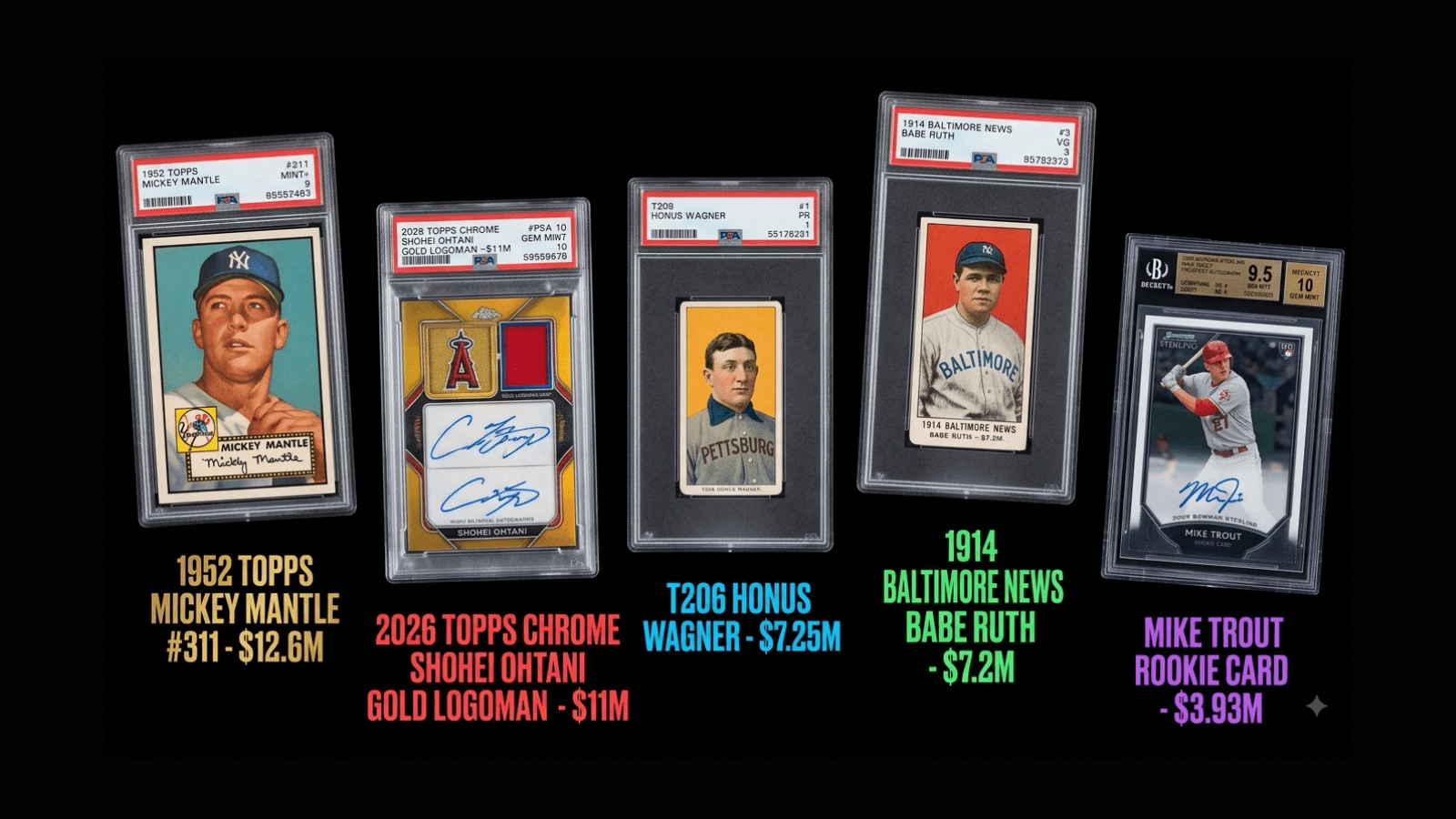
1. 1952 Topps Mickey Mantle #311 – $12.6M
Sold at Heritage Auctions in August 2022, this remains the most expensive baseball card ever sold, and it’s held that title for over four years now, a genuinely long reign in a market that moves this fast. Mantle’s résumé, three MVPs, seven World Series titles, and a career that still defines an entire era of Yankees baseball, gives the card a floor of demand that new sales in the market don’t threaten.
2. 2026 Topps Chrome Gold Logoman – Shohei Ohtani – $11M
This is the card that actually matters most for understanding where this market is heading. Pulled by a collector at a local card shop in Boca Raton, Florida, and sold the same year it depicts, this card carries dual patches and bilingual autographs from Ohtani’s back-to-back 2024 and 2025 MVP seasons.
The Gold Logoman patch is reserved exclusively for players who won MVP, Cy Young, or Rookie of the Year, an intentional scarcity mechanism built directly into the product by the manufacturer.
3. T206 Honus Wagner – $7.25M
The “Holy Grail” of the hobby, and for good reason. Wagner reportedly opposed tobacco companies using his image to sell cigarettes, which caused his card to be pulled from production almost immediately.
Fewer than 60 confirmed copies exist today, most in rough condition, which is exactly the kind of manufactured scarcity that keeps this card perpetually near the top of every all-time list regardless of market cycles.
4. 1914 Baltimore News Babe Ruth – $7.2M
Sold at Robert Edward Auctions in December 2023, this is one of only 10 known copies from a local sporting goods store promotional set, predating Ruth’s more widely known 1933 Goudy card by nearly two decades. Ruth’s cultural weight in baseball’s earliest days makes any card from this period a serious asset regardless of condition.
5. Mike Trout rookie card – $3.93 million.
The most valuable card tied to a still-active player on this list, and worth watching specifically because Trout’s career outcome, more Hall of Fame validation or a decline from injury, will directly move this card’s value in real time rather than settling into a fixed historical price the way a Ruth or Wagner card has.
Note for Readers:
The most expensive sports trading card ever sold, across every sport, isn’t a baseball card at all. A 1-of-1 Michael Jordan and Kobe Bryant dual-Logoman autograph card sold for $12.932 million in August 2025, technically outranking the Mantle card if you’re measuring all sports rather than baseball specifically.

How This Market Actually Moves
A card’s price isn’t set by nostalgia alone, it’s set by the same forces that move any collectible asset market: scarcity, provenance, and grading.
Scarcity is the floor
A card with 60 surviving copies behaves completely differently than a card with 6,000, regardless of who’s on it. Manufacturers have caught onto this, which is exactly why modern cards like the Gold Logoman parallel are intentionally produced in extremely limited runs tied to specific achievements, MVP, Cy Young, Rookie of the Year, rather than printed at standard volume.
That’s not an accident. That’s a company engineering scarcity into a product on purpose, the same logic behind limited sneaker drops or numbered art prints.
Provenance separates two copies of the same card into wildly different price tiers.
A PSA 9.5 graded 1952 Mantle isn’t the same asset as a PSA 6 copy of the identical card, even though they’re printed from the same plate. Grading services condition-rank cards on a 1-10 scale, and the jump between adjacent grades near the top of that scale can be worth millions, not thousands.
Timing and cultural relevance compress or stretch how fast a card appreciates.
It took Ruth and Wagner cards nearly a century to reach eight-figure territory. The Ohtani Gold Logoman did it in the same season it was printed.
That’s the market pricing in real-time confidence about a player’s legacy rather than waiting decades for history to confirm it, a genuinely new dynamic in this hobby that didn’t really exist before superstar-tier active players started generating this kind of speculative demand.
The Tax Side Nobody Talks About
If you’re buying or selling at this level, or honestly at any level with real money involved, there’s a tax mechanic worth knowing that most collecting content skips entirely.
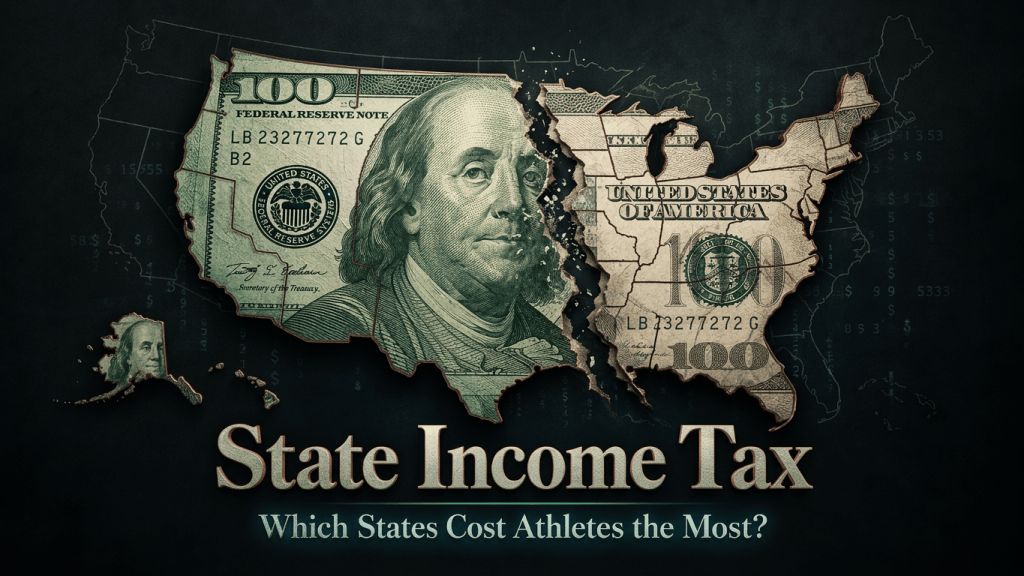
Cards, along with art, coins, and other collectibles, are taxed differently than stocks or real estate under federal law. Long-term capital gains on most investments cap out around 20% federally for high earners. Collectibles are different, the IRS caps the long-term capital gains rate on collectibles at 28%, regardless of your income bracket, a meaningfully higher rate than what applies to a stock held the same length of time.
That distinction matters enormously if you’re the kind of buyer treating cards as a genuine part of a diversified portfolio rather than a pure hobby purchase. A $1 million gain on a rare card sold after being held more than a year gets taxed differently, and less favorably, than the same $1 million gain on an appreciated stock position.
Anyone buying at a serious level should be talking to a tax professional who understands collectibles specifically, not just a general advisor, because this is a niche enough tax category that plenty of otherwise competent CPAs don’t handle it correctly the first time.
Buying Graded Cards vs. Ripping Packs: A Different Kind of Risk
This is worth separating clearly, because they’re not the same activity even though they live in the same hobby. Buying an already-graded, established card, a PSA 9.5 Mantle, a confirmed Wagner, is closer to buying a real asset. The card’s condition is verified, its scarcity is known, and its price discovery happens through actual auction sales you can research. You’re paying a premium for certainty.
Ripping packs and boxes hoping to pull a valuable rookie or a rare parallel is structurally closer to gambling than investing, and it’s worth being honest about that instead of pretending otherwise. The expected value math on breaking a box almost always favors the manufacturer, the same way a casino’s house edge favors the house.
You might pull an Ohtani Gold Logoman once in a career. Most people ripping boxes pull nothing close to that, over and over, and the money spent chasing it doesn’t come back. Neither approach is wrong, but they’re financially different activities wearing the same hobby’s clothing. If you’re treating cards as an actual alternative asset allocation, buy the graded, established piece. If you’re ripping packs for the thrill of the pull, budget it exactly like you’d budget a trip to a casino, money you’re comfortable not seeing again, not money you’re expecting a return on.
Bottom Line
The 1952 Mantle has held the top spot for over four years, a long reign in a market moving this fast, but the real story for 2026 isn’t the old record. It’s the Ohtani Gold Logoman hitting $11 million in the same season it depicts, proof that this market no longer waits decades to confirm legendary status before pricing it in. Scarcity, grading, and provenance are the actual mechanics driving every number on this list, and understanding them is worth more than knowing the rankings themselves.
Whether you’re a collector chasing a specific card or an athlete thinking about your own rookie card as a piece of your legacy and eventual estate, the same principles apply: real assets reward patience and verified scarcity, and hoping for a lucky pull is a different game entirely, worth playing only with money you’ve already decided you’re fine losing.
Most Valuable MLB Cards FAQs
What is the most expensive baseball card ever sold?
A 1952 Topps Mickey Mantle #311, graded PSA 9.5, sold for $12.6 million at Heritage Auctions in August 2022, still the record for baseball cards specifically as of 2026.
What is the most expensive sports trading card of any kind?
A 1-of-1 Michael Jordan and Kobe Bryant dual-Logoman autograph card, sold for $12.932 million in August 2025, a basketball card and the current record across all sports, not just baseball.
How are baseball cards taxed when sold for a profit?
Cards fall under the IRS’s collectibles tax category, capping long-term capital gains at 28% federally, higher than the ~20% top rate that applies to most stocks and real estate held the same length of time.
Is buying graded baseball cards a legitimate investment?
It can be, when treated like any alternative asset, driven by verified scarcity, professional grading, and documented sale history. It carries more volatility and far less liquidity than stocks or real estate, and should be sized accordingly in any broader portfolio.
Is ripping baseball card packs the same as investing in cards?
No. Buying a graded, established card is closer to a verified asset purchase. Ripping packs or boxes hoping to pull a valuable card carries expected-value math that typically favors the manufacturer, closer in structure to gambling than to investing, and should be budgeted the same way.
Next Reads
Disclaimer: This article contains general financial information for educational purposes and does not constitute professional advice. APSM estimates are derived from publicly available information, tax assumptions, finance modeling, and industry-standard fee structures. Actual earnings may vary based on residency elections, private contract provisions, image/media rights agreements, bonuses, and tax filings.