
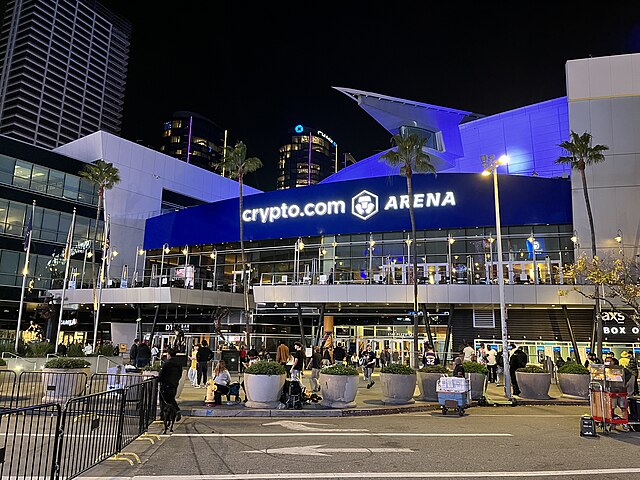
The Los Angeles Lakers are known around the globe, not only because they are historically dominant team, or even that they have some of the most iconic stars in the league to wear their uniform. Rather, it is because they’re a cultural phenomenon.
Although this may be known to those who enjoy the NBA and the sport of basketball, the Lakers are actually not the wealthiest franchise in the NBA. That title, belongs to the New York Knicks.
From some of the highest player salaries in the league, to substantial ticket prices due to the market and location of the team, let alone the history behind the business itself. The Lakers amassed a valuation of over $8 billion as of the end of 2024, good for the third most valuable franchise in the NBA & eighth in the USA. They later sold for ~$10 billion.
APSM dive into what makes the Lakers one of the most valuable franchises and the factors that led to the eventual $10B Sale.
The Los Angeles Lakers have always operated as a global cultural powerhouse. While casual fans focus on highlights at Crypto.com Arena, sports financiers and family offices look at the balance sheet of one of the most liquid, cash-generative assets in global sports entertainment.
In mid-2025, the business model of NBA franchise ownership shifted permanently. The Buss family agreed to sell their majority controlling stake to TWG Global CEO and Los Angeles Dodgers owner Mark Walter at a record-setting $10 billion valuation, making it the most expensive franchise transaction in world sports history.
Combined with the blockbuster trade that sent Anthony Davis to Dallas to land 26-year-old superstar Luka Dončić alongside LeBron James, the Lakers underwent an operational and financial transformation.
For young pro athletes and NIL earners, the Lakers franchise isn’t just a team. It is a masterclass in enterprise equity, cash-flow structuring, and tax-leveraged wealth creation.
The $10 Billion Breakdown: From $67.5M to a Historic Multi-Billion Exit
To understand how sports wealth is built, you have to look at the historical trajectory of franchise value versus player income over time.
In 1979, Dr. Jerry Buss purchased the Lakers, the LA Kings, The Forum, and a Sierra Nevada ranch in a package deal for $67.5 million. By June 2025, that initial investment yielded a $10 billion enterprise valuation, representing a compound return that vastly outpaces public equities, real estate indices, and traditional venture portfolios over the same period.
Franchise Financial Snapshot
| Financial Metric | Lakers Performance | NBA Benchmark / Context |
| Enterprise Valuation | $10.0 Billion | Record sports team transaction |
| Annual Gross Revenue | ~$550M – $580M | Top 3 revenue generator in NBA |
| Operating Income (EBITDA) | ~$170M – $185M | High-margin due to RSN distribution |
| Local TV Deal (Spectrum SportsNet) | ~$184M+ / year | Highest local media deal in NBA |
| Average Ticket Yield | ~$350 / seat | Premium ticket pricing in major market |
When Mark Walter acquired controlling interest, the transaction proved that blue-blood sports franchises are no longer valued purely on traditional price-to-earnings (P/E) multiples. They are valued as scarce trophy assets that double as global media entities, immune to standard economic recessions.
The Revenue Engines: TV Rights, Gate Revenue, and Global Partners
The Lakers generate over half a billion dollars in gross revenue annually across three core business drivers:
1. The Regional Sports Network (RSN) Golden Goose
While regional sports networks across smaller TV markets collapsed or filed for bankruptcy over the last few years, Southern California remains a media fortress. The Lakers’ 25-year, $4 billion agreement with Spectrum SportsNet pays the team upwards of $184 million per year, escalating past $215 million by 2029. That guaranteed local revenue line alone covers the team’s entire active player payroll before a single ticket is sold.
2. The $77 Billion League-Wide Media Windfall
Starting in the 2025-26 season, the NBA’s new 11-year, $77 billion national media rights deal with ESPN, NBC, and Amazon Prime Video kicked in. This trickles down to roughly $140 million per year per team in national media distributions, projecting to reach nearly $290 million annually toward the end of the deal.
3. High-Yield Arena Operations & Global Sponsorships
Crypto.com Arena delivers some of the highest per-seat yield in live entertainment and generates revenue from events across other sports like the NHL, WNBA or industries like music and entertainment (comedy).
- Courtside & Premium Seating: Courtside tickets during marquee home games fetch anywhere from $15,000 to $50,000 per seat.
- Corporate Partnerships: Patch deals with Bibigo, global equipment rights with Nike, and long-term brand integrations with American Express and Delta Air Lines add tens of millions in ultra-high-margin sponsorship cash straight to the bottom line.
Payroll Engineering: Managing the Salary Cap, Luxury Tax, and the Second Apron
Running a payroll in Los Angeles requires navigating strict collective bargaining agreement (CBA) constraints designed to punish big spenders.
Active Roster Core Payroll
LeBron James: ~$51.4 Million (Traded to 76ers)Luka Dončić: ~$43.0 Million (Supermax eligible)Austin Reaves: ~$13.0 Million (Signed 4-yr/$185M extension)Head Coach JJ Redick: ~$8.0 Million (4-yr/$32M Deal - 2-yrs left)Pairing Luka Dončić with LeBron James kept the Lakers operating right at the NBA Second Apron threshold throughout the 2025-26 NBA season (roughly $188M+ payroll level).
Passing the second apron eliminates team flexibilities, including:
- Loss of the Mid-Level Exception (MLE) in free agency.
- Inability to aggregate player salaries in trade deals.
- Draft pick freezing and eventual relegation to the end of the first round after repeated tax offenses.
However, from an enterprise perspective, paying a $40 million to $60 million luxury tax bill is simply a cost of doing business when your local TV deal and ticket sales yield over $500 million in gross returns (ROI).
Equity vs. W-2 Income: What Athletes Should Learn From Team Owners
For NIL athletes and young pros, the Lakers transaction holds a crucial financial lesson: The massive difference between ordinary income and asset equity. When an athlete signs a $200 million contract, that income is classified as ordinary W-2 wage income.
The Math on a $50M Player Salary
Gross Contract Salary: ~$50,000,000-----------------------------------------------Federal Tax (37%): -$18,500,000California State Tax (13.3%): -$6,650,000Jock Tax (Multi-State): -$1,500,000Agent & Management Fees (4%): -$2,000,000-----------------------------------------------Actual Net Take-Home: ~$21,350,000 (~42.7% of gross)Meanwhile, when franchise owners build value through team ownership, that appreciation compounds tax-deferred until a liquidity event occurs. When the Buss family sold their stake at a $10 billion valuation, that growth was taxed under favorable capital gains structures rather than top-bracket W-2 rates.
Athletes who want to build generational wealth must transition from being purely wage earners to becoming equity owners. Using net income to acquire cash-flowing real estate, private equity stakes, franchise locations, or early-stage equity models is the only way to replicate the wealth engine used by team owners.
Market Rivalry? Lakers Brand vs. Clippers
Across town, former Microsoft CEO Steve Ballmer built the state-of-the-art Intuit Dome in Inglewood to give the Los Angeles Clippers a private real estate footprint and dedicated arena revenues.
While the Clippers hold a world-class facility, the Lakers maintain a dominant moat in global brand equity. Decades of championship titles, iconic star power, and international broadcast distribution create a brand valuation that real estate development alone cannot replace. The Lakers’ $10 billion benchmark proves that legacy brand capital commands a premium valuation multiple over raw infrastructure investments.
Financial Takeaways for NIL & Pro Athletes
- Gross Numbers Are Headlines; Net Numbers Are Reality: Never budget your lifestyle against gross contract figures or NIL deals. Always calculate your net position after federal, state, and jock taxes.
- Move From Salary to Equity: Contract money funds your present lifestyle, but asset equity secures your future. Focus on deals that offer equity options, revenue shares, or long-term compounding assets.
- Tax Location Matters: Playing in California carries a 13.3% top state marginal tax rate. Setting up proper holding structures, LLCs, and establishing primary legal residency efficiently is vital for long-term capital preservation.
- Study Corporate Governance: Understand how team owners leverage low-cost debt against appreciating assets. Understanding how ownership structures work gives you leverage during future contract and endorsement negotiations.
The Bottom Line
The transition of the Los Angeles Lakers from a family-owned legacy asset to a $10 billion corporate enterprise under Mark Walter marks a new era in sports business. With Luka Dončić carrying the franchise forward into the next decade after the departure of Lebron James, the Lakers remain the ultimate proof of how global brand equity, local broadcast distribution, and smart capital management build long-term enterprise value.
Lakers 2025 Valuation FAQs
What is the official sale valuation of the Los Angeles Lakers?
The Los Angeles Lakers were valued at $10 billion when the Buss family sold their majority controlling interest to TWG Global CEO Mark Walter. This stands as the largest valuation for a professional sports franchise transaction in history.
Who owns the controlling stake in the Lakers now?
Mark Walter, CEO of TWG Global and principal owner of the Los Angeles Dodgers, owns the controlling majority stake. Jeanie Buss retains an equity percentage and remains as team governor.
How much revenue do the Lakers bring in annually?
The Lakers generate between $550 million and $580 million in annual gross revenue, backed by their $184M+ annual local Spectrum SportsNet TV deal, premier arena ticket yields, and international sponsorship contracts.
How does playing in California affect an athlete’s net income?
California imposes a top state income tax rate of 13.3%. Combined with federal taxes (37%), agent fees (4%), and jock taxes, high-earning athletes in Los Angeles generally take home between 40% and 44% of their gross contract earnings.
How did the Luka Dončić trade impact the Lakers financially?
Acquiring Luka Dončić secured a 20-something global superstar to anchor the franchise’s on-court performance and off-court international business appeal. While his future supermax extension will keep payroll high, his global brand power drives international merchandise, social engagement, and sponsorship revenues that easily cover luxury tax liabilities.
The Lakers’ 2024-25 season isn’t just about wins and losses, it’s about maintaining their financial and cultural dynasty on and off the court.
Next Reads
- Luka Dončić Traded to the Lakers for Anthony Davis
- Lakers’ $10 Billion Sale
- How the Dodgers’ Ownership Built a Multi-Billion Dollar Sports Empire
- How the NBA Could Bring Teams to Seattle and Las Vegas
- Shai Gilgeous-Alexander’s $285M Contract: What the NBA’s Highest-Paid Player Actually Pockets
Disclaimer: This article contains general financial information for educational purposes and does not constitute professional advice. APSM estimates are derived from publicly available information, tax assumptions, finance modeling, and industry-standard fee structures. Actual earnings may vary based on residency elections, private contract provisions, image/media rights agreements, bonuses, and tax filings.


